Friday, September 09, 2022

Out Now: Gabor Szabo - "Live in Cleveland"

Ebalunga has just put out Hungarian guitarist Gabor Szabo’s tremendous Live in Cleveland - for the first time on LP and CD. The wonderfully eclectic specialty label has previously issued the guitarist’s 1968 albums Bacchanal and Dreams in equally pristine vinyl and beautifully-packaged CD formats – as well as high-quality downloads for those, unlike me, who enjoy music that way.

Here, Ebalunga shines a light on the concert Szabo with this live date superbly captured for radio broadcast at Cleveland’s famed Agora Ballroom.

Recorded some 46 summers ago in August 1976 – still memorable as the season of George Benson’s monster hit album Breezin’ (whose title track originated with Szabo) and several months after Szabo’s own Mercury debut Nightflight (whose title track is heard here) was released – this concert catches the guitarist at his very best with his own quartet in the intimate setting where he always excelled – in front of an audience.

Surprisingly, Szabo’s performance here is one of the very few that have surfaced or survived from this 1976 concert series, presented by the Japanese audio and video manufacturer Sansui Electronics and dubbed the “New World of Jazz.” Other performers captured for the series are said to have included Ben Sidran, Pat Martino, Hubert Laws’ then up-and-coming brother Ronnie, and David Sanborn.

But it is one of several Szabo concert recordings known to exist from the seventies, like Live in Cleveland, all well worth savoring. (Personal shout out to the owners of Szabo’s 1976 Vancouver set and the 1979 Montreux performance with guitarist Joe Beck to get this music out.)

Again, Ebalunga has remarkably showcased Gabor Szabo in a yet another fine package, with newly-commissioned cover art and design by Anton Bodanov and liner notes by yours truly.

The disc has been lovingly mastered by Jessica Thompson, renowned for her work on many live recordings and for restoring and remastering Erroll Garner’s iconic and Grammy-nominated The Complete Concert by the Sea (2015). While the Szabo performance was captured on equipment that was then state of the art, Thompson’s sublime mastering brings the guitarist right into the room with the listener.

This is truly one for the guitarist’s fans. Live in Cleveland is arguably more representative of where Gabor Szabo was musically than his records at the time were. Plus, it’s a real joy to hear Gabor in his element.

Saturday, September 03, 2022

Rediscovery: Joe Beck – “Watch the Time”

”Beck is power music which threatens as much throbbing vengeance as Zep or The Who. In fact, Joe, who used to work in the studio with Frank Sinatra and Burt Bacharach, is still hungry enough to sound like a Jimmy Page reborn…”

So says Perry Meisel of the Village Voice on the promotional sticker originally affixed to Joe Beck’s album Watch the Time. But any one expecting something like the name drops there will be disappointed by what’s here. Chances are, though, hardly anyone noticed anyway.

This schizophrenic record came out in March 1977 after a pair of hit albums Joe Beck arranged for Esther Phillips and in between two especially disparate albums the guitarist waxed with fellow guitarist Larry Coryell. In that year, Beck also produced and arranged music for Frank Sinatra and Gloria Gaynor. That’s a crazy catalog of recordings in and of itself.

Taken together, this group of recordings – none of which is especially memorable – reflects the way the music industry was struggling to find meaning and relevance at the time. It also paints yet another murky portrait of a particularly talented musician and composer who couldn’t figure out how or where he belonged in any of it. While most were looking for a hit, Joe Beck seemed in search of a fit.

In broad terms, Watch the Time comes off as a pop-rock and fusion hybrid. The pop seems informed by the prog-turning-pop of Kansas, Styx, Journey and, umm, Pablo Cruise (remember them?). The fusion seems to come out of period Santana and Return to Forever. If this band of influences suggests something potentially compelling, Joe Beck doesn’t find a way to harness it to good effect.

Throughout, Beck assays the multiple facets of his brand of guitaring. But it’s only on the all-too brief “Dr. Lee” where Beck’s once-familiar Hendrix-isms rise to the fore. Otherwise, Beck’s guitar competes with rock vocalist Tom Flynn, who sounds a lot like labelmate Rainbow’s Graham Bonnet, leaving Beck to sound like a session player on his own album.

Produced by rock producer Jack Richardson (The Guess Who, Alice Cooper, Bob Seger’s 1976 hit “Night Moves” and, surprisingly, the Brecker Brothers’ 1977 album Don’t Stop the Music), Watch the Time seems calculated for crossover success. But it’s hard to hear exactly what Joe Beck was crossing over to.

Unfortunately, there’s little if any consistency among the radio-friendly numbers here. There’s the blue-eyed soul of Bobby Scott’s “Happy Shoes,” the album’s first of two singles. Beck seemingly pulled the song from an obscure 1966 Gloria Lynne album, which Scott partially produced and arranged (Beck would later cover Scott’s better-known “A Taste of Honey” on 1991’s The Journey).

Then there’s the power pop of the anthemic “Stand Up and Be Somebody” (the album’s second single and the first of two Michael Brecker appearances here on “saxaphone” [sic]) and “Now’s the Time,” which is anything but the Charlie Parker standard. Then there’s the funky “L.O.V.E.” and the disco-rock of “Watch the Time,” neither of which is particularly dance-worthy yet both are surprisingly earworm-y.

Beck’s guitar wanders in and out, often much like the guitar on Rupert Holmes’ “The Pina Colada Song,” as though called to provide scenic or sonic backgrounds.

The album’s highlights are surely those fleeting moments when Beck (finally) puts himself up front. Chief among these is Beck’s bluesy “Ain’t it Good to Be Back Home.” Here, he seems to deliver a one-two punch of Carlos Santana trading fours with Jimi Hendrix. For my money, “Ain’t it Good” is Beck’s single best composition. It’s certainly one that he played with more frequency than any other.

Beck would later re-record the tune as “NYC” for his 1984 disc Friends, on which Michael Brecker takes the lead. Apparently, Beck first waxed the tune as “Ain’t it Good” – with David Sanborn in the lead – in 1975: it was added as an extra to the 1987 domestic CD reissue of Beck & Sanborn.

”Polaris” is an astute fusion burner that may well showcase Beck’s best performance on the album. The song crosses early Mahavishnu Orchestra with later Return to Forever and yields engaging performances from both Beck and Brecker, who solos on an electric sax that sounds as though it’s filtered through a guitar synthesizer.

Finally, “Dr. Lee” is a funky rocker that gets closer to what this listener wanted to hear from Watch the Time. But it comes at the very end – and at an even three minutes, its duration is shorter than any of the album’s pop tunes. There are echoes here of Max Middleton’s ode to Led Zeppelin, “Led Boots,” heard on Jeff Beck’s 1976 classic Wired (1976), seemingly one-upping Beck by taking these boots to eleven. But then it ends before Beck can take it to more interesting places.

(Curiously, the cover images of Joe Beck on Watch the Time seem to look an awful lot like Jeff Beck as pictured on Wired. Coincidence?)

Watch the Time “(l)acks personality,” wrote the AOR radio tip-sheet Walrus! at the time. “Joe Beck, fine studio player, has yet to decide who he is musically. R&B and blues based rock & roll and various jazz ideas are simply to [sic] broad a gap to be housed on one album, even when the tracks are good enough individually.” Indeed.

After Watch the Time, Joe Beck paired with Hungarian guitarist Gabor Szabo in a dynamic quartet that was captured live at Montreux in 1979 – a recording that has, sadly, yet to be released.

Beck also waxed duo discs with Hungarian guitarist Attila Zoller and American bassist Red Mitchell – both of whom, like Szabo, were ex-pats at the time. Joe Beck was not a literal ex-pat as those three were, but certainly a musical one, then only occasionally returning to the jazz home he wouldn’t find a place in till years later.

He would go on to work in the lucrative world of commercial jingles, where he wrote and recorded for such brands as Panasonic, Chevy, Durkee and Lysol. This gave him the freedom to more or less discover himself by gigging around New York City with others or on his own.

Joe Beck wouldn’t release an album under his own name again until 1984’s Friends (DMP), which reunited him with Michael Brecker, keyboardist Don Grolnick and drummer Steve Gadd (who played on the CTI Joe Farrell albums that featured Joe Beck). Beck waxed a string of discs for DMP that found a focus, consistency and even an energy that finally hit its stride with Beck’s 1991 disc The Journey.

Beck landed another fine disc with Finger Painting in 1995 and recorded a series of sublime trio outings for the Japanese Venus label and, later, Whaling City Sound, which issued his final recordings, including a marvelous duo album with fellow guitarist John Abercrombie.

Watch the Time is a time capsule marking an especially strange period in jazz. That’s hardly the fault of Joe Beck. Rock had lost much of whatever edge it gave to the fusion movement in the early seventies. Much of what was then called “jazz” was increasingly fusing with the rising popularity of disco – which Beck exploited himself in his 1975 Esther Phillips hit “What a Diff’rence a Day Makes.”

Despite coming out in the shadow of George Benson’s phenomenally popular 1976 hit Breezin’ - which Beck nods a bit toward on “Stand Up and Be Somebody” – Watch the Time is hardly alone, splashing about in the deep end of what passed for jazz in 1977.

Tellingly, nothing fellow former CTI hit-makers Freddie Hubbard, Joe Farrell, Johnny Hammond or Deodato put out in 1977 matched the success, savvy or mere interest of their earlier work on CTI – putting Beck in storied and, likely, equally baffled company. (Notable exceptions to that 1977 rule are Stanley Turrentine’s Nightwings and Chet Baker’s You Can’t Go Home Again - both, to these ears, superb studio records.)

Perhaps the only memorable – or easily recalled – “jazz” that came out of 1977 is Chuck Mangione’s “Feels So Good,” which hit number 4 on Billboard’s Hot 100 in June of that year. Mangione’s breezy confection also laid the ground for the onslaught of what later came to be known as “smooth jazz” – a road travelled far less successfully by Beck himself in his earlier Beck.

Little wonder, then, that Watch the Time fell through the cracks. The disc, despite its brief pleasures, bides its time as much as mistook the times. But Watch the Time is a record that successfully shows all the directions a guitarist who could hold his own in rock, pop, jazz and fusion could take. One could merely wish he zeroed in on just one or two such directions here.

Thursday, August 25, 2022

New York Times: Creed Taylor Obituary

Creed Taylor, Producer Who Shaped Jazz for Decades, Dies at 93

He made scores of albums with artists who were well known and others who soon would be. He also founded two important record labels.

By Neil Genzlinger
Aug. 25, 2022, 6:06 p.m. ET

Creed Taylor, one of the most influential and prolific jazz producers of the second half of the last century, best known for the distinctive work he did for his CTI label in the 1970s, died on Monday in Nuremberg, Germany. He was 93.

Donna Taylor, his daughter-in-law, said he had been visiting family there when he had a stroke on Aug. 2. He never recovered, she said.

Mr. Taylor began his career as a jazz producer in the 1950s, and in 1960 he founded the Impulse! label, which would become the home of John Coltrane and other stars. He did not stay there long, though, and most of the label’s best-known records were produced later.

He moved to another jazz label, Verve. He made a lasting mark there by producing recordings by the saxophonist Stan Getz that popularized bossa nova, including “Getz/Gilberto,” the celebrated 1964 album by Getz and the guitarist João Gilberto that included “The Girl From Ipanema,” with Mr. Gilberto’s wife, Astrud. Both the album and the single, a crossover hit, won Grammy Awards.

In 1967, Mr. Taylor was at A&M, where he founded another label, Creed Taylor Inc., better known as CTI. Three years later it became an independent label, which over the next decade became known for stylish albums by George Benson, Stanley Turrentine, Grover Washington Jr. and others — and for a degree of commercial success that was unusual for jazz.

“In many ways the sound of the 1970s was defined by CTI,” the musician and producer Leo Sidran said in introducing a 2015 podcast featuring an interview with Mr. Taylor.

The records Mr. Taylor released on the label often emphasized rhythm and favored accessibility over esoteric exploration. As J.D. Considine wrote in The New York Times in 2002 when some of these recordings were rereleased, Mr. Taylor “believed that jazz, having started out as popular music, ought to maintain a connection to a broader audience.”

Some purists might have scowled at the time, but the effect was undeniable.

“The true measure of his impact was that at the height of the 1970s when so many musical styles were jostling for attention, more people were listening to jazz than ever before,” Ashley Kahn, a music historian, said by email. “For most, CTI wasn’t thought of as a jazz label; it was a sound, a musical identity like Motown. When you bought a CTI album you knew it was going to be top-quality on all levels, with at least two or three tracks you’d be grooving to for a long time to come.”

Impulse!, still a force in jazz, memorialized Mr. Taylor on Twitter.

“He was a genius when it came to finding new and special music that would stay with listeners forever,” the company’s post said.

Creed Bane Taylor V was born on May 13, 1929, in Lynchburg, Va. His father was, as Donna Taylor described him, a “gentleman farmer,” and his mother, Nina (Harrison) Taylor, was a personnel director.

Mr. Taylor grew up in Bedford, Va., and in a bucolic area known as White Gate, west of Roanoke, where his family had owned land for generations. He played trumpet in high school, inspired by Harry James. He was surrounded by bluegrass and country music, he said in a 2008 interview with JazzWax, but much preferred jazz.

“It was cooler music,” he said. “It made you feel hip, not corny.”

He enrolled at Duke University, where he studied psychology until the Korean War interrupted his schooling. After finishing his service with the Marines, he completed his psychology degree in 1954 but quickly made his way to New York to pursue his real interest, music. An earlier one-week visit to the city, he said on Mr. Sidran’s podcast, had whetted his appetite.

“Fifty-second Street was on fire,” he said. “You could walk into any little club at the base of any brownstone in that whole section and at no charge you could hear Basie, Ellington, Getz, you name it. I could hardly wait to get back again.”

He was inspired, in a manner of speaking, to go into producing by “Jazz at the Philharmonic,” the long-running series of concerts and recordings organized by Norman Granz, whom he would later succeed at Verve: He didn’t like it.

“The long bass solos, the tenor solos, you name it,” he said on the podcast. “Drum solos, and the crowd, and all the excitement — what happens to the music in all that? ‘Jazz at the Philharmonic’ was, for me, a circus.”

In 1954 he landed a job at Bethlehem Records, where he produced albums for the vocalist Chris Connor and others. It was an era when producers did everything for a record, from lining up musicians to trying to get radio stations to play it. Mr. Taylor enjoyed being Mr. Do-It-All.

“I was fascinated by the record business,” he told JazzWax, “from how to put a record’s cover and liner notes together to getting the records into stores and selling them.”

And sometimes, it meant discovering the artist. He told JazzWax that in late 1954 he moved to an apartment in Greenwich Village and became intrigued by a flute player he could hear practicing as he sat in his backyard garden.

“He’d play scales and then launch into amazing jazz lines,” Mr. Taylor recalled. “I decided I had to find out who the devil was playing.”

He followed the sound and knocked on the musician’s door. It was Herbie Mann, then still largely unknown; Mr. Mann recorded some of his first albums for Bethlehem.

In 1956 Mr. Taylor moved to ABC-Paramount, where he produced all sorts of albums (one was a collection of speeches and other highlights from the career of Dwight D. Eisenhower) but concentrated on jazz, making records with the trumpeter Kenny Dorham, the singer Bobby Scott and countless others before forming Impulse! as a subsidiary label.

There and at his later stops, he encouraged his artists to try new things, and not to shy away from other genres. One of his George Benson albums, for instance, was “The Other Side of Abbey Road” (1970), featuring Mr. Benson’s guitar interpretations of songs from that Beatles album.

At CTI in the early 1970s, he also packaged artists together in star-studded stage shows. “A real jazz festival has finally come to Atlanta,” The Atlanta Voice wrote in 1973 when the CTI tour played that city with a lineup that included the vibraphonist Milt Jackson, the guitarist Eric Gale and the singer Esther Phillips.

Whatever the project, Mr. Taylor’s stamp was distinctive.

“The through line to the labels Creed worked for or started — including Impulse, Verve and CTI — was an auteur-like, 360-degree approach to creating high-quality recorded product,” Mr. Kahn, the music historian, said, “recruiting A-list jazz players and being open to familiar pop melodies — like bossa nova, soul and R&B tunes, even the Beatles. He used top studios — Rudy Van Gelder’s most often — arrangers like Don Sebesky, and placed museum-quality photography on the album covers. “He thought and acted like a one-man record company, and then became one: CTI. Think Phil Spector, but with a deep feeling for jazz and soul, and without the guns.”

Mr. Taylor’s first marriage, to Marian Wendes in 1956, ended in divorce in 1984. In 1988 he married Harriet Schmidt. She survives him, along with three sons from his first marriage, Creed Bane Taylor VI, Blakelock Harrison Taylor and John Wendes Taylor; a daughter from his second marriage, Courtney Taylor Prince; and five grandchildren.

The CTI label, though successful early, ran into financial trouble — Mr. Taylor said he made some ill-advised decisions on distribution matters — and filed for bankruptcy in 1978.

He also got into a protracted legal dispute with Warner Bros. over the rights to Mr. Benson’s music. After a jury found in Mr. Taylor’s favor in 1988 and awarded him more than $3 million, he was able to revive the label for a time. By then, 1970s CTI records had begun to be reissued by CBS Records, which had acquired the catalog. Rappers were sampling his records, and, with the revival of vinyl in recent years, collectors were valuing them.

In 2012 Mr. Taylor spoke to a jazz studies class at North Carolina Central University, recounting stories of how he got the guitarist Wes Montgomery to try new things, how he talked Nina Simone through the recording of her album “Baltimore,” and more. He encouraged any would-be producers among the class to remain ever curious.

“You have to keep your eyes and your ears open the whole time,” he said.

UPDATE: Gábor Szabó – il jazzista dimenticato - September 10, Budapest Hungary

Update: I was very pleased last month to share the news of author and journalist Stefano Orlando Puracchio's September 10 presentation of his new book, Gábor Szabó – il jazzista dimenticato. The event commerates the publication of Stefano's Italian-language book and celebrates the life and musical legacy of the Hungarian guitarist.

I have just learned that keyboardist and composer Károly Németh will now join musicians Ádám Török and Ádám Fehér to perform music by and associated with Gábor. Additionally, the event is now free and open to the public. The original announcement appears below, edited to include the updated news.

The esteemed Italian Cultural Institute of Budapest has announced that Stefano Orlando Puracchio will present his magnificent book Gábor Szabó – il jazzista dimenticato on September 10, 2022, at one of the most prestigious houses of art and culture in Hungary, the Virág Benedek Ház.

The bilingual event presents the first-ever Italian-language book about the great Hungarian guitarist in the very storied city of his birth, youth and all-too early death.

Ádám Fehér and Ádám Török

Special musical guests include flautist/vocalist Ádám Török, dean of Hungarian prog-rock and founder of the jazz-rock group Mini, along with guitarist Ádám Fehér and keyboardist and composer Károly Németh, performing a selection of material associated with Gábor Szabó. Török, who played with Gábor in a 1974 jam session, regularly features Szabó-related material in his repertoire. Bassist and collaborator of Italian jazz magazine JAZZIT Andrea Parente is also set to appear.

“Gábor Szabó – il jazzista dimenticato” – “The Forgotten Jazzman” in English and “Az elfeledett jazzman” in Hungarian – was published by the Italian press Demian Edizioni earlier this year, marking the fortieth anniversary of the guitarist’s death. Stefano’s book not only memorializes the life and musical journey of Gábor Szabó, but reveals just how influential and meaningful the guitarist’s legacy has become over the last four decades.

Stefano Orlando Puracchio

Stefano’s book beautifully serves as a tonic for or corrective to the myths and marketing that grew – with or without Gábor’s consent – around the guitarist and likely stifled the way people heard his music. While Szabó’s highs and lows necessarily factor into any study of the guitarist, Stefano looks beyond labels like “exoticism” (or “esotism”) and “gypsy” that marginalize or “other”-ize Gábor Szabó.

The event is free and open to the public. If you are in Budapest on September 10 and can visit the Virág Benedek Ház, please drop in. This is sure to be a great celebration of Gábor Szabó’s music and the incredible legacy he left behind.

Viva Gábor Szabó and folks like Stefano Orlando Puracchio who keep this great guitarist’s music and legacy alive.

Tuesday, August 23, 2022

Creed Taylor - R.I.P.

News is coming in that Creed Taylor, one the greatest producers jazz has ever known, passed away this morning. He was 93. A cause of death has not yet been announced.

Over the course of more than half a century, Mr. Taylor recorded hundreds of records and made stars out of some of the biggest names in jazz: Bill Evans, Stan Getz, Jimmy Smith, Wes Montgomery, Antonio Carlos Jobim, George Benson, Freddie Hubbard, Hubert Laws, Stanley Turrentine, Grover Washington, Jr., Bob James, Deodato – to name only a few.

Taylor got his start in the mid fifties at Bethlehem Records and switched over to a lucrative career as one of the A&R men for the newly-merged ABC-Paramount label in the late fifties. In 1960, ABC-Paramount offered him his own label and he created the iconic and storied Impulse label. One of his first signings for Impulse, John Coltrane, went on to craft his most important work for the label.

Shortly after launching Impulse, MGM Records, which had recently acquired Norman Granz’s Verve label, lured Mr. Taylor to Verve, where he made household names of Jimmy Smith, Bill Evans, Cal Tjader and many others. Mr. Taylor’s biggest hits at Verve were with Stan Getz. In a series of albums with Mr. Getz, Taylor nearly single-handedly popularized Bossa Nova in the early sixties. The crowning achievement was Getz’s (with Astrid Gilberto) Grammy-winning hit single “The Girl From Ipanema.”

It was during that Grammy Awards ceremony when Taylor was approached by A&M Records’ Herb Alpert and Jerry Moss with an invitation to form a jazz division for A&M – solely under the direction of Creed Taylor. In 1967, CTI Records was born. There, Taylor waxed landmark records by Jobim and Montgomery as well as others by Herbie Mann (whose earliest albums at Bethlehem were produced by Taylor), George Benson and J.J. Johnson with Kai Winding.

Taylor took CTI to independence in 1970, launching the label with several singles and, notably, Freddie Hubbard’s Red Clay. Many others followed by Hubbard (including his 1972 Grammy-winning First Light), flautist Hubert Laws, Stanley Turrentine (notably, the legendary 1970 CTI debut Sugar) and Joe Farrell. CTI albums by Bill Evans, Kenny Burrell, Astrud Gilberto and Randy Weston also followed.

In 1971, Taylor launched a soul-jazz subsidiary label, Kudu, that featured superb records by organist Johnny Hammond, Esther Phillips and, most notably, Grover Washington, Jr. – who hit his apex with 1975’s Mister Magic. Taylor would launch other less successful subsidiaries, including Salvation (initially intended as a gospel label) and Three Brothers (named for his three sons).

CTI scored its biggest hit in 1973 with Brazilian keyboardist and arranger (Eumir) Deodato’s funky take on the classical “Also Sprach Zarathustra” (a.k.a. “2001,” after the 1968 movie, which featured the classical version of the song as its main theme). Ironically, CTI soon after began experiencing financial difficulties. Many of CTI’s stars began attracting million-dollar contracts from major labels that CTI could not afford to match. Worse, George Benson, CTI’s star guitarist, left the label for Warner Bros., where he scored a huge hit with the 1976 album Breezin’, a multi-million selling album and the biggest hit jazz had ever known to that point.

Further complicating CTI fortunes was the departure of Grover Washington, Jr. – who scored his biggest hit several years later with “Just the Two of Us.” CTI continued releasing and reissuing albums through 1983 with middling success. With a settlement from Warner Bros. and the backing of jazz-besotted Japanese investors, Taylor was able to revive the CTI label in 1990, issuing albums by Dizzy Gillespie, Larry Coryell and Ernie Watts, as well as a new generation of jazzers including Charles Fambrough, Donald Harrison and Bill O’Connell.

Taylor retired from music in 2010, leaving a long legacy of not only popular and award-winning jazz, but also landmark jazz. Such albums include Oliver Nelson’s The Blues and the Abstract Truth (1960), Gil Evans’ Out of the Cool (1960), John Coltrane’s Africa/Brass (1960), Lee Konitz’s Motion (1961), Jimmy Smith’s Bashin’ (1962), Stan Getz’s Jazz Samba (1962) and Getz/Gilberto (1964), Wes Montgomery’s Bumpin’ (1965) and Road Song (1968), Antonio Carlos Jobim’s peerless Wave (1967), Freddie Hubbard’s Red Clay (1970) and First Light (1972), Stanley Turrentine’s Sugar, Joe Farrell Quartet (1970) and Farrell's Moon Germs (1972), Hubert Laws’ Afro Classic (1971), Milt Jackson’s Sunflower (1972), Deodato’s Prelude (1972), Jim Hall’s Concierto (1975), Studio Trieste (1982) ,and many others I can’t immediate think of.

I always considered Creed Taylor one of my only personal heroes. He had a feel for what would appeal to a wide group of listeners, young and old alike. He also had an ear for what sounded good and what sounded right. Taylor was often criticized for the “canning” of jazz: forcing great players to play pop tunes. Even when he did that, he knew how to let those one-of-a-kind players express their personality as much as their talent.

Creed Taylor had an integrity that far too many producers in jazz utterly lacked. Musicians and music people of several generations gravitated toward him. He was, by all accounts, a kind and easy-going man – another anomaly in his field.

In my conversations with him, Creed Taylor was always polite and never had a bad word for anybody. He was old-school that way: “if you can’t say something nice…” Likewise, so many of the people I talked to who worked with him always had nothing but wonderful things to say about him. Words like "mentor," "thoughtful," "visionary" and "inspirational" were often heard. Indeed, the late engineer Rudy Van Gelder, who recorded the great bulk of Taylor's work, regarded Creed Taylor as his favorite producer. Creed Taylor produced a great deal of the music I love and cherish. Whatever magic he worked behind the scenes (and there’s a lot more to that than most people think), more often than not found its way into the music and on to the records.

My heart, thoughts and condolences go out to his family and deep, personal gratitude goes to the man who single-handedly brought about “the new wave of jazz” – not once but many times over.

Saturday, August 20, 2022

From The Gary McFarland Treasure Chest: “Hey, Candy Man” by Gloria Lynne

Well, it happened again. Searching for one thing, I found something better. In tracking down the origins of a little-known Bobby Scott song called “Happy Shoes,” I found out the song had its first reading on R&B singer Gloria Lynne’s 1966 album Where It’s At. More on “Happy Shoes” later.

But a scan of the record’s credits revealed a name I know very well. Buried in Where It’s At’s set list is an even lesser-known gem: the only known recording of Gary McFarland’s hypnotically sinewy “Hey, Candy Man.” Recorded on June 14, 1966, with an unknown group of musicians arranged by Luchi De Jesus, “Hey, Candy Man” is pure pop art magic.

The singer Gloria Lynne (1929-2013) never found one part of the success she so richly deserved. Hampered by tragically unscrupulous mismanagement, she possessed a most commanding contralto voice. Coming up in the church and well-versed in gospel, Lynne could hold her own astride, say, Sarah Vaughan in jazz and Aretha Franklin in pop and soul. In other words, she was perfect for Gary McFarland (too bad she never covered “Sack Full of Dreams”).

Known at the time primarily as a ballad singer, Ms. Lynne scored a Top 40 hit in 1964 with “I Wish You Love,” perhaps her most enduring number. She also wrote and sang lyrics for Herbie Hancock’s “Watermelon Man” in 1965 – also a hit. The only single pulled from Where It’s At was “Strangers in the Night,” a number-one hit for Frank Sinatra that year. Lynne’s version of the song – which almost sounds like a parody of the tune was backed much better by “Hey, Candy Man” – somehow failed to chart.

Remarkably, no one thought to flip the record. ”Hey, Candy Man” borrows its Latin groove from McFarland’s funky “Pfoofnick,” which appeared on drummer Dannie Richmond’s wonderful yet little-known 1966 Impulse album ”IN” Jazz for the Culture Set. “Pfoofnick” also plays during many of the happiest scenes of Kristian St. Clair’s 2006 documentary film This is Gary McFarland.

Whatever the connection between “Pfoofnick” and “Hey, Candy Man,” both have all the markings of a Tijuana taxi driven by the one and only Gary McFarland. At two minutes and seven seconds, “Hey, Candy Man” doesn’t get much of a chance to make a case for itself. But I think it’s a great nugget of pop fun anyway. What’s more, it makes a great case for Kristian’s claim that Gary was a “jazz legend who should have been a pop star.”

Superbly punctuating all of this is a brass section, alternating trumpet with trombone. The sparingly used trumpet is obviously a nod toward the then-in Tijuana Brass. But the clever trombone counterpoint is, to these ears, very likely the work of Kai Winding – who at the time, like McFarland and Richmond, had an “in” album of his own: The In Instrumentals. Winding’s signature sound is apparent throughout Where It’s At.

McFarland co-wrote “Hey, Candy Man” with Linda Laurie, best known for writing Helen Reddy’s 1973 hit “Leave Me Alone (Ruby Red Dress),” and Estelle Levitt, who wrote many hits in the sixties for Herman’s Hermits, Nancy Sinatra and Lulu and scored with Carol Douglas’s “Midnight Love Affair” in 1976. (Guess which decade I was listening to the radio?)

The lyrics are anything but brilliant and amount to little more than several lines. One marvels that three writers are credited here. Smokey Robinson this is not. As sung, Ms. Lynne passionately sketches out the story of an amorous woman whose “candy man” is holding out on her:

Hey-y, candy man (hey, candy man)
Got a little present there for me?
Hey-y, candy man (hey, candy man)
Waiting on you baby patiently.

And hey-y, candy man (hey, candy man)
What’s a lovin’ mama got to do?
Oh-oh, whoa, whoa-ooh, candy man (oh, candy man)
Isn’t all my love enough for you?

You know, it’s party time and you know that I’m willing
To be extra sweet and I feel you come thriilling
Don’t you know how I need you right now…plea-ease.

Hey, hey, hey, hey, candy man (hey, candy man)
Hey, hey, hey, hey-ie candy man (hey candy man)
Hey, hey, hey, hey, hey, hey-ie candy man (hey candy man)
A-hey candy man, a-hey candy man, hey candy man, a-hey hey, hey, hey.

But are we talking love here…or drugs? A case could be made that one’s a metaphor for the other and maybe that’s the point. Of course, “party time” works for either. But while “a little present” makes a stronger case for drugs (unless we’re being ironic), the startling line (for 1966!) “I feel you come thrilling” gets my vote for love – a full decade before Prince!

Ms. Lynne recorded increasingly more soulful records for the next decade or so but more sporadically thereafter. By the late eighties, she was in more jazz-like settings for the Muse and HighNote labels. It was for HighNote she waxed her “swan song” From My Heart to Yours (2007), a disc produced by the estimable Todd Barkan and featuring David “Fathead” Newman.

”Hey, Candy Man” is a hint of what might have been – for Gloria Lynne and Gary McFarland, too.

Saturday, August 13, 2022

Gabor Szabo - "Small World" at 50

On this day fifty years ago, Hungarian guitarist Gabor Szabo wrapped up the second of two days recording Small World, the first of his two Swedish albums. The other one, Belsta River, was recorded and released there in 1978.

Small World is a small wonder. It is among the guitarist’s most intimate and personal albums. Other than a few now-dated feedback effects, it stands as one of Szabo’s most consistently interesting and well-rounded recorded performances.

Credit for this is due in no small measure to producer and Four Leaf Clover owner Lars Samuelson, who assembled the group heard here – featuring then up-and-coming guitarist Janne Schaffer – and allowed Szabo to work his magic. Indeed, Small World casts a spell that had been missing on several previous Szabo records.

The album comes between the disappointing success of High Contrast (Blue Thumb – 1971) and Mizrab (CTI – 1973), recorded four months later, and was issued on CD in 2001 as part of Gabor Szabo in Stockholm, which also included the aforementioned Belsta River.

Neither the album nor the CD were ever issued in the United States – which made the original album pretty hard to come by in those pre-internet days. Only hard-core fans, like yours truly, were aware this thing even existed. When I finally got my first copy of the record (in a reissue with the black and white cover) in the late eighties, it was like hearing a stunning secret no one else knew.

I wrote about Small World at length some two decades ago. With a few minor reservations, most of what I said still stands – the text of which follows. The album is a marvelous detour in Szabo’s discography, well worth hearing anew.

An unusual and fascinating entry in Gabor Szabo's discography, Small World is the first of two records produced in Sweden for Lars Samuelson's Four Leaf Clover Records. Aside from the guitarist's debut Hungarian recordings in 1956, the Stockholm sessions of 1972 and 1978 mark the only occasions Szabo recorded outside of the United States. Small World, like Belsta River and Femme Fatale, wasn't even released in the United States. But it is a gem of Szabo's fine musicianship and one of the guitarist's more notable achievements.

Small World is the result of Szabo's long relationship with Peter Totth (formerly Menyus Totth and also known as Peter Toth). Already conducting the radio orchestra in Hungary by 1956, Totth was also playing piano in a Hungarian trio including Gabor Szabo and bassist Louis [Lajos] Kabók before he escaped the Communist insurgence later that year. Totth went onto Sweden, where he stayed for many years. Szabo, however, went onto the United States and soon thereafter formed a group in California called the Three Strings (also featuring Kabók). Szabo, who so often formed deep, long-lasting friendships, stayed in touch with Totth. Upon a 1972 visit to Sweden the two conspired to make Small World together.

"Peter asked me if I was interested in producing a record with Gabor Szabo," says Lars Samuelson. "And I said yes. I picked the best Swedish musicians who could give Gabor inspiration. Gabor liked them very much; especially Janne Schaffer." Unlike Szabo's American producers, often designing sessions around commercial possibilities, Samuelson genuinely seemed interested in providing a beneficial environment for Szabo. Rock and fusion guitarist Schaffer was, however, chosen for commercial appeal. His own recent debut on Four Leaf Clover had gone gold and he had name recognition by that time in Sweden. But the pairing works -- though Schaffer rarely is afforded the opportunity to solo at length or interact with the leader the way Jimmy Stewart so often did. On the other hand, Schaffer is game to participate and modifies his rockish sound with a gypsy feel quite suitable for accompanying Szabo.

One imagines Small World to be exactly the kind of album Szabo liked making. His playing occupies much of the spotlight. The album is nicely recorded; capturing the guitarist in lucid, often inventive form. The music has the enchanting fervor he was often capable of stirring in performance. His associates cushion the guitarist with minimal support and occasionally he allows for inspired interaction with the other guitarist and keyboard player. (Interestingly, the bass player remembers it as just "a regular studio recording" -- but found himself intrigued by Szabo's sound.) There are no distracting string or vocal sections, no bows to popular culture and Szabo's inclusion of Rodrigo's Concerto de Aranjuez even lends an air of timelessness lacking in so many of Szabo's efforts at the time. One unfortunate drawback, though, is the guitarist seems to employ an effect in places (noticeably in "People") which gives his deep, lovely tone a sour, dated twang.

"People," a piece he'd been perfecting in performance since the mid-60s, starts things off with Szabo's jangled minor-key solo, exploring the mysterious consequences of the song, before continuing into the well-known theme. One cannot help note how expertly he excels at bypassing the song's corny sentimentality to find a genuinely warm emotion. From here, he returns the listener into a darker aspect of the tune; simply a rock riff he used for jamming (here given the title "My Kind of People") and perhaps, an expression of the inherent duality of human nature. "People/My Kind of People" is, unlike so many of the pop covers and self-penned riffs Szabo had recorded for so long, a fully developed, almost theatrical performance (appropriate, as it's taken from the 1964 Broadway hit Funny Girl). It is an exciting entrance that leads into a feature for the pure guitar artistry of Szabo's playing in "Lilac-Glen." The interaction of formality with the openness Szabo needed is probably the result of Totth's co-authorship. There is a classic, waltz-like feel to "Lilac-Glen" that, like much in the best of jazz, is not bound by chordal vamps. Szabo relishes the minimal background -- and the opportunity to interact with his own playing. Although Alicia Solari, Szabo's wife at the time, is credited as lyricist here, no lyrics are sung during the performance. A poem by Solari bearing the title "Lilac-Glen," is printed in English on the sleeve.

The record continues with the welcome return of "Mizrab," certainly one of the guitarist's very best "compositions" and unaccountably never discovered by others as "Gypsy Queen" was. Perhaps the strong Middle-Eastern influence mixed with the drone of an Indian raga scared others off. But the simple harmonics of the theme mixed with the lovely way Gabor expresses it are so unique to the guitarist that it may be best kept as Szabo's secret. This performance isn't as powerful as the one he'd record with Bob James for Creed Taylor later in the year. Szabo allows a rock rhythm to interrupt the hypnotic drone of the tune; and while the musicianship is nice, it is not nearly as engaging as Szabo showed it could be.

"Impression of My Country/Foothill Patrol" is a flight of moods and reactions to an ever-eruptive landscape. Much like a motion picture soundtrack, Szabo and company effectively paint a horizon peopled with beauty and threatened by darkness, then overpower it with 4/4 military cadenzas, slashing lines and unpredictable folly before returning to expressive moments to suggest the survival of the human spirit despite the chaos which torments it. (Although there is a danger reading this deeply into merely politically suggestive music -- Szabo's performance of "Guantanamera" in 1967 is another -- the suggestion gains significance upon studied listening). Here, after a beautiful solo introduction (here titled "Impression of My Country" and used, in part, again to kick off 1973's “Rambler”), the guitarist engages with Schaffer, then introduces the bassist in the conversation and finally when the rhythm section joins in, Egerbladh delivers a Herbie Hancock-like electric piano solo that spurs an interactive synthesis with the entire band. Though this is far from the kind of avant garde music of Sonny Sharrock or Derek Bailey (or even Charles Ellerbee or Bern Nix), it is probably as "free" as Szabo would ever get. This profound and successful piece -- probably no more than a scrapbook of Szabo riffs -- reminds one, oddly enough, of Pink Floyd's The Wall in what it strives to achieve and the impressions it leaves. Ultimately, these performances form the centerpiece and most memorable part of Small World.

Upon coming to a second waltz penned by Peter Totth, it is interesting to note that Szabo's friend does not participate as a musician on this recording. "Another Dream" is a trio performance that reminds one how infrequently Szabo was heard in a guitar/bass/drums format and how well he thrives in a strict jazz context. Szabo hadn't been recorded this effectively as a jazz soloist since Spellbinder in 1966 and during his years following Charles Lloyd's departure as a Chico Hamilton associate.

Finally, the inclusion of Joaquin Rodrigo's Concierto de Aranjuez for Guitar and Orchestra is an unusual turn for Szabo; the unschooled genius who could play the classics but seemed content to avoid them. Immortalized in 1960 by Gil Evans's brilliant arrangement for Miles Davis in Sketches of Spain (Columbia CK 40578 [CD]), Rodrigo's impressionist composition has enjoyed great popularity in jazz contexts and, ultimately seems ideal for such a natural gypsy as Gabor Szabo. The concierto was probably brought to the session by Szabo himself following a recent meeting with Bohlin, a famous Swedish guitar maker. Bohlin made a 12-string acoustic guitar especially for Szabo which the guitarist liked so much, he used it to record the brief version of Concerto de Aranjuez heard here [for purposes of review, 'concerto' is spelled as it appears on the sleeve of Four Leaf Clover (Swd) EFG7230]. Beginning "in the middle" as Evans's arrangement does, Szabo performs the Adagio in a haunting and lovely two-guitar conversation with himself. Szabo is exceptionally well-suited to the nomadic and romantic flamenco style. Miles Davis, himself a romantic haunted by Rodrigo's beautiful work, said of the concierto: "(t)hat melody is so strong that the softer you play it, the stronger it gets." Szabo's natural gypsy talents and uncanny dexterity imbue the song's Spanish outline with the sensitivity required of the performance. He even flares his dramatic muscle (evident to many of his concertgoers) when he concludes the performance on an unresolved note. As the listener awaits more, the needle quietly wends its way toward the paper label at the record's center; the gypsy having told his story.

Rediscovery: Joe Beck - "Beck"

Mark Cathcart’s Creed Taylor Produced site recently and memorably celebrated the life and legacy of the vastly under-appreciated guitarist, composer and arranger Joe Beck (1945-2008). Beck, a prominent yet little-known jazz contributor and a brief but successful part of the Creed Taylor legacy, had a fascinating career and, in Beck, an unusually strong record. After some discussion with Mark about Beck and Beck, I realized I may have disregarded both for a number of reasons. I went back to Beck, the guitarist’s all but forgotten 1975 CTI/Kudu album, and discovered much that I had not heard – or listened for – before.

I.

Guitarist Joe Beck’s 1975 album Beck is pure curio. The record is named for the guitarist, yet it is dominated by alto saxophonist David Sanborn. In Beck’s own discography, it sounds like nothing that came before and nothing he did after. Even as a CTI/Kudu album, Beck sounds different; as though the classic “CTI sound” was beginning to transition in to something else, something new.

Surely, an easy case could be made that Beck is one of the first Taylor-produced – if not one of the first, period – “smooth jazz” albums ever recorded.

Although Taylor is often criticized for the smoothing of jazz from the very beginning – especially during the Wes Montgomery days – much of what he was producing then and during this period sound nothing like the radio-friendly pretty music heard in the eighties and beyond.

Taylor’s productions at the time for, say, Bob James and Grover Washington, Jr., while surely popular crossover successes, were still pretty strong on meaty jazz content. Beck, too, is strong on jazz – but it is a smoother, more radio-friendly brand of jazz: one that strangely featured no single releases.

Beck seems to want to make more of a case for Beck the composer while keeping mostly mum – especially for this guy – Beck the guitarist. This is pretty amazing for a guitarist who always stood out elsewhere, as much for his well-rounded adaptability as for his amplification. But there may be a reason for this. More on that later.

A blindfold-test listener would surely recognize that this album belongs firmly to alto saxophonist David Sanborn – heard here several months before the release of his own solo debut, Taking Off. Indeed, this album was released several years later as Beck & Sanborn (with a different cover), which, thanks to its sole domestic CD release in 1987, is how it’s known today. Changing the title was obviously done to cash in on the saxophonist’s then-growing popularity but it really is as much Sanborn’s record as it is Beck’s.

Whether Sanborn’s star turn here was intentional or not, the album is properly considered the result of the man whose surname is prominent on the original album cover, Joe – not Jeff – Beck. That particular surname further begs the question: is the title an accidental coincidence or sly marketing gimmick? (Jeff’s Blow by Blow was released two weeks after Joe’s Beck was recorded.)

II.

Joe Beck (1945-2008) had gigged around New York City since at least the mid-sixties. He also factored on several early CTI sessions from this period, including Paul Desmond’s classic Summertime and J &K’s Betwixt and Between (both 1969).

This Beck had the distinction of being the first guitarist ever employed by both Gil Evans and Miles Davis. Still, Beck’s recordings with Davis, from 1967 and 1968, were considered failures (although they are not). These recordings, including the epic drone “Circle in the Round” and Evans’ ethereal “Falling Water,” were not released until many years after the fact, leading many to believe that John McLaughlin was the trumpeter’s first guitarist.

While Beck’s star was likely dwarfed by yet another British guitarist, he seemed more obviously to come up in the shadow of fellow American guitarist Larry Coryell. Although the two guitarists paired up on two albums in the late seventies, the late-sixties belonged to Coryell, credited at the time for being among the first to popularize the injection of the youthful rock sound in to the staid sense of jazz.

Beck was doing his part to update the old-fashioned sound of jazz with the new-fangled jangle of rock. Indeed, his approach arguably bests Coryell’s in passion, fire and grace and adapted particularly well to the front or back of any progressive band.

Myth has it that Beck got so sick of the business in the early seventies (code for something else?), he “retired” from music for farming. But scrolling through his discography finds no such break.

Beck was an active studio musician during these years, essentially serving as house guitarist for both the Prestige and Flying Dutchman labels. Indeed, it was for Bob Thiele’s Flying Dutchman that Beck waxed the Richard Davis Trio’s remarkable 1973 album Song for Wounded Knee (with Jack DeJohnette), which remains one of the guitarist’s finest moments on record.

It was also in 1973 that Beck joined saxophonist and flautist Joe Farrell’s band. Farrell (1937-86) was recording for CTI Records at the time. While Creed Taylor had previously captured Farrell in all-star settings (his 1970 CTI debut, Joe Farrell Quartet, featured both the aforementioned McLaughlin and DeJohnette, himself a CTI All Star at the time), the reed player – like fellow CTI All Star Freddie Hubbard – wanted to record more with his own band. It was this Joe’s wish that brought that Joe to CTI.

Beck, the guitarist and the composer, features prominently – practically as co-leader – on Farrell’s rightly-titled Upon This Rock (whose title track is a bravura moment for Beck and numbers among this listener’s favorite CTI moments) and Penny Arcade (both 1974) as well as the 1975 album Canned Funk.

But it was probably Beck’s appearance on Idris Muhammad’s 1974 Kudu classic Power of Soul that really caught Creed Taylor’s attention. Among this album’s many notabilities is Beck’s memorable composition “The Saddest Thing.”

What likely struck a real chord with Taylor during these sessions, however, is the profound spell Beck weaves on Muhammad’s Bob James-arranged cover of Jimi Hendrix’s “Power of Soul.” Here, Beck spins gold by nearly singled-handedly turning Jimi Hendrix’s soulful rocker into a powerful jazz statement.

Not even The Gil Evans Orchestra Plays Jimi Hendrix - from the same year and notably featuring David Sanborn – had anything this powerful or inspired to say on Hendrix’s value to jazz (later Evans covers of Hendrix would vastly improve on what I consider to be an otherwise tepid and otherwise indifferent record).

Surprisingly, nothing on Beck compares with what Beck brought to either “Upon This Rock” or “Power of Soul.” But that may well have been the point.

By the mid-seventies, the guitar gods were tiring of the loud and showy pyrotechnics of whatever constituted rock guitar. By 1975, Jeff Beck was leaning in to fusion (brilliantly on 1976’s Wired) while Eric Clapton was headed straight over to pure pop. Even John Mclaughlin swapped out his electric axe for an acoustic one for his Indian fusion band Shakti. At the same time, Joe Beck seems here to have wanted to focus his writing and playing on melody. It’s fair to say, on Beck, he succeeds.

III.

Recorded in March 1975 and released in May of that year, Beck comes between the guitarist’s only other major-label offerings: 1969’s mod-rockish Nature Boy (Verve Forecast) and the about-face of 1977’s disco-y Watch the Time (Polydor). Neither of those other records have ever appeared on CD and feature precious little that could be considered jazz.

Both, however, offer something of musical interest: the former with “Spoon’s Caress” and “Please Believe Me,” displaying Beck’s Lindsey Buckingham-like pop finesse and prowess on guitar and the latter with exceptional electric fusion turns on “Polaris” and “Dr. Lee.”

Kismet is hardly at work here. But consider this: whoever conspired to team Beck with Sanborn (obviously Creed Taylor – or someone advising him) could only cite Gil Evans as the through-line for this paring.

Beck was with the bandleader from 1967 to 1971, while Sanborn served in Evans’ orchestra between 1973 and 1975. Both appeared sporadically in the Evans orchestra thereafter. Additionally, Taylor himself worked with Evans from the late-fifties through the mid-sixties, notably waxing the landmark Out of the Cool for Impulse in 1960.

During this period, Beck and Sanborn both worked on Hubert Laws’ CTI album The Chicago Theme, recorded and released around the same time as Beck, and would go on to work on such CTI/Kudu fare as Esther Phillips’ Beck-arranged hit What a Diff’rence a Day Makes, Don Sebesky’s “The Rape of El Morro, and a couple of the better tracks off Idris Muhammad’s House of the Rising Sun - all 1975. Then, remarkably, nothing else together ever again.

Beck features the same core rhythm section that factors on Sanborn’s own Taking Off: guitarist Steve Khan, keyboardist Don Grolnick, bassist Will Lee and drummer Chris Parker. Beck even appears – almost as anonymously – on that album’s “Funky Banana.”

Interestingly, Sanborn’s Warner Bros. album was mostly arranged by former James Brown-arranger David Matthews, who himself would join the CTI family several months later, arranging Ron Carter’s sole Kudu outing, Anything Goes (also featuring Sanborn and Grolnick). Matthews’ signature is all over CTI for the next few years after that.

Beck opens with the familiar “Star Fire,” originally heard as “The Saddest Thing” on the Idris Muhammad album. It’s a lovely, though particularly melancholy song – especially here – that deserved much better than it ever got. David Sanborn delivers his finest signature brand of soul, but his domination tends to undermine Beck’s own musical signature. Surprisingly, this song, in either iteration, received no single release and never saw much in the way of covers or samples.

What follows is surely among the disc’s highlights. Don Grolnick’s sinewy “Cactus” – another ideal single choice that never was – brings Beck back to the fore: the guitarist takes the lead (while Sanborn takes on the refrain) and offers a commanding guitar solo that suggests the direction session contributor Steve Khan would pursue several years later in his own solo career. To these ears, “Cactus” would have made a much stronger set-opener than “Star Fire.”

“Cactus” did get covered later by guitarists Hiram Bullock (1986 – also with Will Lee) and Drew Zingg (2012 - again with Lee). It was additionally covered by the Brecker Brothers in a live recording from May 1976 with composer Grolnick, Khan, Lee and Parker in attendance but not released until nearly four decades later, in 2015. Curiously, Sanborn factors on both the Bullock and Brecker Brothers discs noted here but in neither case on “Cactus.”

Grolnick himself would come back to Beck for the guitarist’s 1984 humdinger Friends, the closest thing to a Beck sequel there is in all of Beck’s discography. In other words, Friends is worth tracking down.

Beck’s other contributions include the bluesy “Texas Ann,” the funky “Red Eye” (boasting Beck’s adroit compositional flair, something akin to fellow guitarist John Scofield) and the swampy “Brothers and Others” (with pianist Grolnick sounding like a cross between Dr. John and Richard Tee). Each is well conceived and performed, but sound positively underwhelming as presented.

Perhaps it’s merely a matter of programming: if you shuffled the place of “Brothers and Others” with “Red Eye,” which has a stronger set-closer vibe, things might have made more sense.

Beck stripped these tunes bare on later recordings, revealing a particularly melodic beauty beneath: “Texas Ann” and “Red Eye” on Beck’s lovely Finger Painting (1995) and “Brothers and Others” on Joe Beck Quartet with Lou Marini Recorded Live in Biel, Switzerland (2001).

One of the more interesting features here is the funky blues of tenor saxophonist Gene Dinwiddie’s “Café Black Rose.” Guided by Steve Khan on steel guitar (!), this, too, is dominated by Sanborn – who likely brought the tune to the date, suggesting a surprising prominence in the planning of the record.

”Café Black Rose” originally appeared on proto-rapper Lightnin’ Rod’s 1973 album Hustler’s Convention (which featured CTI contributors Eric Gale and Richard Tee on other tracks). It’s a surprising inclusion, but one that works especially well under the circumstances.

IV.

Beck performed, well, poorly. It likely got lost in the glut of albums CTI/Kudu was issuing at the time (Hubert Laws’ better-known The Chicago Theme - its title track was something of a minor disco hit – and Paul Desmond’s well-regarded Pure Desmond were issued around the same time). And all evidence points to the fact that nothing much was done to promote it. Perhaps that new “smooth” sound worked against its easy acceptance.

While Beck deserved no such fate, David Sanborn, of course, went onto a highly successful solo career – at another label that itself would come to bedevil Creed Taylor. Beck went on to score the forgotten 1976 film Goodbye Norma Jean and work with Michel Legrand, Lena Horne, Frank Sinatra and Gloria Gaynor – mostly as accompanist, arranger, producer or all three.

Indeed, Beck scored several hits with fellow Kudu artist Esther Phillips, notably on her chart-topping disco take of “What a Diff’rence a Day Makes.” But he showed no appetite for working under someone else’s expectations. Beck abandoned CTI almost as quickly as he showed up. Even on Beck, one senses Beck sought to find the right place to fade.

In 1979, CTI reissued Beck, with its unusual (for CTI) and intriguing cover art by Abdul Mati Klerwein (the artist behind the iconic covers for Miles Davis’ Bitches Brew and Santana’s Abraxas, among many others), as Beck & Sanborn, replaced by a Pete Turner-like cover image by color photographer Mitchell Funk.

It’s difficult to say if this reissue did much to change the original album’s status or popularity, but its retitling had much to do with making Sanborn at least the co-star of the show; something Sanborn would have appreciated much more than Beck.

Eight years later, Beck & Sanborn was reissued in the US and Europe on CD, with two unissued tracks added to the original LP’s six-track line up. One or both of these tracks likely account for the June 25 recording date listed in that CD’s liner notes.

(My CTI discography erroneously indicates Don Sebesky’s overdubs on three tracks account for the June date – an impossibility as the Beck album had already been issued several weeks before.)

Was CTI planning a Beck or Beck & Sanborn sequel? Possibly. But it’s impossible, at least at this point, to know why such a project was considered and abandoned, with only two additional Beck and Sanborn songs making it out of the gate. But they’re absolutely worth hearing and knowing a little more about.

First up is the outstanding Beck original “Ain’t it Good.” If this was recorded during the March sessions, it is unconscionable that it was left off Beck. It would have made a sufficiently compelling single release from an album that amazingly yielded no single at all.

The guitarist wound up re-recording the song as “Ain’t it Good to Be Back Home” for his 1977 Beck follow-up, Watch the Time - itself a noteworthy performance, yet one that, too, never found its way on to a 45 release.

The other previously unissued track here is “Spoon’s Theme,” another of Gene Dinwiddie’s tunes from Lightnin’ Rod’s Hustler’s Convention (known there simply as “Spoon”). These ears don’t hear Grolnick doing Richard Tee, but Richard Tee doing Richard Tee – likely aligning the song with the June date.

It may be of interest to some that another of Dinwiddie’s songs, “Love March,” was covered in 1972 by the Swedish flautist Jayson Lindh (a.k.a. Björn J:son Lindh) on his CTI-distributed album Ramadan (it was also a single release).

“Love March” was originally written for the Paul Butterfield Blues Band, which at that time featured Dinwiddie and no less than David Sanborn himself. The song originally appeared on the group’s 1969 album Keep on Moving and was performed on August 18, 1969, at the Woodstock Music Festival by the Butterfield Blues Band with Dinwiddie and Sanborn in tow. Clearly, by Beck, Sanborn was headed in a different direction.

I confess this is a long road to take in appreciating an album I never really paid much attention to. Perhaps it is my way of atoning for my negligence. In my defense, I let the contrived “sound” of Beck crowd out the more meaningful music of Beck.

Beck “sounds” like other CTI records RVG recorded around this time – maybe even more so. It is a signature RVG devised specifically for CTI around 1974 that severely muffled acoustic instruments such as piano, bass and drums – and the exact opposite of the annoying echoey sheen RVG would hone for other labels in the 90s and beyond.

But it is the music and its makers that make Beck, or, if you like, Beck & Sanborn matter. It is one of guitarist Joe Beck’s most enjoyable yet accomplished records – and it stands as one of the finest showcases for saxophonist David Sanborn outside of his own records.

Sunday, July 24, 2022

Stefano Orlando Puracchio Presents “Gábor Szabó – il jazzista dimenticato” - September 10, Budapest, Hungary – Special Guests The Ádám Török-Ádám Fehér Duo

The esteemed Italian Cultural Institute of Budapest has announced that Stefano Orlando Puracchio will present his magnificent book Gábor Szabó – il jazzista dimenticato on September 10, 2022, at one of the most prestigious houses of art and culture in Hungary, the Virág Benedek Ház.

The bilingual event presents the first-ever Italian-language book about the great Hungarian guitarist in the very storied city of his birth, youth and all-too early death.

Ádám Fehér and Ádám Török

Special musical guests include flautist/vocalist Ádám Török, dean of Hungarian prog-rock and founder of the jazz-rock group Mini, along with guitarist Ádám Fehér, performing a selection of material associated with Gábor Szabó. Török, who played with Gábor in a 1974 jam session, regularly features Szabó-related material in his repertoire. Bassist and collaborator of Italian jazz magazine JAZZIT Andrea Parente is also set to appear.

“Gábor Szabó – il jazzista dimenticato” – “The Forgotten Jazzman” in English and “Az elfeledett jazzman” in Hungarian – was published by the Italian press Demian Edizioni earlier this year, marking the fortieth anniversary of the guitarist’s death. Stefano’s book not only memorializes the life and musical journey of Gábor Szabó, but reveals just how influential and meaningful the guitarist’s legacy has become over the last four decades.

Stefano Orlando Puracchio

Stefano’s book beautifully serves as a tonic for or corrective to the myths and marketing that grew – with or without Gábor’s consent – around the guitarist and likely stifled the way people heard his music. While Szabó’s highs and lows necessarily factor into any study of the guitarist, Stefano looks beyond labels like “exoticism” (or “esotism”) and “gypsy” that marginalize or “other”-ize Gábor Szabó.

The event is by invitation only. But if you are in Budapest on September 10 and can visit the Virág Benedek Ház, you are encouraged to stop by. If seats are available, you will be welcome to attend. This is sure to be a great celebration of Gábor Szabó’s music and the incredible legacy he left behind.

Viva Gábor Szabó and folks like Stefano Orlando Puracchio who keep this great guitarist’s music and legacy alive.

Saturday, July 09, 2022

Complete Recording Sessions of Rudy Van Gelder (1953-2011)

As a jazz researcher and serial discographer, I have relied on and been grateful for the great chroniclers and documentarians of recorded jazz. Not only is it an art to present a cohesive document of the messy history that makes up any one record, much less a whole body of recordings, it is a lot of work. A lot.

It takes much more effort than mere crate digging. Discographers are historians, pure and simple.

Those who have mastered this art are not especially well known among listeners who just want to enjoy the music. But for those of us who want to know more about who makes the music, how and when it is made and who else peoples the musical universe (in this case, jazz), discographers are teachers and their discographies are essential texts.

During my years of searching, digging and wanting to know more, I have relied extensively on the great work of Walter Bruyninckx, Michel Ruppli and Tom Lord. While their books are often expensive and found only in better libraries, I thought it necessary to own Ruppli’s Prestige, Verve and (with Michael Cuscuna, himself a great historian) Blue Note discographies and annual (or, for me, occasionally annual) updates of Tom Lord’s The JAZZ Discography on CD-ROM.

Such mad compunction made me shell out sixty bucks for Michael Malott’s Complete Recording Sessions of Rudy Van Gelder (1953-2011). Apparently first published in 2017, I wondered how I had never even heard of this “print on demand” book.

Rudy Van Gelder (RVG) factors in a huge amount of the work I have chronicled and a “complete recording sessions” of his is of significant interest to me. Imagine my surprise, then, when I accidentally stumbled over this listing on Amazon – incidentally, while searching for something completely different. After some internal debate about just how “complete” a nearly 500-page book on RVG could be, not to mention the price tag, I went ahead and clicked “Buy Now.” I was better off to “buy no.”

This is a maddening book.

It is hopelessly incomplete and contains almost no information that hasn’t been readily available elsewhere for years. A simple search for Rudy Van Gelder on Discogs yields 4611 (as of this writing) Technical credits.

While this number includes mixing and mastering credits that are not necessarily recording sessions, Malott’s book lists far less. I would guess somewhere around 1500 sessions – clearly on the low side – but I don’t know because Malott neither numbers his sessions, nor, worse, indexes anything.

Malott doesn’t bother to explain how he researched his subject or where he got any of his information. Much of it could have come from Ruppli’s Prestige and Blue Note books. The rest could have come right off the internet.

Since the word “complete” is in the title, I was counting on Malott to have worked with Van Gelder himself (or Maureen Sickler, RVG’s assistant for many years) in gathering the detail, either from RVG’s notes over the years or logs he might have kept. Nope. As there are no acknowledgements in the text – a common feature of any historian’s work – there is likely no reason to believe Malott consulted with RVG at all.

There is so much wrong with this book. Let’s start with the title. First, there is nothing “complete” about Malott’s text. We’ll get to that. Next, the book chronicles not “recording sessions” but actual released recordings. While Malott generally indicates any disc’s various dates, it doesn’t show how RVG recorded – or re-recorded – multiple artists on any one day.

In other words, this “complete” book wholly lacks any unissued, abandoned, overdubbed, corrective or replacement recordings, no singles (or, for that matter, any pop recordings)…all the messy details that go into a carefully engineered recording.

Here is how much completeness I was willing to delve in to. I am sure there is so much more:

Vox: Malott briefly notes early on that RVG mastered dozens of recordings for the budget classical label, Vox Records. Many of these records were cheaply recorded in Europe and American concert halls and Van Gelder was hired to clean them up. In the fifties, Vox, Blue Note and Prestige were RVG’s biggest clients, essentially building his business and cementing his legendary reputation.

But RVG also recorded a number of the Vox label’s smaller groupings (solo, duo and trio discs), something Malott acknowledges but never properly identifies. Of those Vox titles – like Kenny Clarke’s Spotlight on Percussion (1955), Holidays for Percussion (1958) and Josquin des Pres’s Choral Works (1960) – none are identified here.

Creed Taylor, Part 1: None of the first three known (to me) collaborations between RVG and Creed Taylor are listed here: Jazz at the Metropole (Bethlehem, rec. May 1955), Charlie Mariano (Bethlehem, rec. June 1955) and Urbie Green’s Blues and Other Shades of Green (ABC-Paramount, rec. October 1955).

Here, RVG-Creed Taylor’s first listed collaboration is Jimmy Raney’s The Fourmost Guitars (ABC-Paramount), recorded not on May 4, 1955, as Malott reports, but on May 4, 1956. The first correct RVG-Taylor listing here is the October-November 1960 Winding/Johnson Impulse recording The Great Kai & J.J..

Creed Taylor, Part 2: Shortly after launching the Impulse label, producer Creed Taylor left to head up the MGM-owned Verve Records in 1961. While there, Taylor worked with a variety of engineers – often generically credited to “Director of Engineering – Val Valentin” – but he also worked often with RVG.

While several of Taylor’s earliest and better-known Verve productions recorded by RVG are included here (Jimmy Smith’s Bashin’ and Johnny Hodges’s Blue Hodge), quite a few are not.

These include Dizzy Gillespie’s Perceptions (1961), Johnny Hodges, Soloist/Billy Strayhorn/The Orchestra (1961), Gene Ammons and Sonny Stitt’s Boss Tenors in Orbit (1962), Shelly Manne and Bill Evans’s Empathy (1962 – recorded in New York City, but by RVG) and Kai Winding’s Suspense Themes in Jazz (1962 – also recorded in NYC, partially by RVG).

These were the only ones I was willing to look for. I’m sure there are more.

A&M/CTI: Of the nearly three dozen titles RVG recorded for Creed Taylor’s A&M/CTI imprint between 1967 and 1970, only 10 are listed here: the two by Antonio Carlos Jobim, three by George Benson, two by Paul Desmond and the two by Quincy Jones (one not credited to Taylor).

Surprisingly listed here – given all else not going on in this text – are the first two independent CTI releases: Hubert Laws’s Crying Song and Kathy McCord’s eponymous disc.

CTI Records: RVG recorded the bulk of Creed Taylor’s output on the CTI, Kudu and Salvation labels – particularly in the label’s first decade. (Notably, I should add, using obviously different techniques than those that define his Blue Note and Prestige dates.)

While Malott lists a few of these discs – which he dismisses as “financially successful but not always well received by critics” – more than a few CTI sessions are missing here. Between 1970 and 1975, Malott omits no less than 45 CTI LPs.

Also missing are an additional 22 titles RVG recorded – in full or part, including overdub sessions – for the CTI label between 1977 (a year when RVG was supposedly contracted exclusively to CTI) and 1993. The only disc listed during this period is the 1982 Studio Trieste, credited to Chet Baker, Jim Hall and Hubert Laws.

My count doesn’t even include the many CTI titles mixed or mastered by RVG that were recorded at other studios during this period.

Muse/HighNote: There are 30 some titles RVG recorded for Joe Fields’s Muse Records between 1977 (when funds began drying up at CTI) and 1981 (when I stopped counting . . . and a year this book lists a measly two recordings) that are not included here. Again, this does not count any of the Muse titles mixed or mastered by RVG, recorded at other studios during this period.

In what is little better than an utter disregard for RVG’s later work, hardly any of RVG’s many Muse recordings (through 1994) are listed here. And only five of RVG’s many recordings for Fields’s later HighNote and Savant labels (from 1997 on) are here – all by pianist Cedar Walton.

Criss Cross Jazz: Between 1984 and 1991 – accounting for a mere twelve pages of text in Malott’s book – RVG recorded a series of discs for the Danish Criss Cross Jazz label. While several Criss Cross discs are listed here, there are 18 titles I counted that RVG recorded for such artists as Benny Green, Mike Ledonne, Brian Lynch, Ralph Moore, Jim Snidero and others not included.

Indeed, Malott devotes five more pages of text to RVG’s 1960 recordings than he does to all of RVG’s work between 1980 and 2011. There are less pages devoted to those later years – 27, in fact – than years themselves. (And why stop at 2011? Van Gelder worked actively up until his death, the year before this book was published.)

After all this, I gave up spot checking any of Malott’s Blue Note and Prestige listings. At first glance, though, they look mostly right and complete; to his credit, Malott even notes sessions that weren’t released until many years after their original recordings. But, again, this information was readily available elsewhere.

Another frustration of this book is that Malott notes session producers (mostly correctly, though he mistakenly credits Val Valentin as producer of Gary McFarland’s 1964 Soft Samba) and musicians – but no song titles recorded at those sessions. Granted, this would make for a much longer book.

But such an encyclopedia is the reason anyone would want to consult a book like this in the first place.

There is room in this world – and a need – for the complete recordings of Rudy Van Gelder. It might even take more than one volume to make such a meaningful case for the man Malott properly cites as the one “behind the magic of practically every major jazz recording.”

But that’s about all you get here: the notable and already well-noted major jazz recordings. This poorly sourced and presented book is anything but the “complete recordings of Rudy Van Gelder.”

Tuesday, July 05, 2022

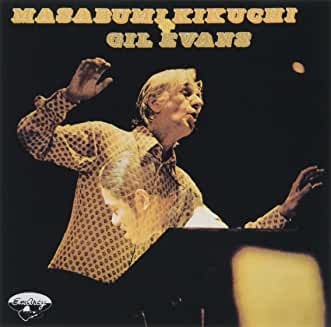
Fifty Years Ago Today: Masabumi Kikuchi + Gil Evans

I first experienced pianist, keyboardist and composer Masabumi Kikuchi in 1981 on his American solo debut Susto (Columbia). Back then it was a riveting experience. Unlike anything I had ever heard before, Susto seemed to promise how exciting fusion jazz could be in the eighties. Masabumi Kikuchi would later be heard stateside in his Tethered Moon trio. But he’s had an extended discography of Japanese-only releases, including Masabumi Kikuchi + Gil Evans , recently reissued on CD on the fiftieth anniversary of its recording.

The legendary Gil Evans (1912-88) was always known – and revered – among listeners more for his successes with Miles Davis (Birth of the Cool, Porgy and Bess, Sketches of Spain) than his own recordings. In a career dotted with only the occasional studio date under his name, perhaps only Evans’s 1961 masterful Out of the Cool stands out.

But Evans helmed other such notable studio dates as the superb The Individualism of Gil Evans (1964), two sets with the great French band leader Laurent Cugny late in Evans’ career and this very special one with the hugely underrated Japanese pianist and composer Masabumi Kikuchi.

Kikuchi (1939-2015) first met Evans during a February 1972 trip to New York City – where the keyboardist permanently relocated several years later – to record an album with drummer Elvin Jones (the Japan-only trio date Hollow Out).

The two hit it off right away.

Evans asked Kikuchi to coordinate the bandleader’s first-ever four-city tour of Japan in the early part of summer 1972. Evans took two members of his band, trumpeter Hannibal Marvin Peterson and composer and tenor saxophonist Billy Harper. The day before the group’s first concert in Tokyo, Evans, Peterson and Harper recorded several numbers with singer Kimiko Kasai for her Japan-only album Satin Doll.

The following week, on July 5, 1972, Evans and Kikuchi were in a Japanese studio to record what was originally issued as a monumental double-disc set. Although billed as a Masabumi Kikuchi album (the Japan-only disc was originally issued on Kikuchi’s Philips label), this is very much a Gil Evans date…with the ever-respectful Kikuchi seemingly happy to be a special guest on occasional electric piano.

Sadly, though, no one in the States knew anything about this record at the time.

For Evans, MK+GE comes in between the studio-set Where Flamingos Fly - likely recorded for Capitol Records in 1971 but not issued until 1981 by the mail-order Artist’s House label and later on CD by A&M – and the well-regarded Svengali (Atlantic/1973), an album title that serves as an absolutely apt anagram of Gil Evans.

Kikuchi, who got his start as pianist in Sadao Watanabe’s band, was no stranger to playing with Americans. He’d already been heard with Charlie Mariano, Oliver Nelson, Gary Peacock (who would later factor in Kikuchi’s wonderful Tethered Moon trio with Paul Motian) and Joe Henderson. Here, Kikuchi sticks to electric piano, but with a much subtler hand than he was known for elsewhere at the time.

Originally, the double-disc MK+GE roughly reproduced the concert program from the week before, with the Gershwins’ “Gone” not surprisingly gone from the studio set. Unexpectedly opening with a brief but blustery version of Carla Bley’s “Ictus” announces that MK+GE was more about where its leaders stood in 1972, not 1958 – when Evans first waxed “Gone” with Miles Davis.

”Ictus” seems to have been a momentary fixation for Evans. He had waxed performances of Bley’s tune – originally written for the Jimmy Giuffre Trio in 1961 – for Svengali and his 1974 Montreux Jazz Festival performance, but neither version was ever released.

Billy Harper’s dazzling, cinematic yet consummately improvisational “Thoroughbred,” a staple of Evans’s repertoire in the early 70s, gets its second hearing here. Known better in its third recording – on Svengali - this pedigree is among its better iterations. “Thoroughbred” ranks up there with Evans’s own “La Nevada” as a definitive tune in the Evansography.

The intoxicating “Priestess,” another Harper original, opens evocatively with Evans’ ring modulator (and percussion), as though torching a flame, before offering up fiery solos from Peterson, Kikuchi and the composer then winds down in a smoldering flute outro. This is Evans’s first recording of “Priestess,” a tune which didn’t factor on another disc of his until a 1983 (!) release of a 1977 performance, also titled Priestess.

Worth noting here is the unusually protracted outros this album affords many of its songs. It’s the sort of thing most American record companies would typically fade out on. Not here. There is a sense of belonging in these outros, as though they were a necessary part of the songs’ arcs; the last act of a compelling short story by a Japanese novelist.

Evans’s own “Love in the Open” is, typically for him, more sketch than painting. The song first appeared on an absolutely underrated 1970 Ampex disc that was later reissued as Blues in Orbit by the German Enja label. At least here, “Love” feels like a mad mix of Lee Morgan’s “Search for the New Land” as if arranged by West Coaster Gerald Wilson and played by Sun Ra’s Arkestra. How great is that?

If Kikuchi sits out “Love in the Open,” then he takes a star turn on his own Evanescent “Drizzling Rain.” Superbly scored – with Evans beautifully employing Michiko Takahashi’s marimba to underpin the melody – Kikuchi seems to pluck Charles Lloyd’s “A Rose for Booker” for a more ornate garden of his own. Kikuchi first performed “Drizzling Rain” (as “Drizzing Rain”) on his 1970 album Collaboration with Sadao Watanabe, an album that also features “Lunar Eclipse,” another Kikuchi piece Evans often played.

Like “Ictus,” the stark and ever-so brief “Eleven” bookends the original program. It is another feature for Kikuchi’s electric piano. Credited to Evans and Miles Davis, “Eleven” is more of a lick to riff on than a full-fledged melody. This is Evans’s first recording of the bit, likely fashioned in the late 60s for an unreleased Miles Davis project.

When MK+GE was first issued on CD in 1989 (now on the EmArcy label), a second, equally long and seemingly more percussive take of “Love in the Open” was added. Also added was the genuine surprise of Billy Harper’s “Cry of Hunger.”

While both tunes were likely excluded from the original album due to Kikuchi’s more backgrounded presence, it turns out that this “Cry of Hunger” is the song’s first-ever recorded performance. Harper’s noteworthy original would not be heard by listeners until 1973 – on both Evans’ Svengali and the composer’s solo debut Capra Black.

Kikuchi permanently relocated to New York City around 1976, playing and recording with many musicians associated with Miles Davis in the seventies. Recordings around this period (1976-82) sound particularly Milesian and are well worth checking out. (Legend has it that the then-“retired” Miles and Kikuchi recorded together in 1978 – the results of which have never been released.)

Kikuchi also reunited with Evans during this period and can be heard on such later Evans recordings as Gil Evans Live at the Royal Festival Hall London 1978 (1979 – and never issued on CD) and both volumes of Live at the Public Theater (New York 1980) (1980 – which Kikuchi himself produced for the Japanese Trio label).

Throughout, MK+GE boasts the elegance of precision of earlier Evans recordings that was so often and likely intentionally absent on later recordings – even the all-too uneven RCA studio sets. The ferocity of the three primary soloists balances out any pretensions to prettiness or orderliness.

It is yet another example of the superb fusion of American and Japanese jazz players that too few Americans knew about at the time - and a real joy.