Saturday, August 13, 2022

Rediscovery: Joe Beck - "Beck"

Mark Cathcart’s Creed Taylor Produced site recently and memorably celebrated the life and legacy of the vastly under-appreciated guitarist, composer and arranger Joe Beck (1945-2008). Beck, a prominent yet little-known jazz contributor and a brief but successful part of the Creed Taylor legacy, had a fascinating career and, in Beck, an unusually strong record. After some discussion with Mark about Beck and Beck, I realized I may have disregarded both for a number of reasons. I went back to Beck, the guitarist’s all but forgotten 1975 CTI/Kudu album, and discovered much that I had not heard – or listened for – before.

I.

Guitarist Joe Beck’s 1975 album Beck is pure curio. The record is named for the guitarist, yet it is dominated by alto saxophonist David Sanborn. In Beck’s own discography, it sounds like nothing that came before and nothing he did after. Even as a CTI/Kudu album, Beck sounds different; as though the classic “CTI sound” was beginning to transition in to something else, something new.

Surely, an easy case could be made that Beck is one of the first Taylor-produced – if not one of the first, period – “smooth jazz” albums ever recorded.

Although Taylor is often criticized for the smoothing of jazz from the very beginning – especially during the Wes Montgomery days – much of what he was producing then and during this period sound nothing like the radio-friendly pretty music heard in the eighties and beyond.

Taylor’s productions at the time for, say, Bob James and Grover Washington, Jr., while surely popular crossover successes, were still pretty strong on meaty jazz content. Beck, too, is strong on jazz – but it is a smoother, more radio-friendly brand of jazz: one that strangely featured no single releases.

Beck seems to want to make more of a case for Beck the composer while keeping mostly mum – especially for this guy – Beck the guitarist. This is pretty amazing for a guitarist who always stood out elsewhere, as much for his well-rounded adaptability as for his amplification. But there may be a reason for this. More on that later.

A blindfold-test listener would surely recognize that this album belongs firmly to alto saxophonist David Sanborn – heard here several months before the release of his own solo debut, Taking Off. Indeed, this album was released several years later as Beck & Sanborn (with a different cover), which, thanks to its sole domestic CD release in 1987, is how it’s known today. Changing the title was obviously done to cash in on the saxophonist’s then-growing popularity but it really is as much Sanborn’s record as it is Beck’s.

Whether Sanborn’s star turn here was intentional or not, the album is properly considered the result of the man whose surname is prominent on the original album cover, Joe – not Jeff – Beck. That particular surname further begs the question: is the title an accidental coincidence or sly marketing gimmick? (Jeff’s Blow by Blow was released two weeks after Joe’s Beck was recorded.)

II.

Joe Beck (1945-2008) had gigged around New York City since at least the mid-sixties. He also factored on several early CTI sessions from this period, including Paul Desmond’s classic Summertime and J &K’s Betwixt and Between (both 1969).

This Beck had the distinction of being the first guitarist ever employed by both Gil Evans and Miles Davis. Still, Beck’s recordings with Davis, from 1967 and 1968, were considered failures (although they are not). These recordings, including the epic drone “Circle in the Round” and Evans’ ethereal “Falling Water,” were not released until many years after the fact, leading many to believe that John McLaughlin was the trumpeter’s first guitarist.

While Beck’s star was likely dwarfed by yet another British guitarist, he seemed more obviously to come up in the shadow of fellow American guitarist Larry Coryell. Although the two guitarists paired up on two albums in the late seventies, the late-sixties belonged to Coryell, credited at the time for being among the first to popularize the injection of the youthful rock sound in to the staid sense of jazz.

Beck was doing his part to update the old-fashioned sound of jazz with the new-fangled jangle of rock. Indeed, his approach arguably bests Coryell’s in passion, fire and grace and adapted particularly well to the front or back of any progressive band.

Myth has it that Beck got so sick of the business in the early seventies (code for something else?), he “retired” from music for farming. But scrolling through his discography finds no such break.

Beck was an active studio musician during these years, essentially serving as house guitarist for both the Prestige and Flying Dutchman labels. Indeed, it was for Bob Thiele’s Flying Dutchman that Beck waxed the Richard Davis Trio’s remarkable 1973 album Song for Wounded Knee (with Jack DeJohnette), which remains one of the guitarist’s finest moments on record.

It was also in 1973 that Beck joined saxophonist and flautist Joe Farrell’s band. Farrell (1937-86) was recording for CTI Records at the time. While Creed Taylor had previously captured Farrell in all-star settings (his 1970 CTI debut, Joe Farrell Quartet, featured both the aforementioned McLaughlin and DeJohnette, himself a CTI All Star at the time), the reed player – like fellow CTI All Star Freddie Hubbard – wanted to record more with his own band. It was this Joe’s wish that brought that Joe to CTI.

Beck, the guitarist and the composer, features prominently – practically as co-leader – on Farrell’s rightly-titled Upon This Rock (whose title track is a bravura moment for Beck and numbers among this listener’s favorite CTI moments) and Penny Arcade (both 1974) as well as the 1975 album Canned Funk.

But it was probably Beck’s appearance on Idris Muhammad’s 1974 Kudu classic Power of Soul that really caught Creed Taylor’s attention. Among this album’s many notabilities is Beck’s memorable composition “The Saddest Thing.”

What likely struck a real chord with Taylor during these sessions, however, is the profound spell Beck weaves on Muhammad’s Bob James-arranged cover of Jimi Hendrix’s “Power of Soul.” Here, Beck spins gold by nearly singled-handedly turning Jimi Hendrix’s soulful rocker into a powerful jazz statement.

Not even The Gil Evans Orchestra Plays Jimi Hendrix - from the same year and notably featuring David Sanborn – had anything this powerful or inspired to say on Hendrix’s value to jazz (later Evans covers of Hendrix would vastly improve on what I consider to be an otherwise tepid and otherwise indifferent record).

Surprisingly, nothing on Beck compares with what Beck brought to either “Upon This Rock” or “Power of Soul.” But that may well have been the point.

By the mid-seventies, the guitar gods were tiring of the loud and showy pyrotechnics of whatever constituted rock guitar. By 1975, Jeff Beck was leaning in to fusion (brilliantly on 1976’s Wired) while Eric Clapton was headed straight over to pure pop. Even John Mclaughlin swapped out his electric axe for an acoustic one for his Indian fusion band Shakti. At the same time, Joe Beck seems here to have wanted to focus his writing and playing on melody. It’s fair to say, on Beck, he succeeds.

III.

Recorded in March 1975 and released in May of that year, Beck comes between the guitarist’s only other major-label offerings: 1969’s mod-rockish Nature Boy (Verve Forecast) and the about-face of 1977’s disco-y Watch the Time (Polydor). Neither of those other records have ever appeared on CD and feature precious little that could be considered jazz.

Both, however, offer something of musical interest: the former with “Spoon’s Caress” and “Please Believe Me,” displaying Beck’s Lindsey Buckingham-like pop finesse and prowess on guitar and the latter with exceptional electric fusion turns on “Polaris” and “Dr. Lee.”

Kismet is hardly at work here. But consider this: whoever conspired to team Beck with Sanborn (obviously Creed Taylor – or someone advising him) could only cite Gil Evans as the through-line for this paring.

Beck was with the bandleader from 1967 to 1971, while Sanborn served in Evans’ orchestra between 1973 and 1975. Both appeared sporadically in the Evans orchestra thereafter. Additionally, Taylor himself worked with Evans from the late-fifties through the mid-sixties, notably waxing the landmark Out of the Cool for Impulse in 1960.

During this period, Beck and Sanborn both worked on Hubert Laws’ CTI album The Chicago Theme, recorded and released around the same time as Beck, and would go on to work on such CTI/Kudu fare as Esther Phillips’ Beck-arranged hit What a Diff’rence a Day Makes, Don Sebesky’s “The Rape of El Morro, and a couple of the better tracks off Idris Muhammad’s House of the Rising Sun - all 1975. Then, remarkably, nothing else together ever again.

Beck features the same core rhythm section that factors on Sanborn’s own Taking Off: guitarist Steve Khan, keyboardist Don Grolnick, bassist Will Lee and drummer Chris Parker. Beck even appears – almost as anonymously – on that album’s “Funky Banana.”

Interestingly, Sanborn’s Warner Bros. album was mostly arranged by former James Brown-arranger David Matthews, who himself would join the CTI family several months later, arranging Ron Carter’s sole Kudu outing, Anything Goes (also featuring Sanborn and Grolnick). Matthews’ signature is all over CTI for the next few years after that.

Beck opens with the familiar “Star Fire,” originally heard as “The Saddest Thing” on the Idris Muhammad album. It’s a lovely, though particularly melancholy song – especially here – that deserved much better than it ever got. David Sanborn delivers his finest signature brand of soul, but his domination tends to undermine Beck’s own musical signature. Surprisingly, this song, in either iteration, received no single release and never saw much in the way of covers or samples.

What follows is surely among the disc’s highlights. Don Grolnick’s sinewy “Cactus” – another ideal single choice that never was – brings Beck back to the fore: the guitarist takes the lead (while Sanborn takes on the refrain) and offers a commanding guitar solo that suggests the direction session contributor Steve Khan would pursue several years later in his own solo career. To these ears, “Cactus” would have made a much stronger set-opener than “Star Fire.”

“Cactus” did get covered later by guitarists Hiram Bullock (1986 – also with Will Lee) and Drew Zingg (2012 - again with Lee). It was additionally covered by the Brecker Brothers in a live recording from May 1976 with composer Grolnick, Khan, Lee and Parker in attendance but not released until nearly four decades later, in 2015. Curiously, Sanborn factors on both the Bullock and Brecker Brothers discs noted here but in neither case on “Cactus.”

Grolnick himself would come back to Beck for the guitarist’s 1984 humdinger Friends, the closest thing to a Beck sequel there is in all of Beck’s discography. In other words, Friends is worth tracking down.

Beck’s other contributions include the bluesy “Texas Ann,” the funky “Red Eye” (boasting Beck’s adroit compositional flair, something akin to fellow guitarist John Scofield) and the swampy “Brothers and Others” (with pianist Grolnick sounding like a cross between Dr. John and Richard Tee). Each is well conceived and performed, but sound positively underwhelming as presented.

Perhaps it’s merely a matter of programming: if you shuffled the place of “Brothers and Others” with “Red Eye,” which has a stronger set-closer vibe, things might have made more sense.

Beck stripped these tunes bare on later recordings, revealing a particularly melodic beauty beneath: “Texas Ann” and “Red Eye” on Beck’s lovely Finger Painting (1995) and “Brothers and Others” on Joe Beck Quartet with Lou Marini Recorded Live in Biel, Switzerland (2001).

One of the more interesting features here is the funky blues of tenor saxophonist Gene Dinwiddie’s “Café Black Rose.” Guided by Steve Khan on steel guitar (!), this, too, is dominated by Sanborn – who likely brought the tune to the date, suggesting a surprising prominence in the planning of the record.

”Café Black Rose” originally appeared on proto-rapper Lightnin’ Rod’s 1973 album Hustler’s Convention (which featured CTI contributors Eric Gale and Richard Tee on other tracks). It’s a surprising inclusion, but one that works especially well under the circumstances.

IV.

Beck performed, well, poorly. It likely got lost in the glut of albums CTI/Kudu was issuing at the time (Hubert Laws’ better-known The Chicago Theme - its title track was something of a minor disco hit – and Paul Desmond’s well-regarded Pure Desmond were issued around the same time). And all evidence points to the fact that nothing much was done to promote it. Perhaps that new “smooth” sound worked against its easy acceptance.

While Beck deserved no such fate, David Sanborn, of course, went onto a highly successful solo career – at another label that itself would come to bedevil Creed Taylor. Beck went on to score the forgotten 1976 film Goodbye Norma Jean and work with Michel Legrand, Lena Horne, Frank Sinatra and Gloria Gaynor – mostly as accompanist, arranger, producer or all three.

Indeed, Beck scored several hits with fellow Kudu artist Esther Phillips, notably on her chart-topping disco take of “What a Diff’rence a Day Makes.” But he showed no appetite for working under someone else’s expectations. Beck abandoned CTI almost as quickly as he showed up. Even on Beck, one senses Beck sought to find the right place to fade.

In 1979, CTI reissued Beck, with its unusual (for CTI) and intriguing cover art by Abdul Mati Klerwein (the artist behind the iconic covers for Miles Davis’ Bitches Brew and Santana’s Abraxas, among many others), as Beck & Sanborn, replaced by a Pete Turner-like cover image by color photographer Mitchell Funk.

It’s difficult to say if this reissue did much to change the original album’s status or popularity, but its retitling had much to do with making Sanborn at least the co-star of the show; something Sanborn would have appreciated much more than Beck.

Eight years later, Beck & Sanborn was reissued in the US and Europe on CD, with two unissued tracks added to the original LP’s six-track line up. One or both of these tracks likely account for the June 25 recording date listed in that CD’s liner notes.

(My CTI discography erroneously indicates Don Sebesky’s overdubs on three tracks account for the June date – an impossibility as the Beck album had already been issued several weeks before.)

Was CTI planning a Beck or Beck & Sanborn sequel? Possibly. But it’s impossible, at least at this point, to know why such a project was considered and abandoned, with only two additional Beck and Sanborn songs making it out of the gate. But they’re absolutely worth hearing and knowing a little more about.

First up is the outstanding Beck original “Ain’t it Good.” If this was recorded during the March sessions, it is unconscionable that it was left off Beck. It would have made a sufficiently compelling single release from an album that amazingly yielded no single at all.

The guitarist wound up re-recording the song as “Ain’t it Good to Be Back Home” for his 1977 Beck follow-up, Watch the Time - itself a noteworthy performance, yet one that, too, never found its way on to a 45 release.

The other previously unissued track here is “Spoon’s Theme,” another of Gene Dinwiddie’s tunes from Lightnin’ Rod’s Hustler’s Convention (known there simply as “Spoon”). These ears don’t hear Grolnick doing Richard Tee, but Richard Tee doing Richard Tee – likely aligning the song with the June date.

It may be of interest to some that another of Dinwiddie’s songs, “Love March,” was covered in 1972 by the Swedish flautist Jayson Lindh (a.k.a. Björn J:son Lindh) on his CTI-distributed album Ramadan (it was also a single release).

“Love March” was originally written for the Paul Butterfield Blues Band, which at that time featured Dinwiddie and no less than David Sanborn himself. The song originally appeared on the group’s 1969 album Keep on Moving and was performed on August 18, 1969, at the Woodstock Music Festival by the Butterfield Blues Band with Dinwiddie and Sanborn in tow. Clearly, by Beck, Sanborn was headed in a different direction.

I confess this is a long road to take in appreciating an album I never really paid much attention to. Perhaps it is my way of atoning for my negligence. In my defense, I let the contrived “sound” of Beck crowd out the more meaningful music of Beck.

Beck “sounds” like other CTI records RVG recorded around this time – maybe even more so. It is a signature RVG devised specifically for CTI around 1974 that severely muffled acoustic instruments such as piano, bass and drums – and the exact opposite of the annoying echoey sheen RVG would hone for other labels in the 90s and beyond.

But it is the music and its makers that make Beck, or, if you like, Beck & Sanborn matter. It is one of guitarist Joe Beck’s most enjoyable yet accomplished records – and it stands as one of the finest showcases for saxophonist David Sanborn outside of his own records.

Sunday, July 24, 2022

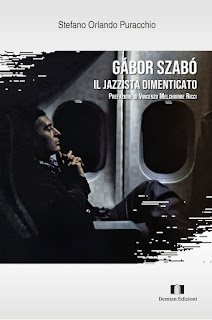
Stefano Orlando Puracchio Presents “Gábor Szabó – il jazzista dimenticato” - September 10, Budapest, Hungary – Special Guests The Ádám Török-Ádám Fehér Duo

The esteemed Italian Cultural Institute of Budapest has announced that Stefano Orlando Puracchio will present his magnificent book Gábor Szabó – il jazzista dimenticato on September 10, 2022, at one of the most prestigious houses of art and culture in Hungary, the Virág Benedek Ház.

The bilingual event presents the first-ever Italian-language book about the great Hungarian guitarist in the very storied city of his birth, youth and all-too early death.

Ádám Fehér and Ádám Török

Special musical guests include flautist/vocalist Ádám Török, dean of Hungarian prog-rock and founder of the jazz-rock group Mini, along with guitarist Ádám Fehér, performing a selection of material associated with Gábor Szabó. Török, who played with Gábor in a 1974 jam session, regularly features Szabó-related material in his repertoire. Bassist and collaborator of Italian jazz magazine JAZZIT Andrea Parente is also set to appear.

“Gábor Szabó – il jazzista dimenticato” – “The Forgotten Jazzman” in English and “Az elfeledett jazzman” in Hungarian – was published by the Italian press Demian Edizioni earlier this year, marking the fortieth anniversary of the guitarist’s death. Stefano’s book not only memorializes the life and musical journey of Gábor Szabó, but reveals just how influential and meaningful the guitarist’s legacy has become over the last four decades.

Stefano Orlando Puracchio

Stefano’s book beautifully serves as a tonic for or corrective to the myths and marketing that grew – with or without Gábor’s consent – around the guitarist and likely stifled the way people heard his music. While Szabó’s highs and lows necessarily factor into any study of the guitarist, Stefano looks beyond labels like “exoticism” (or “esotism”) and “gypsy” that marginalize or “other”-ize Gábor Szabó.

The event is by invitation only. But if you are in Budapest on September 10 and can visit the Virág Benedek Ház, you are encouraged to stop by. If seats are available, you will be welcome to attend. This is sure to be a great celebration of Gábor Szabó’s music and the incredible legacy he left behind.

Viva Gábor Szabó and folks like Stefano Orlando Puracchio who keep this great guitarist’s music and legacy alive.

Saturday, July 09, 2022

Complete Recording Sessions of Rudy Van Gelder (1953-2011)

As a jazz researcher and serial discographer, I have relied on and been grateful for the great chroniclers and documentarians of recorded jazz. Not only is it an art to present a cohesive document of the messy history that makes up any one record, much less a whole body of recordings, it is a lot of work. A lot.

It takes much more effort than mere crate digging. Discographers are historians, pure and simple.

Those who have mastered this art are not especially well known among listeners who just want to enjoy the music. But for those of us who want to know more about who makes the music, how and when it is made and who else peoples the musical universe (in this case, jazz), discographers are teachers and their discographies are essential texts.

During my years of searching, digging and wanting to know more, I have relied extensively on the great work of Walter Bruyninckx, Michel Ruppli and Tom Lord. While their books are often expensive and found only in better libraries, I thought it necessary to own Ruppli’s Prestige, Verve and (with Michael Cuscuna, himself a great historian) Blue Note discographies and annual (or, for me, occasionally annual) updates of Tom Lord’s The JAZZ Discography on CD-ROM.

Such mad compunction made me shell out sixty bucks for Michael Malott’s Complete Recording Sessions of Rudy Van Gelder (1953-2011). Apparently first published in 2017, I wondered how I had never even heard of this “print on demand” book.

Rudy Van Gelder (RVG) factors in a huge amount of the work I have chronicled and a “complete recording sessions” of his is of significant interest to me. Imagine my surprise, then, when I accidentally stumbled over this listing on Amazon – incidentally, while searching for something completely different. After some internal debate about just how “complete” a nearly 500-page book on RVG could be, not to mention the price tag, I went ahead and clicked “Buy Now.” I was better off to “buy no.”

This is a maddening book.

It is hopelessly incomplete and contains almost no information that hasn’t been readily available elsewhere for years. A simple search for Rudy Van Gelder on Discogs yields 4611 (as of this writing) Technical credits.

While this number includes mixing and mastering credits that are not necessarily recording sessions, Malott’s book lists far less. I would guess somewhere around 1500 sessions – clearly on the low side – but I don’t know because Malott neither numbers his sessions, nor, worse, indexes anything.

Malott doesn’t bother to explain how he researched his subject or where he got any of his information. Much of it could have come from Ruppli’s Prestige and Blue Note books. The rest could have come right off the internet.

Since the word “complete” is in the title, I was counting on Malott to have worked with Van Gelder himself (or Maureen Sickler, RVG’s assistant for many years) in gathering the detail, either from RVG’s notes over the years or logs he might have kept. Nope. As there are no acknowledgements in the text – a common feature of any historian’s work – there is likely no reason to believe Malott consulted with RVG at all.

There is so much wrong with this book. Let’s start with the title. First, there is nothing “complete” about Malott’s text. We’ll get to that. Next, the book chronicles not “recording sessions” but actual released recordings. While Malott generally indicates any disc’s various dates, it doesn’t show how RVG recorded – or re-recorded – multiple artists on any one day.

In other words, this “complete” book wholly lacks any unissued, abandoned, overdubbed, corrective or replacement recordings, no singles (or, for that matter, any pop recordings)…all the messy details that go into a carefully engineered recording.

Here is how much completeness I was willing to delve in to. I am sure there is so much more:

Vox: Malott briefly notes early on that RVG mastered dozens of recordings for the budget classical label, Vox Records. Many of these records were cheaply recorded in Europe and American concert halls and Van Gelder was hired to clean them up. In the fifties, Vox, Blue Note and Prestige were RVG’s biggest clients, essentially building his business and cementing his legendary reputation.

But RVG also recorded a number of the Vox label’s smaller groupings (solo, duo and trio discs), something Malott acknowledges but never properly identifies. Of those Vox titles – like Kenny Clarke’s Spotlight on Percussion (1955), Holidays for Percussion (1958) and Josquin des Pres’s Choral Works (1960) – none are identified here.

Creed Taylor, Part 1: None of the first three known (to me) collaborations between RVG and Creed Taylor are listed here: Jazz at the Metropole (Bethlehem, rec. May 1955), Charlie Mariano (Bethlehem, rec. June 1955) and Urbie Green’s Blues and Other Shades of Green (ABC-Paramount, rec. October 1955).

Here, RVG-Creed Taylor’s first listed collaboration is Jimmy Raney’s The Fourmost Guitars (ABC-Paramount), recorded not on May 4, 1955, as Malott reports, but on May 4, 1956. The first correct RVG-Taylor listing here is the October-November 1960 Winding/Johnson Impulse recording The Great Kai & J.J..

Creed Taylor, Part 2: Shortly after launching the Impulse label, producer Creed Taylor left to head up the MGM-owned Verve Records in 1961. While there, Taylor worked with a variety of engineers – often generically credited to “Director of Engineering – Val Valentin” – but he also worked often with RVG.

While several of Taylor’s earliest and better-known Verve productions recorded by RVG are included here (Jimmy Smith’s Bashin’ and Johnny Hodges’s Blue Hodge), quite a few are not.

These include Dizzy Gillespie’s Perceptions (1961), Johnny Hodges, Soloist/Billy Strayhorn/The Orchestra (1961), Gene Ammons and Sonny Stitt’s Boss Tenors in Orbit (1962), Shelly Manne and Bill Evans’s Empathy (1962 – recorded in New York City, but by RVG) and Kai Winding’s Suspense Themes in Jazz (1962 – also recorded in NYC, partially by RVG).

These were the only ones I was willing to look for. I’m sure there are more.

A&M/CTI: Of the nearly three dozen titles RVG recorded for Creed Taylor’s A&M/CTI imprint between 1967 and 1970, only 10 are listed here: the two by Antonio Carlos Jobim, three by George Benson, two by Paul Desmond and the two by Quincy Jones (one not credited to Taylor).

Surprisingly listed here – given all else not going on in this text – are the first two independent CTI releases: Hubert Laws’s Crying Song and Kathy McCord’s eponymous disc.

CTI Records: RVG recorded the bulk of Creed Taylor’s output on the CTI, Kudu and Salvation labels – particularly in the label’s first decade. (Notably, I should add, using obviously different techniques than those that define his Blue Note and Prestige dates.)

While Malott lists a few of these discs – which he dismisses as “financially successful but not always well received by critics” – more than a few CTI sessions are missing here. Between 1970 and 1975, Malott omits no less than 45 CTI LPs.

Also missing are an additional 22 titles RVG recorded – in full or part, including overdub sessions – for the CTI label between 1977 (a year when RVG was supposedly contracted exclusively to CTI) and 1993. The only disc listed during this period is the 1982 Studio Trieste, credited to Chet Baker, Jim Hall and Hubert Laws.

My count doesn’t even include the many CTI titles mixed or mastered by RVG that were recorded at other studios during this period.

Muse/HighNote: There are 30 some titles RVG recorded for Joe Fields’s Muse Records between 1977 (when funds began drying up at CTI) and 1981 (when I stopped counting . . . and a year this book lists a measly two recordings) that are not included here. Again, this does not count any of the Muse titles mixed or mastered by RVG, recorded at other studios during this period.

In what is little better than an utter disregard for RVG’s later work, hardly any of RVG’s many Muse recordings (through 1994) are listed here. And only five of RVG’s many recordings for Fields’s later HighNote and Savant labels (from 1997 on) are here – all by pianist Cedar Walton.

Criss Cross Jazz: Between 1984 and 1991 – accounting for a mere twelve pages of text in Malott’s book – RVG recorded a series of discs for the Danish Criss Cross Jazz label. While several Criss Cross discs are listed here, there are 18 titles I counted that RVG recorded for such artists as Benny Green, Mike Ledonne, Brian Lynch, Ralph Moore, Jim Snidero and others not included.

Indeed, Malott devotes five more pages of text to RVG’s 1960 recordings than he does to all of RVG’s work between 1980 and 2011. There are less pages devoted to those later years – 27, in fact – than years themselves. (And why stop at 2011? Van Gelder worked actively up until his death, the year before this book was published.)

After all this, I gave up spot checking any of Malott’s Blue Note and Prestige listings. At first glance, though, they look mostly right and complete; to his credit, Malott even notes sessions that weren’t released until many years after their original recordings. But, again, this information was readily available elsewhere.

Another frustration of this book is that Malott notes session producers (mostly correctly, though he mistakenly credits Val Valentin as producer of Gary McFarland’s 1964 Soft Samba) and musicians – but no song titles recorded at those sessions. Granted, this would make for a much longer book.

But such an encyclopedia is the reason anyone would want to consult a book like this in the first place.

There is room in this world – and a need – for the complete recordings of Rudy Van Gelder. It might even take more than one volume to make such a meaningful case for the man Malott properly cites as the one “behind the magic of practically every major jazz recording.”

But that’s about all you get here: the notable and already well-noted major jazz recordings. This poorly sourced and presented book is anything but the “complete recordings of Rudy Van Gelder.”

Tuesday, July 05, 2022

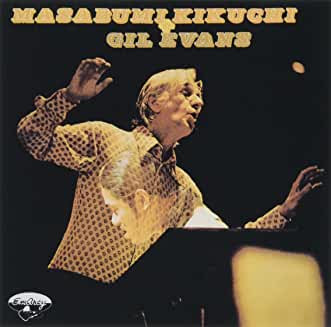
Fifty Years Ago Today: Masabumi Kikuchi + Gil Evans

I first experienced pianist, keyboardist and composer Masabumi Kikuchi in 1981 on his American solo debut Susto (Columbia). Back then it was a riveting experience. Unlike anything I had ever heard before, Susto seemed to promise how exciting fusion jazz could be in the eighties. Masabumi Kikuchi would later be heard stateside in his Tethered Moon trio. But he’s had an extended discography of Japanese-only releases, including Masabumi Kikuchi + Gil Evans , recently reissued on CD on the fiftieth anniversary of its recording.

The legendary Gil Evans (1912-88) was always known – and revered – among listeners more for his successes with Miles Davis (Birth of the Cool, Porgy and Bess, Sketches of Spain) than his own recordings. In a career dotted with only the occasional studio date under his name, perhaps only Evans’s 1961 masterful Out of the Cool stands out.

But Evans helmed other such notable studio dates as the superb The Individualism of Gil Evans (1964), two sets with the great French band leader Laurent Cugny late in Evans’ career and this very special one with the hugely underrated Japanese pianist and composer Masabumi Kikuchi.

Kikuchi (1939-2015) first met Evans during a February 1972 trip to New York City – where the keyboardist permanently relocated several years later – to record an album with drummer Elvin Jones (the Japan-only trio date Hollow Out).

The two hit it off right away.

Evans asked Kikuchi to coordinate the bandleader’s first-ever four-city tour of Japan in the early part of summer 1972. Evans took two members of his band, trumpeter Hannibal Marvin Peterson and composer and tenor saxophonist Billy Harper. The day before the group’s first concert in Tokyo, Evans, Peterson and Harper recorded several numbers with singer Kimiko Kasai for her Japan-only album Satin Doll.

The following week, on July 5, 1972, Evans and Kikuchi were in a Japanese studio to record what was originally issued as a monumental double-disc set. Although billed as a Masabumi Kikuchi album (the Japan-only disc was originally issued on Kikuchi’s Philips label), this is very much a Gil Evans date…with the ever-respectful Kikuchi seemingly happy to be a special guest on occasional electric piano.

Sadly, though, no one in the States knew anything about this record at the time.

For Evans, MK+GE comes in between the studio-set Where Flamingos Fly - likely recorded for Capitol Records in 1971 but not issued until 1981 by the mail-order Artist’s House label and later on CD by A&M – and the well-regarded Svengali (Atlantic/1973), an album title that serves as an absolutely apt anagram of Gil Evans.

Kikuchi, who got his start as pianist in Sadao Watanabe’s band, was no stranger to playing with Americans. He’d already been heard with Charlie Mariano, Oliver Nelson, Gary Peacock (who would later factor in Kikuchi’s wonderful Tethered Moon trio with Paul Motian) and Joe Henderson. Here, Kikuchi sticks to electric piano, but with a much subtler hand than he was known for elsewhere at the time.

Originally, the double-disc MK+GE roughly reproduced the concert program from the week before, with the Gershwins’ “Gone” not surprisingly gone from the studio set. Unexpectedly opening with a brief but blustery version of Carla Bley’s “Ictus” announces that MK+GE was more about where its leaders stood in 1972, not 1958 – when Evans first waxed “Gone” with Miles Davis.

”Ictus” seems to have been a momentary fixation for Evans. He had waxed performances of Bley’s tune – originally written for the Jimmy Giuffre Trio in 1961 – for Svengali and his 1974 Montreux Jazz Festival performance, but neither version was ever released.

Billy Harper’s dazzling, cinematic yet consummately improvisational “Thoroughbred,” a staple of Evans’s repertoire in the early 70s, gets its second hearing here. Known better in its third recording – on Svengali - this pedigree is among its better iterations. “Thoroughbred” ranks up there with Evans’s own “La Nevada” as a definitive tune in the Evansography.

The intoxicating “Priestess,” another Harper original, opens evocatively with Evans’ ring modulator (and percussion), as though torching a flame, before offering up fiery solos from Peterson, Kikuchi and the composer then winds down in a smoldering flute outro. This is Evans’s first recording of “Priestess,” a tune which didn’t factor on another disc of his until a 1983 (!) release of a 1977 performance, also titled Priestess.

Worth noting here is the unusually protracted outros this album affords many of its songs. It’s the sort of thing most American record companies would typically fade out on. Not here. There is a sense of belonging in these outros, as though they were a necessary part of the songs’ arcs; the last act of a compelling short story by a Japanese novelist.

Evans’s own “Love in the Open” is, typically for him, more sketch than painting. The song first appeared on an absolutely underrated 1970 Ampex disc that was later reissued as Blues in Orbit by the German Enja label. At least here, “Love” feels like a mad mix of Lee Morgan’s “Search for the New Land” as if arranged by West Coaster Gerald Wilson and played by Sun Ra’s Arkestra. How great is that?

If Kikuchi sits out “Love in the Open,” then he takes a star turn on his own Evanescent “Drizzling Rain.” Superbly scored – with Evans beautifully employing Michiko Takahashi’s marimba to underpin the melody – Kikuchi seems to pluck Charles Lloyd’s “A Rose for Booker” for a more ornate garden of his own. Kikuchi first performed “Drizzling Rain” (as “Drizzing Rain”) on his 1970 album Collaboration with Sadao Watanabe, an album that also features “Lunar Eclipse,” another Kikuchi piece Evans often played.

Like “Ictus,” the stark and ever-so brief “Eleven” bookends the original program. It is another feature for Kikuchi’s electric piano. Credited to Evans and Miles Davis, “Eleven” is more of a lick to riff on than a full-fledged melody. This is Evans’s first recording of the bit, likely fashioned in the late 60s for an unreleased Miles Davis project.

When MK+GE was first issued on CD in 1989 (now on the EmArcy label), a second, equally long and seemingly more percussive take of “Love in the Open” was added. Also added was the genuine surprise of Billy Harper’s “Cry of Hunger.”

While both tunes were likely excluded from the original album due to Kikuchi’s more backgrounded presence, it turns out that this “Cry of Hunger” is the song’s first-ever recorded performance. Harper’s noteworthy original would not be heard by listeners until 1973 – on both Evans’ Svengali and the composer’s solo debut Capra Black.

Kikuchi permanently relocated to New York City around 1976, playing and recording with many musicians associated with Miles Davis in the seventies. Recordings around this period (1976-82) sound particularly Milesian and are well worth checking out. (Legend has it that the then-“retired” Miles and Kikuchi recorded together in 1978 – the results of which have never been released.)

Kikuchi also reunited with Evans during this period and can be heard on such later Evans recordings as Gil Evans Live at the Royal Festival Hall London 1978 (1979 – and never issued on CD) and both volumes of Live at the Public Theater (New York 1980) (1980 – which Kikuchi himself produced for the Japanese Trio label).

Throughout, MK+GE boasts the elegance of precision of earlier Evans recordings that was so often and likely intentionally absent on later recordings – even the all-too uneven RCA studio sets. The ferocity of the three primary soloists balances out any pretensions to prettiness or orderliness.

It is yet another example of the superb fusion of American and Japanese jazz players that too few Americans knew about at the time - and a real joy.

Sunday, June 19, 2022

Rediscovery: Essence All Stars - Afro Cubano Chant

Back in the nineties – a phrase I never imagined writing – drummer and producer Lenny White with producer and author Milan Simich set about putting out a series of jazz “all-star” recordings. There were two on Atlantic – one nominally led by Charles Lloyd and another by Bobby Hutcherson (both wonderful) – several on their short-lived Hip Bop Essence label and one called Chartbusters on Mike Mainieri’s NYC label.

Jazz all-star records date back at least to Norman Granz’s Jazz at the Philharmonic records of the fifties. But White and Simich’s model likely owes itself to Creed Taylor’s CTI All Stars, a group which did summer tours for a few years in the early seventies. Several records resulted from these tours, including the monumental California Concert (1972) and three volumes of the 1972 Hollywood Bowl performances, issued in 1977.

White himself was part of a CTI all-star date, the starry yet underrated studio concoction Fuse One (recorded in 1980 and released in Japan that year, but not issued in the US until 1981). The drummer was also part of one of CTI’s earliest successes, Red Clay (1970) by Freddie Hubbard – the subject of Hip Bop Essence’s 1995 all-star tribute, Hub Art (notably with former CTI All Star and Red Clay bassist Ron Carter).

Recorded in September 1995, Afro Cubano Chant is one of White and Simich’s better “Essence All Stars” dates. It isn’t great, maybe not even all that memorable. But it is an absolutely pleasurable listen and one of the more inspired teamings of musicians the producers devised.

Perversely, the disc is neither credited to the Essence All Stars nor were any of the named players contracted with the (Hip Bop) Essence label. None of the contributing artists are listed on the disc’s cover, so you’d have to do some serious digging if you’re a fan of any of these guys.

But here you have saxophonist Gato Barbieri – who, for some reason, had not recorded for a full decade before this – surprisingly paired with smooth-jazz avatar and former CTI All Star Bob James, as well as the hugely underrated vibraphonist and aforementioned producer Mike Mainieri.

In addition to White on drums, Afro Cubana Chant offers up the mighty Fort Apache Band members Andy Gonzalez on bass and Steve Berrios on percussion – who both have brief CTI affiliations of their own: the former on Charles Fambrough’s The Proper Angle (1991) and the latter on George Benson’s The Other Side of Abbey Road (1970 – also with Bob James).

Lenny White had previously played with Gato Barbieri on the tenor saxophonist’s Fenix (1971) and the more popular crossover albums Caliente! (1976) and Ruby, Ruby (1977 – both of which featured many musicians associated with Bob James at the time). Speaking of James, White factored briefly on the keyboardist’s 1986 disc Obsession.

Additionally, White and Mainieri could be heard together on Norwegian pianist and guitarist Kenneth Sivertsen’s Remembering North (1993) as well as George Garzone’s Alone (1995) while White and Berrios went on to appear together on trumpeter Wallace Roney’s 1997 Village.

James, who, like White, had seemingly played with everyone by this point, had brief sojourns with Mainieri on the keyboardist’s 1978 album Heads and Steve Berrios on Mongo Santamaria’s Red Hot (1979 – both on James’s own Tappan Zee label).

Afro Cubano Chant is a solid mix of straight-ahead jazz classics and strong group originals set in a pleasing Latin mood that would make Cal Tjader and fans of the late vibist proud. It also marks the first time in decades that Bob James was heard exclusively on piano throughout. This one-off session likely inspired James’s choice to go briefly “straight ahead” on the fab trio-set Straight Up, recorded three months later in December 1995. One can only wonder how much more there was from these sessions.

Indeed, it is as a Bob James session that makes this disc most notable. But it is not James who either commands or dominates the proceedings – nor makes it that interesting.

BJ’s one shining moment comes on Horace Silver’s “Nica’s Dream.” Now a jazz standard, Horace Silver’s “Nica’s Dream” was originally written for Art Blakey’s 1956 album The Jazz Messengers (surprisingly, Tjader recorded the tune only once, in 1969). It is, however, a lovely performance and likely inspired James, the pianist, to feature Silver’s “The Jody Grind” on Straight Up.

Inevitably, it is Barbieri’s sax and Mainieri’s vibes that take the lead throughout and, frankly, give the set the energy it has – but not always at the same time. Together, they lead the charge on James’s “Last-Tango”-esque and somehow very James-ish “Mui Tarde Amor” (a piece that deserves much better notoriety in James’s catalog) and White’s interesting, but all-too-little-explored “Casablanca.”

Barbieri factors in his inimitable way on “Cubano Chant” and “Suave” while Mainieri serves up his bona fides on “Tanya” and his own “Los Dos Lorettas” – riffing off Horace Silver’s “Song for My Father” and later covered by the composer on his own An American Diary: The Dreamings and Pools as well as guitarist Kazumi Watanabe’s 2011 disc Lotus Night.

Ideally kicking off with Ray Bryant’s classic “Cubano Chant,” these all-stars already sound firmly in the pocket. The tune, originally written in 1955 for Cal Tjader, quickly became a staple in both Tjader and pianist Oscar Peterson’s repertoire and was covered by many including the George Shearing Quintet, Art Blakey’s Jazz Messengers and composer/pianist Ray Bryant himself.

Lonnie Hewitt’s wonderfully moody “Tanya” was also written for Tjader (the song appears on the vibist’s superlative 1965 Creed Taylor-produced album Soul Sauce) while the lush “Suave,” from bassist Santi DeBriano, who doesn’t appear here but recorded as part of Simich’s 1993 all-star grouping Grand Central, is a wonderful addition that sounds as though it could have come from his terrific 1993 album Panamaniacs.

All told, Afro Cubano Chant makes for great listening, even in the background.

While it’s a shame these guys never recorded together again, a second recording, billed as Afro Cubano Chant Two, was released in 2000, during the waning days of the Hip Bop Essence label. That set brings back only Gato Barbieri for his own “Habotan” and Bob James for a cover of Ernesto Lecuona’s “La Compasara” – neither one together and none with any of the other folks heard here.

There is also a CD recording featuring this exact same line-up titled Auberge du Soleil – Napa Valley California – Jazz on sale for rather outrageous amounts on Amazon and eBay, But it is, l suspect, nothing more than a repackaging of this exact recording.

Monday, May 30, 2022

Rediscovery: Art Farmer with Joe Henderson “Yama”

Forty years ago this month, one of the last of the original CTI releases found its way onto American record-store shelves. But hardly anyone noticed. The shame of it is that Art Farmer and Joe Henderson’s Yama is a terrific record – and one that pointed the way to a new “CTI sound” that could have accorded well in the post-fusion Eighties.

Surprisingly, Yama represents the only time trumpeter Art Farmer had ever recorded with Joe Henderson – though, even here, they may not have been in the studio at the same time. While trumpeter and “flumpeter” (a flugelhorn-trumpet combo) Art Farmer (1928-99) had a busy solo and studio career in the Fifties and Sixties, he had done very little work under the auspices of Creed Taylor, other than several early sessions for Oscar Pettiford, Candido and Quincy Jones.

Yama was the last of five albums Farmer recorded for CTI between 1977 and 1979 (he also appeared on CTI albums by Bob James, Yusef Lateef and the 1990 all-star Rhythmstick). Farmer had been living in Vienna since 1968, yet all but one of his CTI LPs were recorded in New York – excepting the Japanese-only Live in Tokyo.

Remarkably, Yama is one of only a handful of tenor saxophonist Joe Henderson’s (1937-2001) recordings produced by Creed Taylor. Henderson could be heard on a few tracks of George Benson’s Tell it Like it Is (1969), Freddie Hubbard’s Red Clay (1970) and Straight Life (1971 - Hubbard and Henderson had earlier co-led a group called The Jazz Communicators), Ron Carter’s All Blues (1973) and a favorite of mine, Johnny Hammond’s massive Higher Ground (1973).

Curiously, though, Henderson appears on one song from a 1979 Ben Sidran album The Cat and the Hat - arranged and co-produced by Yama’s Mike Mainieri – “courtesy of CTI.” The label’s waning fortunes at the time likely prevented any further releases by Joe Henderson on CTI. But you have to wonder what else may have been recorded and remains unreleased.

Interestingly, both Farmer and Henderson were born in Iowa. But it’s there the similarities end. Farmer got his chops in Los Angeles while Henderson honed his in Detroit and a later stint in the Army. Farmer had long been in New York by the time Henderson arrived in the early Sixties. By then, Farmer’s Jazztet was winding down and his quartet with Jim Hall was kicking into gear.

Henderson made a name for himself on Kenny Dorham’s “Una Mas” and Horace Silver’s hit “Song for My Father, factoring on some 30 Blue Note albums, including five of his own. As Farmer headed off to Europe, Henderson made a string of highly underappreciated records for Milestone between 1968 and 1976, during which time he permanently relocated to San Francisco.

How Farmer and Henderson’s paths ever crossed in the first place is something of a miracle. Yama is that miracle, one of two paths that really should have crossed much more often but surprisingly didn’t. The record was recorded in April 1979 (and there is likely much more than the five tracks heard here) and although it was announced as a forthcoming release later in the year, CTI ran out of funding and this and several other discs were not released stateside. Yama was, however, issued in Japan that year but was not released in the US until May 1982.

The record’s sound and success – and, most likely, its programming – are due in no small measure to the participation of composer, arranger, producer, keyboardist, percussionist, and, oh yeah, vibes player Mike Mainieri. Although, to be fair, drummer Steve Gadd and synthesizer programmer Suzanne Ciani had appeared on all three of CTI’s 1979 productions. Mainieri (b. 1938) made a splash in the Sixties playing the electric vibraphone – sounding as mellifluous as the Fender Rhodes and far less fuzzy than Gary Burton’s electric vibes – but never really broke out the way Burton and Bobby Hutcherson did during those years.

By the late sixties Mainieri began to take an interest in rock: not merely “fusion,” as such but rock. He formed the NYC musical collective White Elephant – featuring many players who would go on to CTI session work, including Warren Bernhardt and Steve Gadd here – and could be heard on later hits by Don McLean, Aerosmith and Billy Joel.

By 1979, Mainieri was doing loads of session work and began producing pop acts like Carly Simon, with whom he produced and co-wrote the 1980 hit “Jesse” (and later orchestrated her magnificent jazz album Torch with the especially haunting “I Get Along Without You Very Well”). Mainieri had also worked with Creed Taylor on productions for Kenny Burrell, Wes Montgomery, Paul Desmond, Urbie Green and, notably, Art Farmer’s previous CTI album with Jim Hall, Big Blues.

While Farmer and Henderson here might have seemed to fill roles that the Brecker brothers would have otherwise occupied, they are both game and deliver the goods – with the force of their by-then wholly distinctive personalities.

The album opens with Clare Fischer’s festive “Dulzura” (Spanish for “sweetness”). It's an inspired choice. Remarkably, for a Fischer melody, this memorable tune, which debuted on Clare’s 1965 album Manteca!, has had almost no coverage apart from Yama and a 1965 cover by the Jazz Crusaders (that also featured CTI stalwart Hubert Laws).

The Bee Gees’ little-known “Stop (Think Again)” (originally on the group’s first post Saturday Night Fever album Spirits Having Flown) elicits the Brothers Gibb’s – particularly brother Barry’s – remarkable ear for strong, albeit unusual melodies.

Joe Zawinul’s peculiar “Young and Fine” had originally appeared the year before on the Weather Report album Mr. Gone, a song which also featured Yama drummer Steve Gadd. Mainieri’s group, Steps (a group seemingly modeled on Weather Report that later evolved in to Steps Ahead), featured a take of “Young and Fine” on its 1981 Japanese-only album Smokin’ in the Pit - also with Yama’s Don Grolnick, Eddie Gomez and Steve Gadd.

Grolnick, long an undervalued composer and a player whose sensitivities mesh to perfection with Mainieri (witness the much later Medianoche), provides his compelling Latinate “Lotus Blossom,” a tune he first recorded on David Sanborn’s 1978 album Heart to Heart (also featuring Mainieri). Michael Franks added lyrics to his 1980 version of the song on the album One Bad Habit while Sanborn and Grolnick would wax the song again on the 1984 album Straight to the Heart.

Closing out the set is “Blue Montreux,” Mainieri’s magnificent title track to a particularly good album co-led by Mainieri and Warren Bernhardt – later billed as “The Arista All-Stars” – and recorded at the July 1978 Montreux Jazz Festival. While it rounds out the album, it seems to call out here for an encore that never comes.

”In Yoga,” the liner notes tell us, “Yama is the first rung on the ladder toward the gateway to self-realization. Yama is also the Japanese word for mountain.” It goes on to say “Yama can be as big as a mountain or as silent as archways in a formal garden.”

Oddly, though, the 1982 American release of the album omits why the album derived this particular title. From the 1979 Japanese release come these additional words, credited to former DownBeat editor Arnold Jay Smith (who also penned the 1995 notes to the CD release of another 1979 CTI album released stateside in 1982, La Cuna by Ray Barretto):

“The Yoga synthesis came to us from an interview Art Farmer gave to CBS Radio in which he echoed his friend Julian “Cannonball” Adderley’s approach to his art.

”’First you get together with yourself. Then you get together with your instrument. Finally, you arrive at direct communication – with the people you are playing with and those you are performing for.’”

That’s what Yama is really all about: good communication. For this listener, Yama is a success that leaves you wanting more. And that’s its only fault: Yama ends after a mere 33 breezy minutes.

Thursday, March 10, 2022

Interview with Stefano Orlando Puracchio

Italian journalist and author Stefano Orlando Puracchio’s latest book, Gábor Szabó – il jazzista dimenticato (The Forgotten Jazzman), is a remarkable survey of the life and art of the legendary Hungarian jazz guitarist. The Italian-language book was published on February 26, 2002 – the fortieth anniversary of Szabó’s death – by the prestigious Demian Edizioni, which had Puracchio interviewed on the occasion of the book’s release. The interview, as translated by me and approved by the author, offers much as to what makes the book a valuable addition to Gábor Szabó’s story...

Last year an essay on Domenico Bini, now you move on to a legend of guitar like Gábor. Are you a schizoid figure or is there a linearity to all of this?

You found me out! King Crimson's "21st Century Schizoid Man" is me! Seriously, there is a kind of linearity. Bini, at first, could be seen by people just like a "strange" YouTube phenomenon. However, he is a more complex figure. Not a professional entertainer, not professional musician, not a true phenomenon. My aim with him was to show people he is more like a raw (actually, very raw) diamond instead of a simple and easy YouTuber, like anybody else. Regarding Szabó, on the other hand, I went back to an old Klingon proverb (alien warriors of Star Trek). There is a saying - quoted in the saga [Star Trek: Deep Space Nine – Ed.] - which says: "In the long run, the ones who can really understand a Klingon are Klingons." I firmly believe that only a person who has a deep connection with Hungary is able to explain to "strangers" figures such as Szabó. The fact of being Italian-Hungarian helped me a lot to "translate" Szabó for an Italian audience. Honestly, I was afraid of the amenities that a person alien to the Magyar culture could have written. So, for both Bini and Szabó, I wanted to arrive there first so as not to discover later what would have caused me very severe heartburn. And some colorful cursing.

This work of yours is the first Italian book on Szabó. How do you explain the historical absence of local interest in him?

It is not the absence of interest from potential readers, but from that of publishers. There is little risk and a tendency to maximize profits. With proposals of safe-playing editorials. Which causes a noticeable flattening of the cultural curve. We curl up on ourselves like this. For heaven's sake, there are still some indomitable "enlightened" publishing houses. But, in general, we work "of entrenchment" and not attack. A shame. Many, perhaps too many, have forgotten about that old ad that said, "If you don't play, you don't win". Leaving the game gambling and returning to music, Frank Zappa said: "Without deviating (from norm) progress is not possible." This is definitely an editorial release which deviates from the norm. It could not be otherwise, as far as I am concerned, since with "progress" and "progressive" I have a long love story in progress. And, in any case, although [Szabó] "deviated" from safe commercial logic, there is a good preliminary confirmation.

More generally, why is [Szabó] a forgotten jazz player?

Szabó was forgotten, despite having reached the mainstream, for two reasons. The first is that he failed to have an active and constant fanbase, which has perpetuated his memory. On the other hand, it is known as the artists were lucky to have loyal fans, they managed to "live" even when they materially disappeared. Then there are other, more specific reasons that I talk about in the text. Let's say Szabó was a sometimes-divisive figure. Despite himself. He has admirers but, at the same time, even detractors. And here we go back to the point before: if you don't have a base of loyal fans, willing to fight for you, the detractors win. Wrongly, since Szabó was a good artist, but they win. With the book I try to rebalance things a little, without hiding the critical issues.

He is also a key figure in understanding the Hungarian music of the Twentieth century. Although he is attributable to the jazz universe, how much of his roots are there in the music he wrote?

Gábor Szabó is a jazz player but is, at the same time, a direct "musical son" of Bartók and Kodály. The essence of Szabó is in his "Hungarianness." The Hungarian guitarist deeply loved jazz music. Perhaps, more than many American jazzmen. However, over the course of his career, he had to come down to pacts between his "Hungarian" soul and his love for jazz. And, for us, luckily, he did it in the best way. Blending the two aspects. In the majority of cases, the merger was excellent. For the rest he was a man too. Do not all a man's outings can be expected to be perfect. And, also Szabó, made his mistakes. Some too daring fusion is present in his discography.

Speaking of mergers. Szabó skillfully re-read many artists, from the Beatles to Burt Bacharach. In what context do you think he expressed himself best as interpreter?

Personally, I love the many reinterpretations Szabó recorded. And we must point out how, as to the Beatles, artistically speaking, Szabó had known it all along. However, the appearance of the "jazz cover" is, for many, one of the critical points of Szabó. If not really THE critical issue. Many fans (musicians and listeners alike) of jazz - which I define jokingly as "the stinkers" - never forgave the Hungarian guitarist for making jazz elaborations of the pop songs he did.

They accuse Szabó of chasing the "sirens" of popularity. To have, essentially, "flirted too much" with commercial music. Without waiting for a hit song “to decant” properly. Opinions, however not shareable, they are always worthy of attention and respect. But ... and here is a but as big as a house ... you can't point the finger at Szabó with this story and then ignore the fundamental contribution that Szabó has brought to jazz. Or, in a nutshell, the lessons of Bartók and Kodály. Why, if you stick him for the (alleged) demerits and you don't talk about his merits, you're not doing a clean thing. We must not praise Szabó too much. But don’t unload tons of mud on the history of pop either. He must be judged for what he really was. Perhaps Szabó is not worthy to sit at the table of the jazz greats. The table of Coltrane, Davis, Peterson, Mulligan and others, so to speak. But he's certainly present at that banquet. Maybe, sitting at a side table. At the head of the table.

America welcomed him, trained him, launched him. According to you, was Gabor purely American or did he retain something of Eastern Europe in his way of being and playing?

I dare say that the United States welcomed and launched him. Szabó's musical formation, though, once he arrived in the United States, was already at a high level. If not, the prestigious Berklee school would have never admitted him. Also, I want to mention the fact that when Szabó followed the "American model," the style of American guitarists, it was not particularly appreciated. For better or worse, returning to what we initially talked about, the key to his success was his "Hungarianness".

Good, because we know he was a virtuoso and talented guitarist. Bad, because the marketing campaign they launched him on as a soloist / leader, that of being "a magician," "a guitar sorcerer" or something "exotic," due to his unconventional style (read: non-American), eventually backfired. He endorsed it because he believed it was useful to do so. To settle down and ensure a decent living for his family. But it was, perhaps, his biggest mistake. I suspect he was seen by many only as a "curiosity," and not representing the cultured musician he was and remains.

The Breezin’ "case." What differences are there in your opinion between the pioneering version of '71 and the triumphal George Benson one?

The difference is only one: Szabó's version - although flawless and played with the legal author of the song - was not successful. Benson’s cover, however, was very successful. In the book I take apart the "fake news" about this song. Some on the internet say that Szabó was envious of the success of Benson. In reality this is not the case. So much so that the two played the song together, following its success.

Inevitable to mention Gypsy Queen. Do you believe the Carlos Santana cover has done well by its author or has it clouded it?

Gypsy Queen was a godsend for Szabó. The copyright allowed him to raise a lot of money. It might seem like a "bad" thing to see it from the point of view of profit. However, I do remember one thing that, at times, escapes many. The artists do not live on air. Gypsy Queen permitted Szabó to settle down and think more calmly about his art. Of course, it didn't make him rich. And the copyrights were not enough to have any sort of "weight" with the record companies. Now, regardless of the economic discourse, Gypsy Queen is a good piece. Not the best Szabó had to offer but it is a good piece. Santana, who was heavily influenced by Szabó's style, decided to make the song "his own.” Which, merged with Black Magic Woman by Peter Green, made rock-music history.

You have involved many professionals on different sides. What is the thread that connects their writings?

The wise men I involved in the project wore no blinders and they have judged and observed Szabó's work without preconceptions. Needless to say, they are all people I respect professionally and personally.

You are half Hungarian. What did it mean for you to confront such a giant?

It represented having to fight for months with the typical accents of the Magyar language. A nightmare. In fact, some accents will have escaped me and I apologize. Returning to the original question, if any oversight occured on my part, I don’t dare imagine what could have happened to others. Ah, yeah ... nothing. Knowing that, generally, the authors who spoke of Gábor Szabó wrote his name without accents. That is, as it is also reported on the discs. Pity that his real name was Gábor Szabó. Indeed, Szabó Gábor! In Hungary, it starts traditionally first the surname and then the name.

Accentuations aside, I would like to focus on the fact that, inevitably, to help Italian readers understand how, where and when the cultural background of Szabó was formed, I was forced to write a sort of Bignami [named for a series of Italian booklets similar to the CliffsNotes student study guides Americans use – Ed.] type of Hungarian history from 1936 (the birth of the guitarist) to 1956 (when Szabó repaired to the United States). I would have liked to do without it.

However, as Hungarian history is little known and complex, it was necessary to show those who know little or nothing about Hungary, the environment in which Szabó was born and lived for his first twenty years of life. Sure, I, too, could ride the wave of the exotic sorcerer that came from one distant land. But I wouldn't have done an artist's memory justice, a talent that deserves to be remembered.

Monday, March 07, 2022

Gábor Szabó – il jazzista dimenticato by Stefano Orlando Puracchio

“Many believe that Szabó is not worthy to sit at the table of the 'grown-ups' of jazz. The table that seats Coltrane, Davis, Peterson, Mulligan…no. However, he is present at the same banquet, perhaps sitting at the head of a secondary table.”

These are the words of Stefano Orlando Puracchio, author of the remarkable new book “Gábor Szabó – il jazzista dimenticato” (The Forgotten Jazzman), the first Italian-language book dedicated to legendary jazz guitarist Gábor Szabó (1936-82).

Beautifully published by the Italian press Demian Edizioni on February 26, 2022 – the fortieth anniversary of the guitarist’s death – Puracchio’s book not only memorializes the life and musical journey of Gábor Szabó, but reveals just how influential and meaningful the guitarist’s legacy has become over the last four decades.

My grasp of Italian is rudimentary at best, but it is easy to pick up on Stefano’s affection for and attention to the entirety of Gábor’s music. Even more interesting to me is that he doesn’t come at Gábor from the “fan boy” frame of mind – as, perhaps, I did. While his style is anything but academic, Stefano handily places Gábor’s music in several relevant contexts.

Here, Stefano aims to dispel some of the myths (or marketing) that grew – with or without Gábor’s consent – around the guitarist and likely stifled the way people heard his music. While Szabó’s highs and lows necessarily factor into any study of the guitarist, Stefano looks beyond labels like “exoticism” (or “esotism”) and “gypsy” (the one thing Szabó biographer Károly Libisch emphatically says Gábor is not) that marginalize or “other”-ize Gábor Szabó.

”I strongly believe that only [those] who have a strong connection with Hungary (blood, love for the Hungarian culture, etc.),” Stefano told me, “have the right keys to understand deeply Gábor's music. The fact I am an Italian-Hungarian journalist gave me the necessary knowledge to avoid invalidating stereotypes. For instance, all the marketing things created to launch Gabor's solo career.

”In short, no magic, no sorceries at all: in Gábor you will find just very good Jazz linked to the lessons of Béla Bartók, Zoltán Kodály and other Hungarian musicians. Gábor is a ‘musical son’ of Bartók & Kodály. The ‘esotism’ in Gábor is not [a] real mystery’ if you know his real musical imprinting and background. Gábor [was] a very good student and researcher before [he became] a talented guitarist.”

Stefano Orlando Puracchio (born Rome, 1980) is a journalist and writer who divides his time between the Abruzzo region of Italy and Hungary. His first book, “Progressive Rock - a guide” (2014), received considerable attention and praise and was followed by two other volumes on the subject, released in 2015 and 2016. The three publications were consolidated in his “Manual Minimo del Rock Progressivo” in 2018.

Stefano has also written the short-story collection “Io e il signor Oz (e altri racconti)” (Me and Mr. Oz [and other tales]) and the novels “Un Maestro Particolare” (2020) and “Caccia al Diablero” (2021). Parallel to the writing of his latest novel, Puracchio published a book of interviews with the Italian YouTube phenom Domenico Bini (or, “Il Maestro,” as his fans call him), entitled “Il Vulcano, Schana Wana e altri mondi musicali” (2021).

In “Gábor Szabó – il jazzista dimenticato,” Stefano brings a truly fresh perspective to the guitarist’s music. He offers unique insight and often witty commentary, making a compelling argument for Gábor’s “place at the table.” In addition to providing a detailed biography of the guitarist (including what Hungary was like when Gábor was growing up there), Stefano offers particularly insightful analysis of select recordings, notably “Lady Gabor” (1963), “The Look of Love” (1968) and even the curious "Keep Smilin" (1976).

When Stefano brings Frank Zappa into the conversation, you note just how much Stefano himself brings to the table. Citing Lester Bangs’ comment that Zappa’s “Transylvania Boogie” (1970) is “in the style of Gábor Szabó,” it becomes curious that the guitarist records his own Bob James-composed “Transylvania Boogie” in 1975. Even better, Stefano marvelously refers to Small World (1972) and Belsta River (1978) as Szabó’s own Shut Up ‘N Play Yer Guitar.

Another of Stefano’s clever takes is this zinger: “Wind, Sky and Diamonds, released at the end of 1967, could be called: ‘we understand the mistakes of Simpático [the 1966 Impulse album Szabó released with Gary McFarland] and we do not intend to repeat them’.” Not sure I agree with the musical quality of that assessment. But what Stefano gets right is that the singers on the former are easier on the ears than the latter – if, that is, you want to hear singers on these records.

Stefano enhances his lively narrative with shrewd interviews with, among others, guitarist Janne Schaffer, singer Kati Kovács, two members of the Danish rock band Causa Sui (whose most recent disc is called Szabodelico) and brother John Szabó, who has long championed everything Gábor.

The book also generously offers the thoughts and considerations of musicians, journalists and professionals such as Lee Ritenour, Lino Patruno, Toni Fidanza, Donato Zoppo, Csaba Deseő, Sandro Di Pisa, Guido Saraceni, Manuela Romitelli…and an essay (“Gábor Szabó Explores Burt Bacharach”) by yours truly - a version which can be read in English here.

Although Gábor Szabó left us an amazing forty years ago – almost as long ago as he lived – Stefano Orlando Puracchio does much to not only help keep the guitarist’s legacy alive but enhance it with a completely new way of hearing this magisterial jazz legend.

“Gábor Szabó – il jazzista dimenticato” is available online or directly by writing to the publisher (at this writing, a 20% discount will be applied on the cover price). For more information, visit Demian Edizioni. A promotional video is also available on YouTube.

Saturday, February 26, 2022

Forty Years Ago Today: Remembering Gabor Szabo

The Hungarian jazz guitarist Gabor Szabo left this planet on this date in 1982. It’s hard to believe that it’s been four decades now since he’s been gone. He died after a prolonged stay in a Hungarian hospital of liver and kidney ailments. He died a mere week and a half before he would have turned 46. He would have been 86 on March 8.

While revered in his homeland as an American jazz star, he was as good as forgotten in his adopted U.S. home at the time of his death. None of the guitarist’s American albums were in print, the last of which, Faces, had been released five years before, in 1977.

Gabor Szabo is still best remembered for his “Gypsy Queen,” the 1966 composition that the rock band Santana affixed to its hit cover of “Black Magic Woman” in 1970. Although the song earned Szabo a lot of money, it did not do much to help his career. Even his beautiful take on “Breezin,” the song Bobby Womack wrote in 1971 for him, became a hit in someone else’s hands.

After stints in the bands of Chico Hamilton, Charles Lloyd and Gary McFarland, Gabor Szabo made a big noise in jazz during the mid-Sixties with his strikingly unique sound, an inimitable balance of fiery and melodic lines and a provocative blend of originals and covers. Szabo was among the first in jazz to recognize and embrace The Beatles and proved that the Fab Four had as much to offer jazz as any of the then-overdone Tin Pan Alley tunesmiths.

Szabo’s albums Spellbinder (1966), Jazz Raga (1967), Bacchanal (1968) and, most notably, the live album The Sorcerer (1967) dazzled listeners. These records, in particular, offered the guitarist at his best, able to satisfy jazz fans while attracting the young rock listeners hearing “new directions” in the music.

The times, though, were certainly changing. Jazz was – and had been – losing ground as American popular music and, particularly after the British Invasion of the early sixties, younger listeners were gravitating toward rock.

At first, Gabor Szabo seemed positioned to ride this wave of change to great success. But his albums, either out of necessity or choice, became increasingly more commercial, while the guitarist’s increasing lack of direction resulted in albums that became more arranged and less personal, more produced and less inspired.

Even so, good music often emerged: some, like me, are especially partial to Szabo’s CTI albums (my first Szabo experience, Mizrab [1973], remains one of my very favorites) while others, like Carlos Santana, prize the Hungarian guitarist’s 1976-77 Mercury records. Others, still, feel Szabo rediscovered what made his early music so compelling on Small World (1972) and Belsta River (1978), his two Swedish albums.

The rise of the internet in the Nineties – and the availability of cheap, used vinyl – helped a whole new generation discover and appreciate the Hungarian guitarist. Several of Szabo’s albums appeared on CD, while cratediggers honed in on the used-record stores to recover the original LPs. Guitarists Henry Kaiser, Lee Ritenour and Nels Cline covered Szabo tunes. Even pop stars like Madonna and John Legend sampled Szabo: “Space” for the former, “Stormy” for the latter.

As the music industry moved toward streaming in the last decade, Gabor Szabo fared particularly well. As of this writing, iTunes carries all but four of Szabo’s nearly two-dozen releases (those MIA include Magical Connection, the never-issued on CD Gabor Szabo Live, Macho and Femme Fatale).

Despite any of this notice, Gabor Szabo remains more of a cult figure than a canonical icon.

But that might be changing. Pristine vinyl issues of Dreams (2020) and Bacchanal (2021) have recently appeared as has a limited-edition CD issue of the long-out-of-print Magical Connection (2021). Additionally, previously-unissued concert recordings featuring Szabo were unearthed for the first time (both from 1965): Gary McFarland’s Jazz at the Penthouse (included with the DVD release of Kristian St. Clair’s documentary This is Gary McFarland) and Charles Lloyd’s Manhattan Stories.

More significantly, in 2021 Gabor Szabo biographer Károly Libisch published his revised and greatly-updated Hungarian-language biography/discography, “Feketére Festve: Szabó Gábor gitárművész bio-diszkográfiája.”

Libisch published the first edition of his Szabo book – which translates as “Painted Black,” after Szabo’s 1966 cover of the Rolling Stones’ “Paint it Black” – in 1993 (it was 186 pages then). The revision weighs in at nearly six-hundred pages, with many full-color photos and serves as an encyclopedia devoted solely to the guitarist; a thorough, loving, erudite celebration of the short, yet fascinating life and art of Gabor Szabo.

In October 2021, Hungary’s T1 TV broadcast Szabó Gábor 85 – 2021. Július 24. – Bozsó-gyűjtemény Kecskemét, celebrating what would have been Gabor Szabo’s 85th birthday. An outstanding quartet featuring Dr. Gyula Kispál and László Bagi (both sensational) on guitar, Dénes Nagy on bass and Csaba Nagy on drums plays a terrific selection of tunes associated with Szabo:

But, as they used to say in the commercials, that’s not all. There are not one but two more books dedicated to Gabor Szabo on the way: an Italian-language book, which was published this month (more on that later), and an English-language book that’s in production. On top of all that, there is even a documentary film on Gabor Szabo and more vinyl in the works.

An earlier documentary, Rising from 1974, which was never officially released is now easily viewable on YouTube:

This film – a student film by Larry Bock who went on to become an editor on such Hollywood films as Rambo: First Blood Part II, Bill and Ted’s Excellent Adventure and The Mighty Ducks - catches Szabo at a pivotal time in his career, right after his first return to Hungary and while he was ambitiously trying to put together a large band, The Perfect Circle, that never came to be.

Gabor Szabo has long been an important part of my life. His music helped me to appreciate not only unique musicianship but music, particularly jazz, itself. I cherish anything that documents his music or his career. Each time a CD or record, a book or film celebrates an aspect of this great Hungarian guitarist, it renews my love of his music and gives me hope that someone else will hear and discover the magic of this spellbinding sorcerer.

I have always felt that Gabor’s greatest and most underrated talent was his storytelling ability: every song, every solo of his tells a story, one that takes listeners on a journey. That’s how I connect to Gabor’s music; I am along for the ride. Each time, I go someplace new. That’s all Gabor ever wanted out of music; to connect with people, to communicate with audiences. He sings to me each time I listen.

I remember – and will always revere – Gabor Szabo.

Wednesday, February 23, 2022

Joan Hutton - Sue Orfield: Take That Back

Take That Back is the name of Midwest reed veterans Joan Hutton and Sue Orfield’s riveting new quintet as well as this CD, the group’s bracing debut disc. Joyfully documenting two writers and players deserving much wider recognition, Take That Back is the witty rejoinder to those cynical among us who think all the fun has gone out of jazz. Take that back, indeed!

Joan Hutton, who spends much of her time as an educator, plays jazz with the Swing Sisterhood Big Band, funk with Rare Medium and classical with the Ancia Saxophone Quartet. For the last several years, she has led the Joan Hutton Jazz Project, a forum for her dazzling originals (“Without a Name,” “Weave Poles,” “Slinky”), which deserve far more documentation than they’ve thus far received.

Sue Orfield, who resides in the Chippewa Valley of Wisconsin, has toured nationally with the Seattle-based Tiptons Sax Quartet & Drums and locally with the Jazz Women All Stars and AcoostiHoo. Since 2007, Orfield – who has been marvelously described as a tenor saxophonist “with the whimsy of Sonny Rollins, the passion of Kurt Cobain, the soul of Bill Withers, and the joy of Ella Fitzgerald” – has released five discs as part of the Sue Orfield Band, the latest of which is The Unwitting Man About Town (2020).

To their credit, neither is a quoter or a copy-cat. Hutton is yin to Orfield’s yang. The two first joined forces in late 2019, shortly before the onslaught of the pandemic forced venues to prevent or limit performance opportunities. Unfazed, they began recording a series of videos dubbed “The Kitchen Sessions,” named for the setting: Hutton’s kitchen (later videos were shot outdoors).

Both have a strong presence and clearly enjoy what the other brings to each other’s musicality. Of the two, Hutton is seemingly more cerebral; her compositions flirt with multiple time signatures, as though she were plotting clever short stories that always leave you guessing as to what comes next. Orfield is more playful; one might even say mischievous: it’s in the titles of her songs, their spunky lines and her rousing solos.

Take That Back is a nicely balanced set alternating in equal measure the two leaders’ attractive and compelling compositions. Joining Hutton and Orfield in the quintet is Ted Godbout, commanding on piano, Kameron Markworth on bass and David Schmalenberger on drums.

The disc’s two best moments are right up front: Hutton’s loping and utterly catchy set opener, “Dirty Secret,” and the sinewy, seductive and snaky Latinate funk of Orfield’s “that it would not hurt you” (featuring a stand-out Godbout solo). Both pieces evince two particularly engaging writers who know how to bring out the best in each other – especially in the harmonies. But then they solo and it’s easy to forget about the construction and just get lost in where it takes them.

Other highlights include Orfield’s exuberant “Memory Bait” (giving Schmalenberger a well-deserved Krupa-like feature and another notable Godbout solo) and effervescent “Steezy” as well as Hutton’s soulfully romantic “My Six” and the cat-and-mouse dance of “Dodged It,” which launches both horns on a near-free ride of soloing.

Orfield’s set closer, the bluesy “Curtains” appropriately suggests an after-hours set closer or encore number. The song recalls for me the Crusaders’ classic “Way Back Home” and would make a perfect theme for the band.

Godbout and Kameron Markworth occasionally trade their acoustic axes for electric ones, adding a tasteful variety to the disc. But it never steers the program off-course. Likewise, Hutton swaps her alto for bass clarinet on four tracks. She is a notably agile bass clarinetist (she cites Chris Potter as an influence), a far too unusual sound in jazz and one that pairs nicely with Orfield’s tenor.

On the lovely “Hope for the Girl,” Orfield provides Hutton an elegant showcase for her bass clarinet prowess. The bass clarinet also features on “OH!” (an early piece for the Ofield - Hutton teaming!) and the aforementioned “Dirty Secret” and “Dodged It.”

Take That Back is a strong showcase for the talents of Joan Hutton and Sue Orfield – individually and collectively. They have an intoxicating chemistry with one another, a strength of presence very much felt in this quintet. Joan and Sue’s compositions have a consistent vitality, unique flavor, even a sense of humor and adventure that’s all-too rare in jazz these days: a real pleasure.

Monday, January 31, 2022

Farewell, Jerry Weber

I’m sad to report that my good friend Jerry Weber passed away on Friday, January 28. He was 73. Not only was Jerry the nicest guy you’d ever want to meet, he was one of Pittsburgh’s most beloved personalities and well-known throughout the world as one of the greatest of all record sellers.

There was nothing about music Jerry didn’t know. His first love was the blues – and he had a thing for old rock and jazz too. But ask him anything about records, even if you weren’t sure of what you were asking, he’d know about it. His mind was a virtual encyclopedia of records.

While still delivering mail in the late 70s, Jerry opened up his first record store in Pittsburgh’s Oakland neighborhood. Just blocks away from the University of Pittsburgh, it wasn’t just any old record store. Jerry’s store – known then as Garbage Records – carried a huge selection of everything from rock, pop, blues and jazz to soundtracks, classical, easy and cast albums (all used). And this doesn’t count the insane quantities of 45s and 78-rpm records.

Jerry’s store wasn’t some hole-in-the-wall shop either. Records literally overflowed from the second and third floors of a storefront on Forbes Avenue. The selection was always fantastic but Jerry’s business model made you want to buy: he paid a reasonable rate for just about anything (from estates, libraries and individual sellers) and most of his records were about three of four dollars each, priced so the added tax would round it up to the even dollar amount (I remember many records priced at $2.83). It made it a lot of fun to buy – and an affordable way to try something new.

One of my first visits to Jerry’s store was after graduating high school in 1981. The earliest purchase there I can remember was Chas Jankel’s Questionnaire. It’s still a favorite of mine…and one that brings back very happy memories of that time and that place.

Jerry was a character and would chat with you about anything (especially sports or drinking) – but never faulted anyone for loving records (he wasn’t a big fan of CDs), even if it was one of his multiple copies of a Michael Jackson record or dozens of some easy listening record.

Every phase of music I went through in my life, Jerry conjured up the requisite records to satisfy: here was where I discovered jazz, funk, P-Funk, soundtracks, easy-listening and so much more. Thanks to Jerry, I was also able to discover and, of course, later chronicle both Gabor Szabo and Gary McFarland, among many others.

Eventually Jerry gave up his postal job and renamed the store Jerry’s Records. By 1993, Jerry relocated to the store’s current location on Murray Avenue in Pittsburgh’s wonderful Squirrel Hill neighborhood. I moved to the Washington, DC, area in the late eighties but Jerry’s was always my first stop on any return trip home (I moved back in 2015).

Jerry shared my love of records, yet he did far more for me than open my ears to new sounds. Any time I pursued a musical research project, Jerry would let me sample or borrow whatever record I needed. I usually ended up buying most of the music, but Jerry’s kindness and trust in me was something I appreciated and never took for granted.

More than once, Jerry gave me work when I needed it. But working for Jerry was never work – there was always music, Jerry, Bobby and Diane. As an employee, customer or researcher, my time at Jerry’s was always magical. Jerry made it magical.

Health issues forced Jerry to sell his store to an employee in 2017, but it was agreed that the store would still be called Jerry’s Records. Because Jerry had millions more records at his warehouse home in Swissvale, he and his son, Willy, continued selling records out of his own home.

Jerry isn’t just someone I cared deeply for. He was a beloved icon here and one respected by many throughout the world. His kindness was genuine and is unprecedented among the other record purveyors here in Pittsburgh and in far too many record stores throughout the world.

My thoughts and prayers are with Jerry’s family. And his many, many friends: Jerry took great care of his family – and even his friends. I will miss you, my friend.

Monday, January 10, 2022

Causa Sui - Szabodelico

The Danish quartet Causa Sui is an instrumental band that goes out of its way to defy categorization. Neither the sum of its influences – psych rock, Krautrock, indie rock, spiritual jazz, what have you – nor the result of a successful (or any) formula, Causa Sui is an exceptionally refreshing way to experience electric music.

Since 2005, Causa Sui – whose name comes from a Latin phrase that beautifully suggests a thing which generates something from within itself – has waxed eight discs of largely instrumental music. The band consists of Jakob Skøtt (who also produces much of the band’s artwork), Jonas Munk, Jess Kahr and Rasmus Rasmussen. In true deference to the group’s name, none are credited as individual instrumentalists and no one person is identified as composer of the band’s music.

Causa Sui claims its sound “owes as much to (70s-era) Miles Davis and (70s Krautrock pioneers) Can as to American stoner-rock,” which probably means jam bands like Gov’t Mule, Phish, the Allman Brothers and, of course, the Grateful Dead. To these ears, there’s much more going on here. There’s an elegant European sensibility that sharpens the group’s metallic edges and refines its jazz-like approach. Causa Sui has the rawness of renewal I attribute to fellow Danes Ibrahim Electric as well as an effective approach to ”jazz rock” that probably hasn’t been heard in at least half a century.

By all accounts, the band’s 2020 double album (single disc) Szabodelico is a departure, if not a new high on Causa Sui’s multi-year continuum. While previous efforts were workshopped or meticulously composed, Szabodelico was largely improvised. “Each track was put together from improvisations,” Jonas Munk told DenpaFuzz. “At no point did we talk, or plan, where to go, and no one told anyone what to play.”

Given its on-the-spot invention over lengthy sessions recorded between 2019 and 2020, emerges as one of the band’s most compelling and melodic statements to date. While the album gets its name from jazz guitarist Gabor Szabo, it is inspired more by the guitar legend’s approach to music than by his distinctive sound or iconic songbook.

Szabo, like Causa Sui on Szabodelico, conjured most of his best and best-known music on-the-spot right in the studio. On the bandstand, Szabo was also one of music’s most gifted storytellers, able to craft dramatic solos with a gypsy (or folk) flavor and hypnotic fervor. Szabodelico doesn’t mine or mimic Szabo so much as channel him – and it’s all the better for it.

Other than namechecking Gabor Szabo on “Gabor’s Path” and “Szabodelico,” the closest this record gets to appropriating the guitarist is on “Vibratone,” which launches itself off a variation of “Gypsy Queen,” and the title song, seemingly built upon a “Passin’ Thru”-like foundation. “Laetitia” – along with “Sole Elettrico,” among the disc’s best tracks (both also featuring Jans Aagaard on Bansuri Flute) – revels in the spacey 70s-era Charles Lloyd, a frequent Szabo associate.

The melancholy “Honeydew,” like Santana’s 1972 “Song of the Wind,” feels like the offspring of Bobby Womack’s “Breezin,” infused here with the ballad “(They Long to Be) Close to You,” which Szabo covered in 1970.

To Causa Sui’s credit, Szabodelico relies more on Szabo the muse than Gabor the musician. Over a baker’s dozen songs – with evocative titles like “Echoes of Light” and “Merging Waters” that could have come right out of a film-music library or a David Lynch soundtrack – the band paints psychedelic soundscapes that have a positively hypnotic draw.

Here, though, the band evinces a newfound focus on melody. Whether or not this, too, was inspired – or as delico indicates, revealed or clarified – by Szabo’s influence, only the band can say. (I think it is.)

Szabodelico, more than previous efforts, tempers tension-building and repetition – qualities which, to this writer, are positive and make Causa Sui’s work in the collective as compelling and appealing as, say, Philip Glass’s film music or Nik Bärtsch’s Ronin – with a welcome amount of reflection and rumination.

As ever, the four players are especially sensitive to one another; each responding to the other with an engaging empathy and musical invention that is positively beguiling. Little wonder that Causa Sui is such a draw live – an appeal to anyone who likes the exploratory sides of rock, (electric) jazz and the blues.

If this is, as they say, “stoner rock,” consider me stoned.