Wednesday, July 29, 2009

Freddie Hubbard "The Baddest Hubbard"

The great reissue label Wounded Bird recently issued eight of Freddie Hubbard's lost albums from the 1970s on CD. It's amazing that a reissue label would even bother to make such a great investment in one jazz artist who wasn't Miles Davis or Duke Ellington. But it's also amazing that the company cared enough to release these eight CDs from the trumpeter's most criminally under-appreciated period of creativity. None of these albums ranked high among critics, nor sold much upon their original release.

Six of the CDs Wounded Bird issued comprise the bulk of Hubbard's 1974-80 output on Columbia Records and have been covered earlier on this blog. Two of the CDs are exact reissues of LP compilations issued by CTI, the label Hubbard recorded for between 1970 and 1973, while the trumpeter was recording for Columbia.

Jazz producer, arranger, historian, journalist, scholar and my very good friend, Arnaldo DeSouteiro, recently covered Wounded Bird's reissue of one of the Hubbard compilations, given the very 70s title, The Baddest Hubbard, on his fantastic Jazz Station blog. Arnaldo's knowledge of CTI is peerless (he has been the single-most important contributor to my CTI discography for many, many years) and he beautifully expresses what can go wrong with too many CD reissues today.

I share Arnaldo's words here - with his permission and my thanks - to remind those who want us to buy their product that reissues, while very deeply appreciated by fans, also deserve more than going back to the original tapes. We who have not gone over to all-digital still like, even need, good packaging. And the musicians who bothered to make the music in the first place deserve proper credit. The rest is by Arnaldo DeSouteiro:

The first CD reissue ever of a compilation released in 1974 by CTI Records, soon after Freddie Hubbard left Creed Taylor's stable to sign a million-dollar contract with CBS. Ironically, Sony now controls all the CTI catalog from the '70s, and licensed this compilation to Wounded Bird.

The CD booklet reproduces the original front & back cover artwork, but not the liner information. It means that Ira Gitler's text was deleted, as well as Fred Valentine's b&w liner photo. Most surprisingly, Don Sebesky, who arranged half of the material ("First Light," "In A Mist"), is not mentioned anywhere on the CD. Rudy Van Gelder (who engineered ALL tracks), Fred Valentine (who also did the front & back cover pics) and Bob Ciano (responsible for the album design) either...

But the names of several musicians who didn't play a single note on any of the tracks (Bob Bushnell, Ed Shaughnessy, Richie "Pablo" Landrum) are!

I don't know from where Wounded Bird collected such crazy info, but certainly it wasn't from Douglas Payne's fabulous CTI website, the most reliable and most comprehensive source about CTI Records on the web.

Despite all these mistakes, the musical content is top class, including the title tracks from the albums "Red Clay" (Hubbard's debut at CTI) and the Grammy-winning "First Light", magnificently arranged by Don Sebesky, who also scored Bix Beiderbecke's intriguing "In A Mist" (from the "Sky Dive" sessions).

"Here's That Rainy Day" completes the program. It's a track from the "Straight Life" LP, on which Hubbard is backed only by Ron Carter and George Benson; however, the other four players (Jack DeJohnette, Herbie Hancock, Richard "Pablo" Landrum, Joe Henderson) are wrongly listed among the sidemen on that tune. Couldn't the Wounded Bird guys give a call to Creed Taylor or Doug Payne to check the info? Or simply take a look in the original LP issue? Jesus!

Monday, July 20, 2009

Monk Higgins

Monk Higgins was born Milton Bland to Mrs. Alma Howell and J.T. Bland, in Menifee, Arkansas, October 17, 1936. His roots were in gospel music, due to his mother's faithfulness as a choir singer. Monk, at six feet, three inches and 285 pounds, was a football and basketball star at Conway County Training School, in Conway, Arkansas. In his spare time, he played the bass tuba in the marching band, primarily because he was the only kid large enough to carry the instrument. Moving with his family to Chicago, he entered that city’s Musical College, where he studied trombone with Bill Russo.

A scholarship took Monk to Arkansas State University where he majored in theory and orchestration. Eventually he switched over to tenor sax but little of the music he’s known for features his sax playing. While he’s not a bad player in that swinging honky-tonk way that Earl Bostic, Jr. Walker or, even, Stanley Turrentine was, most of the music he’s known for today doesn’t even feature his sax playing. Indeed, his playing – when it was there – stuck pretty close to melody lines and refrained from investigating much in the way of improvisation. It’s really his compositions and the jazzy R&B groove he laid down that recalls Monk Higgins’ music most to listeners today.

He taught school in Missouri and back in Chicago for several years after college. While still teaching, though, Milton Bland began moonlighting on Chicago recording sessions, signing on to One-Derful! Records in 1962, where he immediately scored local hits by Betty Everett (“Your Love’s Important To Me”), McKinley Mitchell (“The Town I Live In”) and Otis Clay (“That’s How It Is (When You’re In Love)”).

During 1965 to 1967, the newly re-christened Monk Higgins had become the A&R man at Chicago’s St. Lawrence label, writing, arranging and producing jukebox singles for Mamie Galore, Butch Baker (“Batman at the Go Go”) and Johnny Sayles (“Don’t Turn Your Back On Me”). Higgins also ran St. Lawrence’s subsidiary label, Satellite, recording more jukebox 45s for Chuck Bernard, The Fantaisions, The Ideals and The Vontastics. Around this time, he also crafted local hits for Holly Maxwell (“Philly Barracuda”), Alvin Cash (“Hawk Eye,” “The Barracuda,” “Burn Just A Hair” and “Do It One More Time”), The Ideals (“Go Go Gorilla”), Junior Wells, Cash McCall (“When You Wake Up”) and scored one of his own with “Who-Dun-It” (which was later covered by Blue Mitchell on his first Monk Higgins collaboration, Collision in Black).

He spent a little less than a year starting in 1967 at the famed Chess records label , where he continued churning out singles for Etta James, Muddy Waters , Howlin’ Wolf, Buddy Guy, Mitty Collier, Andre Williams, Laura Lee and Johnny Sayles.

Finally, he was invited to Los Angeles to arrange the strings “only” for Nina Simone’s Gifted & Black (Canyon, 1968) album and stayed to helm his first full-scale album works with saxophonist Stanley Turrentine on Flipped-Flipped Out (Canyon, 1968), trumpeter Blue Mitchell on Collision In Black (Blue Note, 1968), Gene Harris and The Three Sounds on Elegant Soul (Blue Note, 1968) and his own debut album Monk Higgins in MacArthur Park (Dunhill, 1968). While all this seemed to trumpet the arrival of a huge new talent, none of it really caught on at the time and only Collision In Black could be considered any kind of an artistic success.

But Monk Higgins had built himself a strong reputation for R&B flavored jazz with a little cadre of Los Angeles studio aces, anchored by fellow Chicago native Freddy Robinson on guitar, and boasting Joe Sample and Wilton Felder of The Jazz Crusaders, drummer Paul Humphrey and notable percussionists Victor Feldman and King Errisson. It worked well to give Higgins’ productions of the time a very strong and consistent personality and something that really was unheard of at the time – a sturdy R&B jazz flavor.

Round about this time Monk also helmed guitarist Freddy Robinson’s debut album The Coming Atlantis (World Pacific, 1969), featuring the hit version of Monk’s “Black Fox” and Monk’s equally contagious “Monkin’ Around,” as well as follow-up albums for Blue Mitchell (the revered Bantu Village) and the Three Sounds (Soul Symphony, Gene Harris and the Three Sounds).

He also worked up the funky and little-known 45s “The Queen Bee” for Diane Johnson (Buluu) and “Baby You’re Right” (co-written with “B. Leena” who co-wrote “I’m In Love,” “Put On Train” and “Down Home” with Monk on Gene Harris’ Live At The ‘It’ Club Volume 2) for Helena Hollins (Stonegate) and contributed to Jimmy McKracklin’s The Stinger Man, Charles Wright and The Watts 103rd Street Band’s You’re So Beautiful, Tyronne Davis’ Without You In My Life and Freddy Robinson’s Enterprise albums (At The Drive-In and Off The Cuff ).

During this period, a handful of albums appeared on the Solid State, United Artists and Buddah labels, a minor hit ensued with “Gotta Be Funky” (1972) and one soundtrack (Sheba, Baby) emerged. But all to little avail. While Higgins built a reputation providing music to radio and TV commercials throughout the 1970s and 1980s, he seemed to toil in relative obscurity as far as the public knew. His records came and went with little or no notice and attention until samplers (Monk’s obscure 1969 cover of “Little Green Apples” was sampled by Gang Starr for “Code of the Streets” and has since made the song a feature of many funk-jazz compilations), crate diggers and DJs discovered these grooves years and years later.

In 1977, Monk Higgins became affiliated with former Stax executive Al Bell’s little-known and short-lived label ICA, where he worked on singles that never turned into hits by Frank Lucas, Vernon Garrett, L.V. Johnson and Margie Evans. The Bell-Higgins partnership was probably helped along through Freddy Robinson, who recorded three albums for the Stax subsidiary Enterprise several years before that were arranged by Higgins.

Monk Higgins (with co-producer Bell) went on to make seven of blues singer Bobby “Blue” Bland’s more R&B-oriented albums between 1978 and 1984, constituting what amounts to Higgins’ most significant single body of work. It’s surely the slickest work he’s done. It’s just not the best: Come Fly With Me (ABC AA-1075, 1978), I Feel Good, I Feel Fine (MCA 3157, 1979 – includes a remake of “Little Mama”), Sweet Vibrations (MCA 5145, 1980), Try Me, I’m Real (MCA 5233, 1981), Here We Go Again (MCA 5297, 1982 – includes Higgins’ title single), Tell Mr. Bland (MCA 5425, 1983 – featuring Higgins’ mostly instrumental classic “What Is It?”) and You’ve Got Me Loving You (MCA 5503, 1984).

For some reason, Higgins began using the Milton Bland credit again on some songs around this time (e.g., Irma Thomas’ 1973 “Save A Little Bit For Me”) and began using it on the arranger credits for the later Bobby “Blue” Bland albums, while continuing to use the Monk moniker as producer and both Monk and Milton in the songwriting credits. It’s probably worth noting here that Milton Bland and Bobby “Blue” Bland were brothers in spirit only.

As the 1980s loomed, Higgins recorded less and less, but played in and around L.A. with some of the biggest names in blues (guitarist/vocalist Keb Mo had one of his first jobs in Higgins’ band). Higgins continued writing and contributing songs to the occasional album (e.g., “Don’t Pick Me For Your Fool” for Son Seals’ Bad Axe album), but his recording days were pretty much over by 1984. Sadly, Monk Higgins died on July 3, 1986, in Los Angeles. He was only 49 years old.

A Monk Higgins Discography

…Cuz, again, I couldn’t find a very good one anywhere else. These are just the releases I could find bearing Monk Higgins’ name. I haven’t heard most of this music. Maybe someday. But I think it’s worth noting the existence of the following recordings – especially the 45s. For additional recordings, please see my other postings for Monk Higgins’ biography and Monk Higgins On The Side:

“Mister Luckee” (C. Perry/B. Gardner/M. Higgins) /”Ain’t That Hateful “ (M. Higgins/B. Gardener) - Monk Higgins and The Satellite’s (Satellite 2010, 1965) – Awesome stuff.

“Who-Dun-It” (Monk Higgins)/”These Days Are Filled With You” (Monk Higgins) (St. Lawrence 1013, 1966) - “Who-Dun-It” (without the dashes) is included on the Chicago scene CD compilation Steppin’ Muzak Presents Steppin’ To Jazz.

“Now That’s Sayin’ Sumpin’”/”Easy Does It” (St. Lawrence 1016, 1966)

What Fah” (Monk Higgins)/”Ceatrix Did It” (aka “Black Fox”) (Monk Higgins) (St. Lawrence 1022, 1967) – “Ceatrix Did It” is included on the Belgian CD compilation Soul Cargo Volume 5 (Totorecords).

“Different Strokes (For Different Folks)” (Monk Higgins/Burgess Gardner)/”How Come” (Monk Higgins) (Chess 1998, 1967)

“Monkin’ Around” (Monk Higgins)/”Comin’ Up The Middle” (Chess 2025, 1967)

“Yesterday” (J. Lennon/P. McCartney)/”The Look Of Love” (H. David/B. Bacharach) (Chess 2034, 1967) – The excellently arranged “The Look of Love” is included on the Chicago scene CD compilation Steppin’ Muzak Presents Steppin’ To Jazz.

Monk Higgins In MacArthur Park (Dunhill 50036, 1968): Features “Mac Arthur Park” (Jim Webb), “T'Aint Nothing To Me” (Vee Pea), “Elegant Soul” (Vee Pea – also featured on the Three Sounds album of the same name), “Hey Mother” (Monk Higgins), “By The Time I Get To Phoenix” (Jim Webb), “Vee Pea” (Monk Higgins), “Jo-Ju-Ja” (Vee Pea – also on Blue Mitchell’s Collision in Black), “Cherish” (Terry Kirkman), “I Believe To My Soul” (Ray Charles), “Who Cares” (Vee Pea), “Ain t No Way” and “You See What I Mean” (Vee Pea). The only single released from this album was “Vee Pea” (presumably named for Virginia P. Bland, who was probably also Mrs. Monk Higgins) b/w “MacArthur Park.”

Extra Soul Perception (Solid State SS-18046, 1969): Features “Extra Soul Perception” (Monk Higgins), “The Look of Slim” (Monk Higgins - sampled for Madlib’s “Slim’s Return”), “A Good Thing,” “Watermelon Man” (Herbie Hancock), “Straight Ahead,” “Canadian Sunset,” “Collision in Black” (Monk Higgins - also used as the title track to Blue Mitchell’s 1968 album), “Just Around The Corner,” “Little Green Apples” (Bobby Russell - sampled for Gang Starr’s “Code of the Streets”), “Poker Chips,” “Sittin’ Duck” (Monk Higgins - better known as part of the Three Sounds’ repertoire at this point and first featured on the trio’s Elegant Soul album) and “Doing it to Deff” (Monk Higgins). The only single released from this album was “Watermelon Man” b/w “Extra Soul Perception.” Download available at Slice of Spice.

“Baby, You’re Right” (Monk Higgins/Alex Brown)/”I’ll Still Be There” (Monk Higgins) (Sack 711, 1970?)

“Arkansas Yard Bird”/”I’ll Still Be There” (Monk Higgins) (Sundi 317, c. 1970?)

Heavyweight (United Artists UAS-5592, 1972): Musicians aren’t listed here but it’s fair to say that most, if not all, of the musicians listed on Little Mama (below) are heard here. Features “Libra’s Way,” “Treat Her Like A Lady,” “Wichita Lineman,” “Big Water Bed (Monk Higgins/Alex Brown), “Lord Have Mercy,” “Last Flight To Dallas,” “Up On The Hill,” “Feeling You Feeling Me” and “Gotta Be Funky” (Monk Higgins/Alex Brown). Includes the singles “Gotta Be Funky” b/w “Big Water Bed” and “Treat Her Like A Lady” b/w the non-LP “Two In One.” Download available from the great My Jazz World blog.

Little Mama (United Artists, 1972): With Clarence McDonald (piano), Joe Sample (piano, clavinet, harpsichord), Wilton Felder (Fender bass), Paul Humphrey (percussion), Al Vescovo (guitar), Freddy Robinson (guitar, harmonica), Monk Higgins (tenor sax, organ), Specialties Unlimited (vocal background). A mostly great slab of funky jazz includes the singles “Little Mama” (Higgins’ nickname for co-writer Alex Brown) b/w “Trusting You” and “Can’t Stop” b/w “Walking in My Sleep.” Covers here include Carole King’s “So Far Away” and Bread’s “If.” Highlights include “Little Mama” (later covered by Bobby “Blue” Bland), “Walking In My Sleep,” “Can’t Stop,” “Black Fox” and the oddly titled “Highway Number 101 (Pacific Coast Highway),” whose lyrics repeat the title of Higgins’ previous album. Issued on European CD in 2004 – to date, the only Monk Higgins album ever issued on CD. Download available from the Milk Crate Breaks blog.

“Work Song (Pt. 1)”/”Work Song (Pt. 2)” (United Artists , 1972?)

Dance To The Disco Sax of Monk Higgins (Buddah BDS 5619, 1974): With Monk Higgins (tenor sax, organ), Joe Sample (piano, electric piano, clavinet), Wilton Felder (bass), Paul Humphrey (drums), Freddie Robinson (guitar, harmonica), Jim Horn (flute), Sidney Sharp (string section), Alex Brown, Elaine Cole, Deborah Lindsey (vocal background). An unfortunately forgotten piece of soul jazz that deserves better than it ever got, Dance To The Disco Sax of Monk Higgins is a pretty decent collection of soulful cover tunes. Sure it’s missing the original conceptions Monk Higgins often brought to any project. But there’s no lack of soul here. This album is one of the few examples Monk Higgins left to show what he could do to transform a tune – even transcend it. Not all of it succeeds. But what’s good here is pretty darned great. It’s sort of like a less labored Houston Person album of the time, saddled as it was with an unfortunate title and probably equally poor marketing support (I don’t think any singles were ever released from the record). Monk covers a broad spectrum of 1973-era radio hits including E.L.O.’s “Showdown,” Gallery’s “I Believe in Music,” Aretha Franklin’s “Until You Come Back To Me,” The Chi-Lites “I Found Sunshine,” Love Unlimited Orchestra’s “Love’s Theme,” MFSB’s “TSOP” (here titled “Soul Train Theme”), War’s “Me and Baby Brother,” Billy Preston’s “Space Race” and Ronnie Dyson’s “One Man Band (Plays It All).” Highlights here are surely the funkiest numbers on the album – and the ones that live up most to the album’s title: “I Found Sunshine,” “Me and Baby Brother,” “Space Race” (with a terrific arrangement for strings by Monk Higgins that you won’t hear on the original), “One Man Band” (which features Paul Humphrey’s sampled break) and Monk Higgins and Alex Brown’s totally funked-out “Make It Good,” featuring the underrated Jim Horn on flute.

Sheba, Baby (Buddah BDS 5634, 1975) : With Barbara Mason (vocals – “Sheba Baby,” “I’m In Love With You,” “A Good Man Is Gone,” “She Did It”), Harold Mason (drums), Bobbie Hall (percussion), Henry Davis (bass), Larry Nash (piano, Moog), Sonny Burk(e) (electric piano, clavinet), Freddy Robinson, David T. Walker, Al Vescovo (guitar), George Bohannon & Specialties (horns), Monk Higgins (tenor sax solo), Fred Jackson (flute, alto and tenor sax solos), Bill Green (alto sax solo), Alex Brown, Edna Wright, Darlene Love (background vocals). A late entry in the soul cinema genre known as “Blaxploitation” and Monk Higgins’ only-ever film credit, Sheba, Baby , the album, is also a pretty good slice of honest-to-god jazz-funk. The album features Barbara Mason on four vocal pieces, including the well-known “A Good Man Is Gone” and “She Did It” and two other pieces that have nothing to do with Monk Higgins. The generously proportioned soundtrack includes a great deal of the funkiest Monk Higgins music ever waxed, including “Get Down Sheba” (a reconditioned version of “Gotta Be Funky”), “Who In The Hell Is That,” “Number One Man,” the excellent “Sheba“ and “Speedboat.” Highly recommended. The brief and soundtrack-y “Railroad” ended up on a Dusty Fingers compilation a few years ago. Never issued on CD but reissued on LP a few years ago. Download available from the Fraykers Revenge blog.

“I Like To Dance” (Freddy Robinson/Vee Pea)/”Knee Bone” (Monk Higgins/Vee Pea) – Freddy Robinson and Monk Higgins Orchestra (ICA 004, 1977)

“My Girls” (Monk Higgins/Vea Pea)/”Rock N Roll Has Gotta Go” – Monk Higgins Orchestra (ICA 018, 1977)

Monk Higgins On The Side

Monk Higgins contributed sax, keyboards, songs, arrangements and production to many, many records from the early 1960s to the early 1980s, mostly 45s and mostly in the R&B, blues and gospel fields. His jazz work was minimal but notable. He probably won’t be remembered as a significant contributor to jazz. But what he did is certainly worth hearing and memorable all the same.

The list below covers the few jazz dates Monk Higgins helmed for others and while I would have liked to have heard whether the Freddy Robinson albums Monk Higgins did should be included here, I don’t think there were too many other jazz dates Monk Higgins participated in.

Please see other posts for a Monk Higgins biography and a Monk Higgins discography.

Collision in Black - Blue Mitchell (Blue Note 84300, 1968): With Blue Mitchell (trumpet), Jack Richmond, Dick Hyde (trombone), Jim Horn, Ernie Watts (flute), Anthony Ortega (tenor sax), Monk Higgins (tenor sax, piano, organ), Al Vescovo (guitar), Bob West (bass), Paul Humphrey (drums), Miles Grayson (piano, percussion), Dee Ervin (organ, percussion), John Cyr (percussion). Surely one of the hardest turns Blue Note ever took away from their straight jazz formula, Collision In Black is a minor masterpiece, loaded with Motown-derived instrumentals that really cook. Some of Higgins’ ideas outstay their welcome, as if the trumpeter really doesn’t seem to know what to do with the often too-simplistic themes. But it all works surprisingly well. The album, which surprisingly has yet to see the light of day on CD, contains versions of the Monk singles “Monkin’ Around” and “Who Dun It” and such highlights as “Collision in Black,” the Bond-esque “Jo Ju Ja,” “Swahili Suite,” “Keep Your Nose Clean” and “Kick It.” Even “Keep Your Soul Together” out Nats Nat Adderley, who was certainly here first. But Blue Mitchell sounds right at home in R&B and pretty comfortable in the crash of cultures Monk Higgins provides.

Elegant Soul - Gene Harris And The Three Sounds (Blue Note 84301, 1968): With Gene Harris (piano), Andy Simpkins (bass), Carl Burnett (drums) and Bob Jung (reeds), Jim Horn (flute), Alan Estes (vibes, percussion), Al Vescovo (guitar), Paul Humphrey (drums), Miles Grayson, Dee Ervin (percussion), Leonard Malarsky, Louis Kievman, Jesse Erlich, William Kurash, Henry Felber, Albert Steinberg (strings), Ralph Schaeffer, Dave Burk, Ron Fulsom, Tibor Zelig (violins), Phil Goldberg, Leonard Selic (viola), Jerry Kessler (cello). Following a previous orchestral record with Oliver Nelson, pianist Gene Harris was clearly looking to connect with younger listeners who were discovering the “black blues” of Muddy Waters and B.B. King through rock bands like the Rolling Stones and the newer soul sounds of Otis Redding and James Brown. Elegant Soul was the answer. Higgins, who had actually put in time with blues legends like Muddy Waters and crafted a whole back catalog of his own R&B grooves, really changed up The Three Sounds. The trio, aided by occasional horns, strings and background vocalists, had never sounded this out-and-out four on the floor before. But Higgins brings out more of the gospel in Harris’ trio that was always there rather than the R&B they were all aiming for. Not a bad thing, yet it never really kicks into gear until track three, Higgins’ break beat classic “Sittin’ Duck” (all nine minutes of it – probably about four minutes more than was necessary). Once it clicks, though, it’s a joy to hear. Higgins really gives each song the “plenty, plenty soul” notes writer Herb Wong credits him with and provides Harris with ample space to do what he does best (though it’s pretty obvious that Humphrey’s drums drive most of the beats here, not Burnett’s). Highlights include Higgins’ classic “Sittin’ Duck,” “Harper Valley P.T.A.” (believe it or not), “African Sweets” and the dark groove of Higgins’ “Book of Slim.” Issued on CD in 2008.

Flipped – Flipped Out - Stanley Turrentine (Canyon 7701, 1969): With Paul Humphrey (drums), King Errison (sic) (conga), Fred Robinson (guitar), Al Vescovo (guitar), Joann Growler (sic) (piano), Wilton Felder (bass) and Victor Feldman (percussion). Reissued in any number of formats on many budget-priced labels, this is perhaps among Stanley Turrentine’s least enjoyable records. If R&B kingpin Monk Higgins and the soulful Stanley Turrentine seemed to suggest an ideal musical match, Flipped – Flipped Out proved that it wasn’t to be. Probably recorded somewhere between Turrentine’s 1969 departure from Blue Note and before his classic 1970 CTI debut, Sugar, this album seems to be missing the sophistication and the classy programming either Blue Note or CTI would have automatically ensured. Perhaps it’s the choice of cover tunes – watered-down soul consisting of The Fifth Dimension’s “Wedding Bell(s) Blues,” Stevie Wonder’s “Yester-me, Yester-you, Yesterday” and “My Cherie Amour” and Bill Medley’s “Brown Eyed Woman.” Turrentine, of course, sounds as true to form as ever. Monk doesn’t sound too shabby either (check out the percussion on the otherwise cheesy “My Cherie Amour”). It’s just that the material leaves much to be desired. Even the set’s originals aren’t that interesting. Includes Higgins’ swampy break beat “Flipped Out” as well as Higgins/Erwin’s less interesting “I’ll Take You All The Way There” and “Toe Hold.” The rest is fairly unendurable. Note: I have yet to see a “complete” version of the Canyon LP on CD.

Bantu Village - Blue Mitchell (Blue Note 84324, 1969): With Blue Mitchell, Bobby Bryant (trumpet), Charlie Loper (trombone), Buddy Colette (flute), Bill Green (flute, alto sax), Plas Johnson (tenor sax), Dee Ervin (piano, percussion), Monk Higgins (piano, percussion), Al Vescovo, Fred Robinson (guitar), Bob West, Wilton Felder (bass), John Guerin, Paul Humphrey (drums), Alan Estes, King Errisson (conga). Blue Mitchell’s revered Bantu Village is the second of the trumpeter’s two collaborations with Monk Higgins and the last of his Blue Note albums. Here Monk breaks out of the Motown mold and audibly amps up the R&B as announced by the “It’s Your Thing” groove of the opening “Hnic.” There may be an African thing to many of the titles. But Monk and Mitchell have settled into a pretty heady groove, which is mostly R&B, but on several occasions (“Bantu Village,” “Bush Girl”) veers closer to soul jazz. The charts are ramped up a bit too for a Monk Higgins album and that works well in its favor. And Mitchell responds in kind with some interesting playing that doesn’t riff off of other riffs. It’s a shame that Monk and Mitchell didn’t explore things a bit more after this. The album has been reissued on vinyl recently, but unfortunately remains unissued on CD. Highlights: “Hnic,” “Na Ta Ka,” “Bantu Village” and “Blue Dashiki.”

Soul Symphony - The Three Sounds (Blue Note 84341, 1969): With Gene Harris (piano), Henry Franklin (bass), Carl Burnett (drums) and David Duke or Art Maebe (French horn), Buddy Collette (flute, alto sax), Freddy Robinson (guitar), Alan Estes (percussion), Specialties Unlimited (Alex Brown, Clydie King, Mamie Galore - background vocals), Sid Sharp or Jim Getzoff (string section). The second of three studio collaborations between The Three Sounds and Monk Higgins features an ambitious suite composed by Higgins called “Soul Symphony.” The 26-minute opus is not at all shaped like a traditional symphony and is little more than a number of soulful R&B vamps weaved together into one long piece, all driven solely by the pianisms of Gene Harris. It’s hard to dislike when broken into bite-size chunks. But it’s really hard to appreciate as any sort of major work, especially when the piano dominates the entire piece. After you get through all of that, the classic Higgins romp “Repeat After Me” is here and “Upper Four Hundred,” the oddly titled “Popsicle Pimp” and the soundtrack-like “Black Sugar” are all worth hearing. But “Repeat After Me” is about all that’s worth hitting the repeat button for here. Issued on CD in 2008.

Live At The ‘It’ Club - Gene Harris And The Three Sounds (Blue Note 35338, 1970): With Gene Harris (piano), Henry Franklin (bass), Carl Burnett (drums). Michel Ruppli’s 1988 discography, The Blue Note Label lists a March 6, 1970, Three Sounds concert recorded at the “It” club that wasn’t issued. The music on this 1996 CD of the March 6, 1970, Three Sounds concert recorded at the “It” club had never been issued before, but none of the music included on this CD is even listed in the Rupli book, which, by the way, indicates the recordings were made over March 6 and 7, 1970. It turns out it’s also one of the very best Three Sounds records out there. Had it actually come out in 1970, the Three Sounds might actually have attained some of the fame and fortune Ramsey Lewis had enjoyed. Monk Higgins was sort of guiding the group at this point, providing material and arrangements. But here, it’s just the trio. No orchestras. No background singers. No percussion. Just fine and funky Three Sounds at their finest and funkiest best. Even the ballads don’t sound out of place here. They’re like breathers to appreciate the trio’s magic in between the grooves they rouse the audience with elsewhere. Harris’ “I’m Still Sad” is the disc’s best moment – a real groove that never tires at eight and a half minutes. Monk Higgins provides the other highlights – “Funky Pullett,” “Baby Man” and an always welcome visit back to the great “Sittin’ Duck.”

Live At The ‘It’ Club Volume 2 - Gene Harris And The Three Sounds (Blue Note 23997, 1970): With Gene Harris (piano), Henry Franklin (bass), Carl Burnett (drums). In 1970, producer Monk Higgins put together a double album of material recorded by the Three Sounds at the “It” club on March 6 and 7, 1970, for Blue Note Records, overdubbing percussion he played himself later in the studio. For whatever reason, the album was never issued. It wasn’t even assigned a number. Thirty years later – after both Higgins and Harris had died – producer Bob Belden reassembled the music (removing “Virgin Pearl,” “This Guy’s In Love,” “Judy’s Blues” and “How Insensitive”), got rid of the overdubbed percussion and issued the album on CD as Live At The ‘It’ Club Volume 2, since a CD of material from the concert(s) had already been issued in 1996. Like the first CD, it is a terrific showcase for the funky Three Sounds trio. It’s easy to hear on a disc like this why most jazz artists often sound better live than they do on their studio recordings. There’s more spontaneity, more personality, less pandering to popularity, less fitting in and, simply, more interesting music. What’s more, Gene Harris, like many of jazz’s best voices, feeds off the energy of the audience. And there’s little doubt that the audience wasn’t getting its money worth here. Highlights include the “Ain’t That Peculiar” groove of Higgins’ “Put On Train,” Higgins’ “Down Home,” Higgins’ hit for Freddy Robinson, “Black Fox” (which actually predates the remarkably similar sounding “Ain’t No Sunshine”), and Higgins and Harris’ bluesy “Apollo 21”. Even “Eleanor Rigby,” “Get Back” and “Come Together” rise well above the typical dreck Beatles covers usually inspire, with Harris launching into a gospel zeal that bodily lifts each of the pop songs above their usual groundings. Monk Higgins and the Three Sounds would record “Put On Train” and “Eleanor Rigby” again the following year on Gene Harris and the Three Sounds, the final Three Sounds record and the last time Gene Harris and Monk Higgins worked together.

Thursday, July 02, 2009

Quincy Jones Explores The Music of Henry Mancini

Today, composer, arranger, producer, entrepreneur and svengali Quincy Jones is remembered for just about everything other than the jazz he helmed under his own name in the 1950s and 1960s. One minor exception would be the groovy "Soul Bossa Nova" from Q's album Big Band Bossa Nova (Mercury, 1962), which enjoyed new life some years ago as Austin Powers' theme song.

A rather significant exception, however, is surely Quincy Jones Explores The Music of Henry Mancini (Mercury, 1964), which fortunately achieved its first domestic CD issue in June 2009, some 45 years after its initial appearance on LP (a Japanese CD version was issued in the 1990s that quickly went out of print - used copies used to fetch high dollars on eBay).

This is one of Q's finest albums during what stupid jazz critics dismissed as his "pop phase" (the Mercury years between 1962 and 1965) and a tribute to one of film's greatest and jazziest composers, Henry Mancini (1924-94). The album was recorded over three sessions during February 1964 with some of New York's top session men almost a year to the day before Jones' own maiden voyage into film music with The Pawnbroker.

Here, Q works with some of the catchiest music ever written for the cinema or TV. Much of Mancini's music remains as well known today as John Williams' "Jaws" or "Star Wars" themes, Lalo Schifrin's "Mission: Impossible" or even Jones' own later themes for "Ironside" (used generously in the Kill Bill films) and "The Streetbeater" theme to Sanford and Son.

There is little doubt that Quincy Jones has a great fondness for this music and even more admiration for Henry Mancini. The two were to become great friends while in Hollywood and both greatly respected the other's achievements.

Quincy Jones' musical exploration was one of the earliest album-length tributes to Henry Mancini's music. (Jones also produced Sarah Vaughan Sings The Mancini Songbook the following year, an album comprised of several sessions recorded between October 1963 and December 1964, arranged by Robert Farnon, Frank Foster, Bob James and Bill Holman.) Although Mancini had been in films since the early 1950s, the majority of his best known work came from the period of about 1958, when Peter Gunn first aired, until about the time of this 1964 album - although Mancini's excellent music for A Shot In The Dark was being written and recorded at about the time of Q's tribute, so sadly, none of this music is featured here.

Not content to merely use Mancini's well-defined originals as is, Q puts his own unique spin on the arrangements, showing how well he would maintain his jazz instincts in his own film work later on, without ever casting off or casting out the personality of Mancini's distinct musical charms. It's an amazing transformation. Mancini has never - never - sounded as good as Jones makes him sound here.

Q transcends Mancini's music, often - believe it or not - improving on the originals as this definitive reading of "Charade" (from Hatari!) attests. It's hard to imagine that film without this particular version of the theme.

Q gives "Dreamsville" (from Peter Gunn) an appropriately dreamy context, to which Bobby Scott tinkles the ivories most enchantingly (buttressed, perhaps, by Jerome Richardson's warm, swinging solo). Refusing to drown in the goop given to most covers of "Moon River" (from Breakfast at Tiffany's), Q offers a stunningly swinging arrangement in his near-patented "big band bossa nova" groove, fitted with a good Kirk solo on soprano sax. Listen, too, to the brilliant accents studio-shy Gary Burton brings to "Peter Gunn" on marimba.

The kooky swing of "Bird Brain" (from Soldier in the Rain) boasts all-sorts of kooky sounds from a bass clarinet solo (Wally Kane?), Major Holley's scat vocalizations and long-time Jones associate Toots Thielemans - and it works unbelievably well, cushioned as the soloists are in Q's feather-lined nest.

In Q's hands, "(I Love You) And Don't You Forget It," a hit for Perry Como in 1963 that added Al Stillman's lyrics to Mancini's "Tinpañola" (from the 1961 album Mr. Lucky Goes Latin), is utterly revitalized by a marvelous horn section. Rahsaan Roland Kirk takes a dynamic solo on flute here (he reappears on "Peter Gunn" too).

Q gives real vivacity to many of the tunes by alternating soloists imaginatively. The excellently conceived "Baby Elephant Walk" highlights sadly forgotten Vince Bell's fuzzy surf guitar, Major Holley's scatting and, of course, some of the outstanding pianisms of Bobby Scott. The wistful "Soldier in the Rain" is a showcase for Toots Thielemans' harmonica and whistling. "Odd Ball" (from Peter Gunn) spotlights Bobby Scott's piano, Ernie Royal's flugelhorn and Jerome Richardson's flute.

The saxes - which include the finest sax sounds in New York at the time including Jerome Richardson, Stan Webb, Rahsaan Roland Kirk, Phil Woods, Seldon Powell, Romeo Penque and George Berg - get the bulk of the record's compact, yet meaningfully melodic solos.

But it's Q's horn voicings throughout that are immaculately memorable. No one has ever arranged horns (and strings) as imaginatively as Quincy Jones does. They're economical and always perfectly composed of the right amount of brass or wind, usually brass, but never too much. The horns build up to a suspenseful climax that either the soloist or an alternatively quieter group of instruments somehow resolve.

At 38 minutes, Quincy Jones Explores The Music of Henry Mancini never feels like enough. There is no evidence that additional music exists from these 1964 sessions. But it sure would be fascinating to hear more - much more - of Quincy Jones exploring the music of Henry Mancini.

Wednesday, July 01, 2009

Lalo Schifrin "Sky Riders"

Sky Riders surely ranks among the least known of film composer Lalo Schifrin's 100 plus film scores. This 1976 film, which is not even currently on DVD, has gotten its first-ever soundtrack release on the composer's own Aleph label, some 33 years after the fact, while Schifrin's better-known or more desired scores for, say, Charley Varrick or St. Ives remain unissued. Sky Riders, directed by British director Douglas Hickox (1929-88), who was better known for directing Vincent Price's Shakespearean horror spoof Theatre of Blood (1973) and John Wayne's Brannigan (1975), is basically a kidnap story set apart by aerial shots of hang gliding, said to be something of a fad at the time. According to IMDb, Robert Culp (whose 1964 film Rhino was Schifrin's first American film assignment) plays Bracken, whose life seems perfect until his wife Ellen and their children are kidnapped by terrorists one day. After failed attempts to capture them back by the police, Ellen's ex-husband enters the fray and plans his own rescue attempt. James Coburn (whose films The President's Analyst and Harry In Your Pocket were also scored by Schifrin) plays McCabe, Ellen's ex-husband who hires a crew of professional hang gliders to help him rescue her and the kids from the terrorist's mountain top lair.

The music is typically good by Schifrin standards, but contains absolutely nothing outstanding. Not even a memorable main theme emerges. Recorded a mere month before Schifrin's fusion funk classic Black Widow (CTI, 1976), Sky Riders is anything but what liner notes writer Julie Kirgo claims as "the last, for a time, in that long, innovative line of jazz/funk-dominated scores with which Schifrin made his reputation." There is absolutely no jazz or funk to be heard here. It is a completely orchestral score from the first breath to the last, with no trace or evidence of a foot-tapping beat. Kirgo's claim, which is being used to promote this CD, is more appropriately applied to St. Ives, scored by Schifrin later that year. This Schifrin score, however, best fits into that style of sweeping symphonic scores that Schifrin had only recently begun exploring starting, perhaps, with 1974's The Four Musketeers.

Sky Riders benefits by a conservative use of the cymbalom ("The Terrorists," "The Last Kite"), set off menacingly by the piano's lowest realm ("The Terrorists"), a bouzouki and location-specific Greek folk themes ("Climbers," "Copters and Gliders" and "End Credits" - something he would explore in greater depth on 1979's Escape to Athena/Offside 7) and beautifully scored circus motifs in "Flying Circus" that prefigure Schifrin's own Rollercoaster later in the year. Notably, "Climbers" in particular accompanies the hang gliding scenes perfectly by combining pizzicato strings with swirling reeds and strings, highlighted by a low-brass riff Schifrin borrowed from his own "The Edge of Night" (from the Mannix soundtrack album). A brief snatch of the "Adagio" from Rodrigo's Concierto de Aranjuez can even be detected - on oboe, of all things - in "Copters and Gliders."

Like other Nick Redman produced CDs of Schifrin's scores, the Sky Riders soundtrack consists of several suites that marry short motifs and cues into one long song. Therefore, rather than 20 or 25 individual tracks, this soundtrack offers eight suites that range from two minutes to nine minutes in length. Fortunately, Redman pieced Sky Riders together less awkwardly than previous Schifrin soundtrack jobs and there's a sort of coherence that holds the whole thing together rather nicely.

Highlights: "Climbers," "The Terrorists" and "End Credits" (the closest thing to a main theme). Sky Riders, which will be issued on CD and iTunes on July 29, is hardly outstanding, but will be of interest to Schifrin's orchestral film-score fans.

Monday, June 29, 2009

Houston Person on Mercury

In between his little-known Eastbound/Westbound years (1973-75) and the prolific Muse years (1976-94), tenor saxophonist Houston Person recorded his only two albums for a major label, Mercury Records, home to many a pop hit since being founded by Irving Green, Berle Adams and Arthur Talmadge in Chicago, Illinois, in 1945.

The company, now owned by Universal Music, the largest record concern in the recording industry, was home at the time to hugely popular rock acts like Bachman Turner Overdrive, Thin Lizzy, the Ohio Players, who like Person came to Mercury from Westbound, and, for a brief period between 1976 and 1978, jazz acts like Gabor Szabo, Jimmy Smith, Chico Hamilton, Bennie Maupin and Houston Person.

Houston Person (b. 1934) is one of those tenor giants who is always compared to the bebop-meets-R&B sax of Gene Ammons (1925-74), or is said to carry on Ammons' "big horn" sound of softly swinging, growly blues. Because he tackles so much popular fare and has a fondness for overplayed standards, Person is also often compared to Sonny Stitt (1924-82).

But even from his earliest records, Person has maintained an easily recognizable signature sound on tenor sax that's all his own, regardless of the format or context he appears within. His sound was "Person-alized."

He has since become something of an "acid jazz" icon - a term he's actually said to dislike - but I don't think it's appropriate to him. The vast majority of his music is as far away from "acid jazz," "funk" or "groove music" as you can get. There was a time, from say 1969 to 1973, when he fooled around with more soulful forms of jazz like R&B and funk that probably helped him gain a certain type of commercial acceptance.

And then for a little while, starting in about 1974 when jazz-with-a-dance-beat hits such as Deodato's "Also Sprach Zarathustra (2001)" and Manu Dibango's "Soul Makossa" made it big, Person was willing to jump into the fire more and embrace the emergence of disco.

In 1973, after seven years and 11 albums for the jazz-bound Prestige Records, Houston Person switched over to Detroit's Westbound Records, home at the time to George Clinton's Funkadelic and the Ohio Players, whose hit "Pain" became a part of Person's repertoire. The tenor sax great opted here to incorporate more funk into his groove and over three albums for the label, increasingly introduced disco rhythms to his musical vocabulary.

Houston Person was offered more money than he'd ever been offered by Mercury Records in 1976 - and significantly wider exposure due to Mercury's amazing distribution network (as a result, it's much easier to find old copies of Houston Person's two Mercury albums than any of his albums for the Prestige or Muse labels, who printed much smaller quantities of albums than the majors like Mercury did) - so he continued his disco experiments over only two albums the label issued by the leader in 1976 and 1977. While much of Person's disco work is neither terribly revolutionary nor ultimately convincing, his ability to deliver a sincerely soulful performance with a groove always merits attention, which is why I am covering these albums here.

Neither of Houston Person's Mercury albums have ever appeared anywhere on CD.

Pure Pleasure (Mercury, 1976): Houston Person recorded Stolen Sweets and The Big Horn for the Muse label before waxing Pure Pleasure. But this was the album that was issued right after the tenor saxophonist's little-known 1975 Westbound album, Get Out'a My Way. Pure Pleasure was intended as a quick follow-up to the previous album's semi-hit "Disco Sax." Like the Westbound album, which was also arranged by Detroiter and former Motown house arranger Jimmy Roach (Smokey Robinson & The Miracles, Four Tops, David Ruffin, etc.), this disco-oriented album was an overt attempt to cross over into commercial heights that few jazz horn men ever succeeded in attaining. Nothing caught on here either. The disco is a bit slicker here than the rather more funky stuff Roach portioned out on Get Out'a My Way, with ten string players and three background vocalists including Patti Austin, Vivian Cherry and Gwen Guthrie spicing up Houston's still undeniably soulful groove.

Out in front with Person here is trumpeter Cecil Bridgewater, who was previously heard on Houston's 1971 Prestige album Houston Express, and Paul Griffin (King Curtis, Aretha Franklin and on different tracks of Houston Express than Bridgewater). Also in the rhythm section are guitarist Bruce Nazarian, like Jimmy Roach, a Detroit native who probably also appeared uncredited on Person's two Detroit-recorded Westbound albums, bassist and Motown Funk Brother Bob Babbitt, New York studio drummer Allan (nee Alan) Schwartzberg and percussionist Lawrence Killian in his first appearance with Person (there's also Wildflower and The Nearness of You, plus a number of other Person productions on Muse). In the main, the program is rather disappointing. The hard funk of some of Houston's Westbound collaborations with Jimmy Roach is completely watered down here to a sort of "disco light," almost like a Muzak version of someone else's disco.

The string section and the vocalists are used unimaginatively and the songs never really pop enough to stick in the memory. It's salvaged, however, by Houston's typically robust playing. But even so, the tenor great never really claims any of these songs as his own. With the exception of his take on Natalie Cole's "Inseparable," a ballad that sounds tailor-made for Houston, Person seems out of his element here, more or less just noodling over the groove. If there are any stand-out tracks, the long title track, "Dancing Feet," featuring Houston's echoplexed solo and Ann Roach's interesting "Déjà vu" would rank somewhere in there. But these are just average strolls that seem to be missing something interesting to sweep a dancer on their feet or even get a jazz listener to pay attention. Surprisingly, Person even sounds misplaced on his honking yet rather too pedestrian cover of King Curtis' 1964 hit "Soul Serenade" (keyboardist Paul Griffin probably also factored on Curtis' original).

Mercury issued both a 3:35 edit of "Dancing Feet" and "Soul Serenade" as singles. Neither took off. Apparently, Person also covered Lou Rawls' 1976 hit "You'll Never Find another Love like Mine" during the recording of Pure Pleasure but it has yet to be issued. Jimmy Roach later reunited with Houston Person on Always On My Mind (Muse, 1985), where he contributed the funky little "Cutie Pie," one of the album's best tracks. Smooth has Pure Pleasure available for download on his incredible My Jazz World blog.

Harmony (Mercury, 1977): Despite the addition of high-priced session players, a horn section, more strings and more vocals, the second of Houston Person's two major-label albums was even less commercially successful than the first. That may explain why the tenor sax giant was never offered another shot at the big time. But Harmony is far more artistically satisfying to Houston's fans and beat heads combing Person's catalog for funky nuggets than many other Houston Person albums of the period.

Horace Ott, who first worked with Houston Person on Houston Express (Prestige, 1971 - and contributed "Nemo" from that session to Person's 1997-issued Island Episode) returns here as arranger, conductor and keyboardist (no doubt the one who gets the few keyboard solos heard here) to add a professional polish to what was clearly intended to be a commercial endeavor. From the album's opener, "Harmony, Perfect Harmony," one of The Four Seasons songs from the hit 1975 album Who Loves You, disco seems to be playing much more of a minor role here than what prevailed on the preceding Jimmy Roach productions. Keyboardist Paul Griffin and percussionist Lawrence Killian return from Pure Pleasure, aided by guitarists John Tropea and Jerry Friedman and the fantastic bassist Wilbur Bascomb, who was also on Person's funkier later albums Suspicions, Heavy Juice, Always On My Mind and We Owe It All To Love. Strangely, no drummer is credited here.

The album's odd opener, "Harmony, Perfect Harmony," isn't a great song or even a significantly harmonic one. But in Houston Person's hands, it turns into a reflective ballad that he ruminates ever so effectively upon. The man was born for ballads and, as he does elsewhere, makes this song his own. George Devens accompanies Person here on vibes - a sound the tenor player hasn't often featured in much of his own work - and even gets a welcome shot at a swinging solo. Barry Manilow's corny "I Write the Songs," a huge hit in 1975, even sounds almost meaningful in Houston's hands, despite the fact that neither Person nor Manilow, for that matter, wrote the song. Horace Ott contributes the little disco to be heard here with his easy-breezy "Do It While You Can" and funky-lite "Love Is All We Need," lifting Person up in his tradition of upbeat positivity.

Person's cover of influential Nigerian musician, composer and political activist Fela Ransome Kuti's "I No Get Eye For Back," which first appeared on Fela's 1975 album Alagbon Close, is not only this album's key moment (or 11 and a half glorious minutes, to be exact), but it is probably the single-most highlight of all of Houston Person's funk recordings. This rare groove - which was probably introduced to most of the CD generation on the generously sampled Move To Groove: The Best Of 1970s Jazz-Funk (Verve, 1995) - is a tour-de-force performance. Kudos to Person for covering it in the first place and props to the man for delivering it with the same emotionally philosophical fervor as Fela did in the original. Both Ott and Person are outstanding here and this performance is one to savor for all time.

Oddly, no singles resulted from this album. But the highly charged funk of "I No Get Eye For Back" has become a worthy cult hit - and probably an argument to get this album on CD somehow. While Houston Person did not dabble in disco after this, he wasn't ready to abandon the groove, as the excellent "Preachin' and Teachin'" from his next album, Wildflower (Muse, 1978), beautifully illuminated. Several funky forays followed before Person completely went over to the ballads he is known for today.

Person would later reunite with Ott, who, believe it or not, went on to craft the arrangements on all of the Village People albums and many of VP producer Jacques Morali's successful Can't Stop disco productions, on The Gospel Soul Of Houston Person (Savoy, 1978), a predictable album in the gospel tradition which boasts Ott's nice "Enjoy," Suspicions (Muse, 1980) and the little-known and hard-to-find We Owe It All To Love (Baseline, 1988). The two can also be heard together on The Leon Thomas Blues Band (Portrait, 1988) and Etta Jones' Sugar (Muse, 1989). Smooth has Harmony available for download on his incredible My Jazz World blog.

Saturday, June 27, 2009

A Houston Person Discography

…Cuz I really haven't seen a very good one anywhere.

There must be very few musicians as frequently recorded as Houston Person (b. 1934) who are as misunderstood, maligned or just plain ignored. The jazz crowd thinks he's just a funkster. And the funk lovers write him off as a balladeer or standards-bearer.

Of course, he's all this and more. He's also an accomplished be-bopper, one heck of a bluesmith, a passionate gospel player, a sensitive accompanist, a thoughtful improviser and in addition to being quite the talent scout and seasoned producer, he's really turned into a first-rate ballads player.

He's always maintained his own sound (right out of the Book of Jug) but he's never really had the audience he's deserved. I've noted the players here to show just the sort of talent Houston Person attracts - again and again:

- Underground Soul! (Prestige, 1966 - not on CD): Mark Levine, Charles Boston, Frankie Jones.
- Chocomotive (Prestige, 1967 - all tracks except "Up, Up and Away" and "Girl Talk" on CD as part of Trust In Me): Virgil Jones, Cedar Walton, Bob Cranshaw, Alan Dawson.
- Trust In Me (Prestige, 1967 - on CD as part of Trust In Me)" Cedar Walton, Paul Chambers, Lennie McBrowne, Ralph Dorsey.
- Blue Odyssey (Prestige, 1968): Curtis Fuller, Pepper Adams, Cedar Walton, Bob Cranshaw, Frankie Jones.
- Soul Dance! (Prestige, 1968 - on CD as part of Truth!): Billy Gardner, Boogaloo Joe Jones, Frankie Jones.

- Goodness! (Prestige, 1969): Sonny Phillips, Billy Butler, Bob Bushnell, Frankie Jones, Buddy Caldwell.
- Truth! (Prestige, 1970 - all tracks except "If I Ruled The World" on CD as part of Truth!): Sonny Phillips, Billy Butler, Bob Bushnell, Frankie Jones, Buddy Caldwell.
- Person to Person! (Prestige, 1970 - on CD as part of Legends of Acid Jazz - Houston Person): Virgil Jones, Sonny Phillips, Grant Green, Jimmy Lewis, Idris Muhammad, Buddy Caldwell.
- Houston Express (Prestige, 1971 - on CD as part of Legends of Acid Jazz - Houston Person): Jimmy Watson, Paul Griffin, Billy Butler, Jerry Jemmott, Bernard "Pretty" Purdie, Buddy Caldwell with horns arranged by Horace Ott and Cecil Bridgewater, Arthur "Babe" Clarke, Ernie Hayes, Jimmy Watson, Billy Butler, Jerry Jemmott, Bernard "Pretty" Purdie, Buddy Caldwell.
- Island Episode (Prestige, includes "Nemo" from 1971 Houston Express sessions plus eight tracks from 1973 session, issued in 1997): Cecil Bridgewater, Arthur "Babe" Clarke, Ernie Hayes, Jimmy Watson, Billy Butler, Jerry Jemmott, Bernard "Pretty" Purdie, Buddy Caldwell and Victor Paz, Hank Jones, Jimmy Ponder, Andy Gonzalez, Jerry Gonzalez, Nicky Marrero.
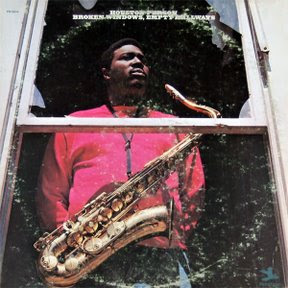
- Broken Windows, Empty Hallways (Prestige, 1972 - on CD as part of Broken Windows, Empty Hallways): Cedar Walton, Ernie Hayes, Jimmy Watson, Grady Tate with horns arranged by Billy VerPlanck.
- Sweet Buns & Barbeque (Prestige, 1972 - on CD as part of Broken Windows, Empty Hallways): Richard Tee, Jimmy Watson, Joe Beck, Hugh McCracken, Ron Carter, George Duvivier, Grady Tate, Buddy Caldwell and horns arranged by Billy VerPlanck.
- The Real Thing (Eastbound, 1973 - six tracks including "Kittitian Carnival" on CD as part of Personality): Marcus Belgrave, Donald Townes, Eli Fountain, Wild Bill Moore, Jack McDuff, Sonny Phillips, Jimmy Watson, Grant Green, Robert Lowe, James Jamerson Sr., Idris Muhammad, Hank Brown, Buddy Caldwell, Etta Jones and Spanky Wilson.
- Houston Person '75 (Westbound, 1974 - six tracks on CD as part of Personality) unknown musicians including Etta Jones arranged by Eddie Nuccilli and Jimmy Roach.
- Get Out'a My Way! (Westbound, 1975 - not on CD): unknown musicians including Sonny Phillips arranged by Jimmy Roach.

- Stolen Sweets (Muse, 1976 - not on CD): Sonny Phillips, Jimmy Ponder, Frankie Jones, Buddy Caldwell.
- The Big Horn (Muse, 1976 - issued in 1979, not on CD): Cedar Walton, Buster Williams, Grady Tate, Buddy Caldwell.
- Pure Pleasure (Mercury, 1976 - not on CD): Cecil Bridgewater, Bruce Nazarian, Pail Griffin, Bob Babbitt, Alan Schwartzberg and Lawrence Killian with horns, strings and voices arranged by Jimmy Roach.
- Harmony (Mercury, 1977 - not on CD): Jon Faddis, Arthur "Babe" Clarke, Paul Griffin, Horace Ott, John Tropea, Jerry Friedman, Wilbur "Dud" Bascomb, Lawrence Killian, George Devens, Henry Gibson and orchestra arranged by Horace Ott. - Wildflower (Muse, 1977 - issued on CD as part of Lost & Found): Bill Hardman, Sonny Phillips, Jimmy Ponder, Idris Muhammad, Lawrence Killian.

- The Nearness of You (Muse, 1977 - not on CD): Virgil Jones, Sonny Phillips, Charles Earland, Melvin Sparks, Mervin Bronson, Grady Tate, Lawrence Killian, Etta Jones.
- The Gospel Soul of Houston Person (Savoy, 1978 - not on CD): The Ogletree Brothers and The Atlanta Philharmonic Chorale, arranged by Horace Ott.
- Suspicions (Muse, 1980 - not on CD): Virgil Jones, Ernie Hayes, Sonny Phillips, Horace Ott, Jack Cavari, Melvin Sparks, Wilbur "Dud" Bascomb, Idris Muhammad, Ralph Dorsey.
- Very Personal (Muse, 1980 - not on CD): Virgil Jones, Cedar Walton, Buster Williams, Vernell Fournier.
- Don't Misunderstand - Live In New York with Etta Jones (HighNote, 1980 - issued in 2007): Sonny Phillips, Frankie Jones.
- Heavy Juice (Muse, 1982 - not on CD): David Braham, Jon Logan, Melvin Sparks, Wilbur "Dud" Bascomb, Bernard "Pretty" Purdie, Billy James, Ralph Dorsey.
- Suffield Gothic - with Ran Blake (Soul Note, 1984)
- Road Warriors with Les McCann (Greenestreet/CTI, 1984 - not on CD): Bobby Bryant, Lou Volpe, Gary King, Buddy Williams, Richard Malcolm, musical director Peter Drake.
- Creation with Roger Kellaway (Greenestreet/CTI, 1984 - not on CD): Ted Brancato, Gary King, Kent Heckman, Eek-A-Mouse.
- Always On My Mind (Muse, 1985 - not on CD): David Braham, Ted Brancato, Wilbur "Dud Bascomb, Bernard "Pretty" Purdie, Ralph Dorsey, arranged by Jimmy Roach.
- The Talk of the Town (Muse, 1987): Cecil Bridgewater, Stan Hope, Buster Williams, Grady Tate, Ralph Dorsey.

- Basics (Muse, 1987): Stan Hope, Peter Martin Weiss, Cecil Brooks III, Ralph Dorsey.
- We Owe It All To Love (Baseline, 1988): Cecil Bridgewater, Ron Bridgewater, Jon Weiss, Horace Ott, Melvin Sparks, Wilbur "Dud" Bascomb, Cecil Brooks III, Sammy Figueroa, Ralph Dorsey.
- Something In Common - with Ron Carter (Muse, 1989 - also part of The Complete Muse Sessions)
- The Party (Muse, 1989): Joey DeFrancesco, Randy Johnston, Bertell Knox, Sammy Figueroa.
- Now's The Time - with Ron Carter (Muse, 1990 - also part of The Complete Muse Sessions)

- Just Friends - The Tenors of Buddy Tate, Nat Simkins & Houston Person (Muse, 1990 - reissued by Bluejay as Texas Tenors - Blowing Session in 2006): Stan Hope, Major Holley, Grady Tate.
- A Night In Roppongi - with Etta Jones (All Art, 1990 - issued 2004): Stan Hope, Peter Weiss, Cecil Brooks III.
- Why Not! (Muse, 1990): Philip Harper, Joey DeFrancesco, Randy Johnston, Winard Harper, Sammy Figueora.
- The Lion And His Pride (Muse, 1991): Philip Harper, Benny Green, Christian McBride, Winard Harper, Sammy Figueroa.
- Christmas with Houston Person and Friends (Muse, 1994 - reissued as Santa Baby on Savoy, 2003): Stan Hope, Bennie Green, Mike Renzi, Melvin Sparks, Randy Johnston, Cameron Brown, Peter Martin Weiss, Jay Leonhart, Alan Chip White, Winard Harper, Grady Tate, Etta Jones, Della Griffin.

- Horn To Horn - with Teddy Edwards (Muse, 1994 - reissued on 32 Jazz in 1999): Richard Wyands, Peter Washington, Kenny Washington.
- Close Encounters - with Teddy Edwards (HighNote, 1996): Stan Hope, Ray Drummond, Kenny Washington.
- Person-ified (HighNote, 1996): Richard Wyands, Ray Drummond, Kenny Washington.
- The Opening Round (Savant, 1997): Joey DeFrancesco, Rodney Jones, Tracy Wormworth, Bernard Purdie.
- My Romance (HighNote, 1998): Russell Malone, Richard Wyands, Ray Drummond, Kenny Washington.
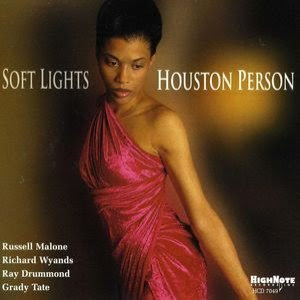
- Soft Lights (HighNote, 1999): Russell Malone, Richard Wyands, Ray Drummond, Grady Tate.
- In A Sentimental Mood (HighNote, 2000): Stan Hope, George Kaye, Chip White.
- Together at Christmas - with Etta Jones (HighNote, 2000): Stan Hope, George Kaye, Chip White.
- Dialogues - with Ron Carter (HighNote, 2000)
- Blue Velvet (HighNote, 2001): Richard Wyands, Ray Drummond, Grady Tate.

- Sentimental Journey (HighNote, 2002): Richard Wyands, Russell Malone, Peter Washington, Grady Tate.
- Social Call (HighNote, 2003): Stan Hope, Paul Bollenback, Per-Ola Gadd, Chip White.
- To Etta With Love (HighNote, 2004): Stan Hope, Paul Bollenback, Per-Ola Gadd, Chip White.
- You Taught My Heart To Sing - with Bill Charlap (HighNote, 2004 - issued 2006)
- All Soul (HighNote, 2005): Stan Hope, Randy Johnston, Per-Ola Gadd, Chip White.

- Just Between Friends - with Ron Carter (HighNote, 2005 - issued 2008)
- Thinking Of You (HighNote, 2007): Eddie Allen, John di Martino, James Chirillo, Ray Drummond, Willie Jones III.

Houston Person Compilations:
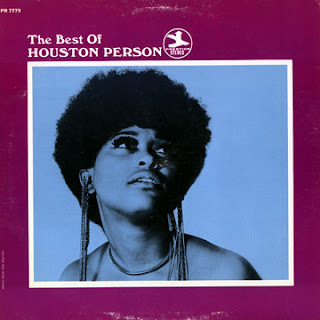
- The Best of Houston Person (Prestige, 1970)
- Personality (Beat Goes Public, 1993)
- Legends of Acid Jazz - Houston Person (Prestige, 1996)
- The Complete Muse Sessions - with Ron Carter (32 Jazz, 1997)
- Lost & Found (32 Jazz, 1997 - include unissued 1991 album Sweet Slumber)

- Christmas with Houston Person and Etta Jones (32 Jazz, 1997)
- Truth! (Prestige, 1999)
- A Little Houston On The Side (32 Jazz, 1999 - a compilation of Houston Person's sideman appearances on Muse, reissued by Savoy Jazz, 2003)
- Trust In Me (Prestige, 2001)
- Broken Windows, Empty Hallways (Prestige, 2004)

- The Art And Soul Of Houston Person (HighNote, 2008 - includes four tracks recorded in 2008 not available on previous recordings)

Houston Person also appeared as a sideman in the 1960s and early 1970s on many albums by Johnny "Hammond" Smith (1963-70), Byrdie Green, Don Patterson, Billy Butler, Sonny Phillips, Gene Ammons, Charles Earland (on the hit "More Today Than Yesterday"), Charles Kynard, Horace Silver, Melvin Sparks, Ceasar Frazier, Tiny Grimes and Reuben Wilson.

Person also began a musical relationship with singer Etta Jones in 1968 that began on records in 1975 and continued until her death in 2001. By the late 1970s, Person also began producing records for the Muse label, nearly singlehandedly resurrecting or launching the recording careers of many musicians such as Richard "Groove" Holmes, Charles Earland, Johnny Lytle, Jack McDuff, Shirley Scott, Dakota Staton, Buck Hill, Cecil Brooks III, Della Griffin, Lorez Alexander, Michael Logan, Jimmy Ponder, Larry O'Neillm Randy Johnston, Ernie Andrews, Michael Carvin, Freddie Cole, Antoine Roney, Joyce DiCamillo, Sofia Laiti, Everette Greene, Effie Jansen, Peter Martin Weiss, David "Fathead" Newman, Santi Debriano, Stan Hope, Norman Simmons, Dr. Lonnie Smith, Richard Wyands, Frank Morgan and Jeff Hackworth.

Houston Person can also be heard on records by Mike Mandel, Hank Crawford, Eric Gale, Leon Thomas, Lena Horne, Joey DeFrancesco, Judy Blair, Rhoda Scott, Ronnie Wells, Lorenzo, Lou Rawls, Bernard "Pretty" Purdie, Vanessa Rubin, Rodney Kendrick, The 3 Bs, Warren Vache, Miki Kohno, Carrie Smith, Judy Argo, Johnny Adams, Tony Zamangi, Doris Spears, Hisayo Tominaga, Joyce DiCamillo, Julie Divine, Denise Perrier. ESPM, Junior Mance, Johnny Adams, Paul Brown, Ron Carter, Doris Spears, Marty Elkins, Kenny Colman, Ronnie Wells, Cyndra Fyore, Daryl Sherman, Steve Kroon, Janis Siegel, Pearl Williams, James Williams, Vic Seneri, Carol Slone, Mocean Worker, Mike Torsone, Statesmen of Jazz, Roy Meriwether, Barbara Morrison, Nancy Kelly, Chip White, Martirio, Aaron Weinstein, Rebecca Parris, Pamela Luss, Diana Marino and Pamela Luss and, recently, The Peter Hand Big Band.

Thursday, June 25, 2009

RIP Michael Jackson

The news screaming across the mastheads of all the online news and entertainment sources like the saddened wail of millions of fans worldwide right now is that popular icon Michael Jackson suffered a heart attack and has died at the age of 50.

This sad and stunning news brings a surprising end to what has been a life of not too many years filled with many very high highs and several lowly lows that must have taken an emotional and physical toll on the man dubbed "the King of Pop." Unfortunately, Jackson's death comes about on the same day as the death of another icon from the 1970s, Farrah Fawcett, who died at 62, having lost a long and painful fight to cancer.

Like many others around the world, I have always had a very special place in my heart and soul for Michael Jackson. The Jackson 5's Greatest Hits was the first non-childrens record I ever got. It was Christmas Day in 1973 when I came downstairs and saw that record in my pile of stuff (mostly clothes) from Santa Claus. I couldn't have been more excited. I didn't even know the album was already two years old.

The music seemed timeless to this ten year old. Reflecting on it now, it's amazing how well all that high-class bubblegum music stands up (from the ironic "it just goes to show" department, I'm listening to tenor saxophonist Gene Ammons' 1973 cover of Jackson's 1972 hit "Ben" right now - Ammons' label, Prestige, also had Boogaloo Joe Jones cover the J5's "I'll Be There" and the great pianist Harold Mabern do a groovy take on "I Want You Back").

I will always remember the photo of the Jacksons on the cover of the album, with handsome Michael proudly standing out in front, staring back at you like you were looking out of your front door's peephole, ready to answer the door as if they just stopped by to visit you. The picture was framed in blue, just like a family portrait would be. I had a huge thing for Michael - probably my first-ever crush - and remember loving the Saturday morning cartoon Jackson 5ive that his little cartoon likeness was featured in.

Of course, the voices in the cartoon weren't really the Jackson 5's. I didn't know that then. But the songs were. Wow. What songs. "ABC." "I Want You Back." "Stop (The Love You Save May Be Your Own)." "Sugar Daddy." "Mama's Pearl." And one of my favorites at the time, "Goin' Back To Indiana." All those grooves - all lit up by that beautiful voice of Michael as a child. That sold me. I had to have this music.

Watching them dance was a gas too. They were all over TV at the time. I recall a guest shot the Jackson 5 did on The Carol Burnett Show in the mid 1970s wherein they played students who convinced their square teacher, played by the hilarious Ms. Burnett, to get hip, getting down to "ABC." At this point, Michael's voice had changed - and so did the Motown sound of their music. I also remember Michael appearing on the Sonny & Cher show a few times. One of the memorable appearances was when Sonny Bono asked the still young Michael what he wanted to be when he grew up. Michael responded with something like "I don't know. Maybe an astronaut. What do you want to be when you grow up?"

The Jackson 5's 1974 hit "Dancing Machine" was fun - the first time disco seeped into their sound - but it didn't seem like the Jackson 5 anymore. And I guess my interests began going somewhere else. I sort of liked 1976's "Enjoy Yourself" - their first record after they left Motown - but I don't think people paid much attention to it or to them at this point.

That all changed in 1978 when the group now calling themselves The Jacksons released the incredible Destiny (Epic, 1978). I seem to recall "Blame It on the Boogie" was the first single. But we never heard anything like that album's dance-floor classic "Shake Your Body (Down to the Ground)." It still mesmerizes me today.

This was a new Michael Jackson, fronting what was clearly his own show. Finally grown into adulthood and seemingly comfortable and in command of his new voice, Michael honed his songwriting skills to perfection and knew exactly how to craft the look, the sound and the feel he wanted. He reconfigured his whole act from cute kid who imitated big people to an adult fully in charge of the music. What he did set trends for years to come.

He confirmed his place in history with Off The Wall (Epic, 1979), one of the most amazing pop albums of all time, featuring the hits "Rock With You," "She's Out Of My Life" and the incredible "Don't Stop (Til You Get Enough)." The album paired Jackson with svengali Quincy Jones, who helped Jackson create a sound that no one had ever heard before (Jones had previously worked with Jackson on the 1978 soundtrack to the movie version of The Wiz, which featured Jackson's take on "Ease On Down The Road" - Jackson starred as the scarecrow along with Diana Ross in the movie). It's hard to believe that this sound just wasn't around before Michael Jackson and Quincy Jones brought it to life in 1979.

Then came Thriller. This 1982 album changed everything. It had a life of its own. I think it still remains the best-selling album of all time. Practically every song on the album was a hit. All huge hits. The stuff was beyond good. The videos revolutionized music videos and were newsworthy themselves. Michael Jackson earned his crown as The King of Pop.

Anything after Thriller would be a let down and while his follow-up, Bad (Epic, 1987) had its moments (including the title hit and its Martin Scorcese-directed video), it was probably unreasonable for anyone to expect Thriller II or something better or greater than Thriller. Thriller is better than anyone could ever have expected. It always will be one of the greatest albums of all time.

After that, Michael Jackson's life came to be less about the music and more about his personal quirks, overly extravagant lifestyle, the unusual changes to his face and his body as he got older, the embarrassing legal troubles and, recently, the tremendous financial troubles. It was a sad end to a life that was so remarkable once upon a time. Jackson was planning performances in London next month and was looking for opportunities to get his recording career back on track. Sadly, it isn't to be.

But, fortunately, as with all great artists - and he was certainly one of the greatest artists of all time, who gave much great entertainment to at least two generations of music lovers - Michael Jackson will be remembered for his great artistry and not the other kinks in the chain of life.

You will be missed, Michael Jackson.