Masterworks Jazz continues the 40th anniversary celebration of the great CTI Records with another four newly re-mastered discs including George Benson’s
Body Talk, Hubert Laws’s
In the Beginning, Freddie Hubbard’s
Straight Life, and Stanley Turrentine’s Don’t Mess with Mister T.
Originally produced by Creed Taylor and in most cases recorded by the legendary Rudy Van Gelder, the Masterworks Jazz series is supervised beautifully by Richard Seidel and masterfully re-engineered by Mark Wilder and Maria Triana.
As before, the reissues are packaged in thin flat matte gatefold sleeves that replicate the original LP gatefolds CTI is known for. Unfortunately, though, the flat finish of the covers doesn’t do justice to Pete Turner’s phenomenal cover photos and the sleeves will got lost on many CD shelves and hold up poorly to repeated usage.
Still, it’s the music that matters and CTI represents some of the best jazz recorded during the early half of the 1970s.
 Straight Life - Freddie Hubbard:
 Trumpeter Freddie Hubbard’s second CTI album is one of his very best. Coming on the heels of the classic
Red Clay, a tough act to follow, no doubt,
Straight Life more than compensates with two long blowing tunes and a sublime ballad performance that ranks as one of the best in the trumpeter’s entire discography. It is a landmark of 70’s jazz and one that
Billboard aptly enthused perfectly “bridges the gap of modern and traditional styles,” adding that “Hubbard’s trumpet is exquisite and all of the other musicians complement each other to great extremes.”
Few better – or more – words can explain what makes a great jazz album great.
Originally released in January 1971,
Straight Life confirms not only that CTI was on the right track (Hubbard’s record was the label’s 12th LP release) but, more importantly, that Creed Taylor was a force to be reckoned with in shaping the ideal of what jazz could achieve during the 1970s. But good as the music and the musicianship might be, the record was hard to program into bite-size radio formats and, in the end, it probably didn’t perform as well for Hubbard or the label as it ought to have.
Straight Life reunites much of the team responsible for the solid music of
Red Clay, including saxophonist Joe Henderson (first heard with Hubbard on the trumpeter’s 1965 album
Blue Spirits), keyboard player Herbie Hancock (who featured Hubbard on many of his early solo records, including his 1963 debut
Takin’ Off) and ubiquitous bassist extraordinaire Ron Carter, adding guitarist George Benson and percussionist Richard “Pablo” (Richie) Landrum to the mix. Jack DeJohnette replaces
Red Clay’s Lenny White.
It’s a dream-team of heavy-hitting modern players to be sure. But it’s interesting to note that Hubbard, Henderson, Hancock, Carter and DeJohnette had earlier contributed to Hancock’s 1966
Blow Up soundtrack and Hubbard would later re-group with Henderson, Benson, Carter, DeJohnette and fellow CTI alum Hubert Laws for the trumpeter’s lovely “To Her Ladyship” from 1978’s
Super Blue.
Up first is Freddie Hubbard’s 17-minute jam tune “Straight Life,” with Hancock comping gloriously on Fender Rhodes and Jack DeJohnette firing rapidly on all pistons, more like a rock drummer than a jazz drummer, but definitely a part of the song’s frenetic action. Landrum must have had to work overtime to keep up. The song is almost like a funked-up bossa. Henderson solos magnificently in a trademark style that mixes the power and fury with the passion and fire of his unappreciated and undervalued Milestone albums of the period. Henderson’s solo nearly decimates Hubbard’s own solo – nothing shabby, but hardly matching the intensity of the song’s other performers. Hancock then solos in the funky melodic style he established on
Fat Albert’s Rotunda (no spacey interludes here), followed by Benson providing an almost intellectual interjection that still has the warm soulful passion that seems to suggest the composer wanted to alternate Henderson and Hancock’s jazzier interludes with Hubbard’s and Benson’s soulful passages. A percussion workout ensues to bring it all back home.
Weldon Irvine (1943-2002) joins the cast on tambourine (!) and contributes the memorable “Mr. Clean,” a perfect vehicle for Hubbard’s fiery horn antics – which are at their very best here – and the band, which crafts a singularly sample-worthy and Hubbard-esque groove, rock this thing out. Hubbard, Henderson, Hancock and Benson all solo beautifully. Irvine would wax the tune again several months later with Richard “Groove” Holmes on the B-3 great’s
Comin’ On Home and later on his own 1972 solo debut
Liberated Brother. Each version of the tune sounds considerably different than Hubbard’s take, suggesting that Creed Taylor knew precisely how to keep everybody on target and in line. It’s worth noting that one of Irvine’s earliest recordings outside of his stint as Nina Simone’s musical director, is “Can’t Let Her Go” from Freddie Hubbard’s 1968 album
High Blues Pressure.
(Given the strength of Weldon Irvine’s additional contributions to the CTI legacy, namely “Sister Sanctified” – later renamed “Funkfathers” without proper credit – and “Introspective,” both from Stanley Turrentine’s 1972 CTI classic,
Cherry, it’s surprising the pianist/composer/arranger was never provided an opportunity to work more extensively with CTI, a label that even recorded Nina Simone in the years after Irvine left her employ.)
 Straight Life
 closes out with an extraordinarily lovely performance of “Here’s That Rainy Day,” the 1953 song by Johnny Burke and Jimmy Van Heusen from the forgotten Broadway musical
Carnival in Flanders. Even by 1970, when this version was recorded, the song had become a jazz standard and a favorite among pop singers, particularly Frank Sinatra, who first recorded the song in 1959 and performed it often in concert on his many TV specials. Producer Creed Taylor had also recorded the song on productions for Stan Getz, Kai Winding, Wes Montgomery, Astrud Gilberto and Walter Wanderley, so it’s fair to assume that he too liked the song just as much. In this reading, Hubbard, on flugelhorn, is paired with only guitarist George Benson and bassist Ron Carter for a truly inspired take that warrants classic status. While it’s probably no surprise that “Here’s That Rainy Day” was issued as the album’s single, it’s probably less surprising that this lovely jazz instrumental didn’t turn into a hit when Elton John’s “Your Song” and Santana’s “Black Magic Woman” ruled the airwaves.
For whatever reason,
Straight Life is graced by not one but two Pete Turner photographs, a rarity in the CTI discography, as was the trumpeter’s follow-up album
First Light. The photographer has no idea why designer Bob Ciano juxtaposed these two photographs. But he clearly approves. The front cover is called “Liberty” (1962), a double exposure. “I went to the Battery and shot [the Statue of Liberty] with a long lens for the small image,” explains Turner. “Then I took the boat to Liberty Island and kept shooting as we got closer and closer. The airplane flying by was just luck.” The back cover, “Parthenon” (1964), was from a series the photographer produced cataloging various wonders of the world, but “not picture-postcard style, more interpretative.” The abstract take on monuments honoring the Roman goddess of freedom (Libertas) and the Greek goddess of wisdom (Athena) has a curiously perfect relationship to the music of
Straight Life.
Body Talk - George Benson: This is one of the more unusual and subsequently less predictable albums in guitarist George Benson’s entire catalog, maybe even in the whole of the CTI discography as well. Like the guitarist’s earlier
Tell It Like It Is, a one-off coupling of Benson with Mongo Santamaria’s arranger, Marty Sheller, this staged studio presentation pairs the guitarist with the J.B.’s Pee Wee Ellis, one of the more significant architects of the James Brown sound.
Released in September 1973,
Body Talk was not only Benson’s third CTI album but also, more interestingly, the first album the guitarist waxed for the label after signing a notoriously “exclusive agreement” with CTI in June of 1973. While the album never allows Benson to sing, as he wanted to do all along (suggesting that he still wasn’t in control of his own career), it is clearly designed to be different, pointing Benson down the instrumental R&B road that the J.B.’s helped forge - though never with the hit success of so many of the era’s one-hit wonders in the pop instrumental field. It’s sort of like Creed Taylor was only willing to let George Benson go so far down the road he wanted to travel.
Pee Wee Ellis is a little-known part of the CTI legacy, having contributed to such Kudu albums by Hank Crawford (
Help Me Make It through the Night), Esther Phillips (
From A Whisper To A Scream,
Alone Again, Naturally,
Black-Eyed Blues,
Performance, Capricorn Princess) and Johnny Hammond (
The Prophet).
Body Talk proved to be Ellis’ only appearance on CTI proper. And while it’s hard to gauge just how much he contributes to
Body Talk, it is apparent that there is a headier quotient of soul present here that was nearly absent on so many previous Benson albums. Ellis may have been more inspiring than inspired, but Benson delivers a true jazz guitar classic with
Body Talk.
Regardless of how you feel about this album or its material or its significance in the CTI legacy, it really is chock full of Benson’s terrific guitar playing. There is absolutely no adherence to standards-based formulae or overblown arrangements. Benson plays his ass off. The mood is mostly funky. But it swings like crazy from the very beginning.
From the opening “Dance” and Donny Hathaway’s “When Love Has Grown” (originally heard on the 1972 album
Roberta Flack & Donny Hathaway, an album that also featured CTI covers in Grover Washington, Jr.’s “Where Is The Love” and Hubert Laws’ “Come Ye Disconsolate”) to “Top of the World,” Benson’s fantastic original that closes out the original LP,
Body Talk is a superb showcase for Benson’s beautiful guitarisms.
A recent addition to the band is second guitarist Earl Klugh, who had a brief appearance as a teenager on Benson’s previous
White Rabbit and gets a solo here on “When Love Has Grown.” Klugh left Benson’s band shortly hereafter to start his own solo career and was replaced by Phil Upchurch. Benson and Klugh’s next recording together didn’t come until their 1987 duo disc
Collaboration.
Bassist Ron Carter returns, of course, alternating duties with the truly underrated electric bassist Gary King (1947-2003) – in one of his earliest recorded outings – while Benson and Carter’s fellow CTI all-star Jack DeJohnette again mans the drums for the last time on a CTI date with the guitarist (the two would reunite for the last time together on Freddie Hubbard’s 1978 album Super Blue).
A horn section featuring Jon Faddis, (former J.B.’s) Waymon Reed, Dick Griffin and Frank Foster (all rather surprising for a CTI session and most of whom were drawn from the Thad Jones/Mel Lewis Big Band of the time) is sporadically added for the Benson originals “Plum,” “Body Talk” (a faster and funkier take on “Tequila” – a song producer Creed Taylor scored a hit with in Wes Montgomery’s 1966 cover, also featuring bassist Ron Carter) and the superb “Top of The World,” without a doubt this album’s finest moment and surely one of CTI’s hidden jewels.
Pianist Harold Mabern makes his second of two CTI appearances on Body Talk (his only other appearance is on Stanley Turrentine’s Don’t Mess With Mister T., recorded the month before) to almost no fanfare whatsoever. Surprisingly, it’s also the only time Benson and Mabern have been recorded together. Surely there must be a story there.
Mabern, who now mans the chair in tenor saxophonist Eric Alexander’s elegant quartet, deserved better than he got here. He’s never afforded any solos and on Fender Rhodes, he sounds nearly anonymous in the background, lacking any of the bluesy ambition he displays otherwise with signature force on the acoustic piano. My guess is he was probably chosen here for his presence in Wes Montgomery’s mid-sixties band that went scandalously unrecorded by Creed Taylor when the late guitarist was recording his hit albums for Verve.
Body Talk isn’t one of CTI’s most memorable outings. But it offers some of guitarist George Benson’s best “guitar magic” and most inspired playing on record and a chance to hear him strut his stuff on the especially inspired “Top of the World.”
Pete Turner’s striking cover photo led Billboard to proclaim that “(t)he cover in red and black will stop customers. If you like windows and walls, this jacket is for you.” It is a marvelously presented image, a photograph Turner calls “Barn Door,” originally taken in 1966. “It was shot in Scandinavia and it was just as red as this. The hook on the back cover is actually right near the door, but Bob Ciano decided to extend the wall forever and the hook ended up left of the fold.”
 Don’t Mess With Mister T. – Stanley Turrentine: Don’t Mess With Mister T. is the last of the studio albums tenor sax great Stanley Turrentine recorded for CTI Records between 1970 and 1973 and unquestionably one of the saxophonist’s - and the label’s - most satisfying outings. Indeed this album and Turrentine’s first CTI album, Sugar, rank not only among Stanley Turrentine’s best recordings in his multi-faceted career, but also among his most popular and the two that lent him the nicknames that stuck with him throughout the remainder of his career (“The Sugar Man” and “Mister T”).
Helmed with beautiful fortitude by arranger/pianist Bob James, Don’t Mess With Mister T. is a joy from start to finish, offering Stanley Turrentine’s sensual horn playing on some bluesy, after-hours grooves that showcase his sound and style to, ah, a “T.”
Originally released in September 1973, Don’t Mess With Mister T. was a success from the very start. This may have been the label’s greatest crossover success, gaining black audiences that Miles Davis was trying (but not succeeding) to court at the time.
No doubt it had something to do with Alen MacWeeney’s memorable mack daddy cover shot of Turrentine in Black Godfather mode peering over his shoulder in what appears to be a Cadillac Eldorado (the pimpmobile of choice back in the day) and the saxophonist’s flawless performance of the title tune, best known from its appearance in a popular Blaxploitation film of the time.
Marvin Gaye’s tremendous “Don’t Mess With Mister T.” comes, of course, from the first-rate soundtrack to the now forgotten film Trouble Man, which yielded another superb CTI cover (also arranged by Bob James) by Grover Washington, Jr. on Soul Box. Turrentine takes charge of the song, playing it with the heart and soul that suggests it was written just for him.
Bob James gives the song a relaxed feel that is perfect for Turrentine’s easy-going but unquestionable command of things. Buffered by James on piano and electric piano, Richard Tee on organ, Ron Carter on bass, Idris Muhammad (who replaced Billy Cobham) on drums and an absolutely perfectly deployed horn and string section, Turrentine offers up a sumptuous celebration of jazz and soul, melding it together with a heated precision that could melt butter or warm honey to overflowing. James takes a terrific solo on piano here that ranks among his best on record to this point, but everybody coalesces into a terrific climax of musical ecstasy that made it the signature theme it ultimately became (Turrentine recorded the song again for his 1995 album T Time).
Turrentine offers up two of his own originals, the spunky “Two For T,” adding Harold Mabern on electric piano and Eric Gale on guitar, and “Too Blue,” with Mabern, Gale and percussionist Rubens Bassini. In addition to showcasing Turrentine in his element, “Two For T” features spots for Mabern, Carter and Muhammad while “Too Blue” offers solos for Gale and James, again on piano. James wisely does away with the horn and string accoutrements on these numbers (though “Too Blue” finds the horns making a quick appearance) and just lets Turrentine and company take care of business.
“I Could Never Repay Your Love” offers up one of the saxophonist’s signature gospel performances, something too few of his records ever did (check out “I Told Jesus” for Turrentine’s previous bow to the church). The song was originally one of the few from the Spinners’ eponymous 1973 album that didn’t turn into a hit. That album yielded hits out of “I’ll Be Around,” “Could It Be I’m Falling In Love,” “One of a Kind (Love Affair)” and “Ghetto Child.” Turrentine is impassioned and beautiful here, set alight by James’ lovely strings and horns, and touching, yet fiery solos from Eric Gale and Richard Tee.
The original program totals only about 30 minutes. But even though more music from these sessions was left off the record, it’s worth pointing out that while vinyl in those days could accommodate considerably more music, Creed Taylor consciously kept CTI albums around a half hour long, or fifteen minutes a side, to maintain the big, clear sound he developed in the studio with engineer Rudy Van Gelder. Like digital files of today, the more you compressed music on vinyl, the less aural clarity it had. That’s why CTI records sounded better than so many jazz records of the day.
The first time that Don’t Mess With Mister T. was issued domestically on CD in 1988, it included Stanley Turrentine’s first recording of the Michel Legrand song “Pieces of Dreams” from these sessions as a bonus track. The memorable song from the not-so-memorable 1971 film had already been covered by such singers as Peggy Lee, Sarah Vaughan and Rita Reys, but this was one of the first jazz recordings of the tune. It was obviously a song that the saxophonist felt strongly about. But producer Creed Taylor didn’t quite agree, so the song was left off the original album. This decision probably prompted Turrentine to seek more autonomy (and considerably more money) at Fantasy Records when his CTI contract expired.
Stanley Turrentine recorded the song anew in a silkier, smoother (and ultimately less satisfying) arrangement by Barry White’s arranger, Gene Page, as the title track to his Fantasy debut album, issued in October 1974.
The song became a radio hit and Creed Taylor hurriedly released the 1973 recording of the tune on The Sugar Man, a hodge-podge compilation of outtakes and unreleased tunes, in February 1975. Even though the Bob James arrangement of the song is the stronger of the two performances, the Fantasy version had already become a hit and it was that version that most people listened to and, more importantly, bought. The CTI version was pretty much ignored.
The song found its way onto CD as part of the first domestic digital issue of Don’t Mess With Mister T. in 1988 (as well as several compilations and the 2003 European edition of the CD, which matches the 2011 CD’s programming), but in an altered mix that differed from The Sugar Man version by adding Richard Tee’s organ pronouncements throughout. Producer Richard Seidel was not aware of The Sugar Man mix of “Pieces of Dreams” until it was too late – so the “other” mix of the song is heard here again.
Still, back on Don’t Mess With Mister T., where it belongs, “Pieces of Dreams” reveals one of the few misjudgments Creed Taylor made in his lengthy career and, in hindsight, one of the first cracks in the mighty wall that CTI had built in only a few short years.
While Taylor’s instincts may have evaded him for “Pieces of Dreams,” it was clear that his instincts had been right on for the recording of Don’t Mess With Mister T.. That’s because, as it turns out, the album we’ve known for nearly four decades was not the first recording Turrentine made of the album.
Several months earlier, Turrentine got together with Bob James, Eric Gale, Ron Carter, (the strangely uncredited) Johnny Hammond on organ, who miraculously orchestrates from his particular position, and Billy Cobham (drummer on Turrentine’s previous Salt Song and Cherry) to lay down tracks for the album. Even though this group more or less made up the CTI All Stars of the time, producer Creed Taylor felt the recording just wasn’t working.
Despite the expense involved, Taylor opted to do nothing with the recordings until a more suitable recording situation presented itself. Three of the tracks recorded at these sessions finally showed up on the 2003 European CD release of Don’t Mess With Mister T., including a completely inferior take of the title song (thoroughly justifying Taylor’s initial decision), Billy Cobham’s “Mississippi City Strut” and Bob James’ “Harlem Dawn.”
Each track in itself is spectacular, especially given the fact that its leader is no longer with us and every note he blew is worth savoring. But given the terrific nature of the final album that was Don’t Mess With Mister T., it’s audibly obvious why the producer thought the music, while perfectly serviceable and exceeding the qualities of most jazz fusion being made elsewhere at the time, was certainly not up to the CTI standard, a bar that was raised with each successive album at this point in the label’s history.
Indeed, Don’t Mess With Mister T. raised the bar for Stanley Turrentine, and provided a measure that the saxophonist probably didn’t equal or better at any point after this in his career. It’s a classic that sits high among the classics Stanley Turrentine waxed and one of the great CTI titles of all time.
 In The Beginning –Hubert Laws: The title to flautist Hubert Laws’s 1974 CTI album, In The Beginning references one of the very few overtly biblical titles in the CTI canon (the title of Joe Farrell’s Upon This Rock, recorded shortly hereafter, references Matthew 16:18). This particular title derives from Genesis, the first book of the Hebrew Bible and the Christian Old Testament. Indeed, Genesis is the Hebrew word for “in the beginning.”
As Genesis 1:1 goes, “(i)n the beginning God created the heavens and the earth.” Curiously, several years later – after the flautist left CTI for the more prosperous climes of Columbia – CTI reissued this double album as two individual sets, both bearing the title Then There Was Light, a title alluding to another chapter of Genesis, ( 1:3): “(a)nd God said, ‘Let there be light.’ And then there was light.”
On the other hand, all this bible talk is little more than speculative and may just be nothing more than a case of wrong-headed thinking. After all, the album’s title derives from the little-known Clare Fischer composition that kicks off what was originally one of CTI’s very few double albums. It’s unlikely that Fischer came to the session with an unnamed tune or any religious intentions, therefore allowing the producer to fit it into some unlikely biblical schema he may have had.
The West Coast-based Fischer had never before – or since – had anything to do with CTI, which makes his appearance on two tracks here unusual, to say the least. Producer Creed Taylor had worked with Fischer on some of Cal Tjader’s earliest Verve recordings from the early 1960s, when Fischer was part of Tjader’s working group, and Hubert Laws had only ever worked with the keyboardist / composer / arranger as part of the flautist’s childhood chums, The Jazz Crusaders’ great 1965 album Chile Con Soul.
But, in all fairness, In the Beginning is a slightly odd album all the way around. It’s the flautist’s sixth of eight albums as a leader for CTI and while it continues Morning Star’s near perfect blend of jazz, classics and gospel – with an emphasis more on the swinging side of jazz than previously heard on Laws’s earlier CTI efforts - something substantial is amiss here.
Surely, the musicianship is of the highest caliber.
But is it the double-album length which provides more of the leader than we want to hear? The double album format was certainly extravagant at the time, and probably more than the label should have attempted. But Creed Taylor probably wanted to reward the flautist, one of the original CTI all-stars, for staying with the label when other stars like Freddie Hubbard and Stanley Turrentine had left and at a time when another CTI all-star, guitarist George Benson – who earned Taylor’s wrath with the left-handed nickname of George “Bad” Benson – was striving to do things more his own way.
Is it the audibly weird sound design, particularly notable on the muffled drums and stifled acoustic piano heard throughout, that engineer Rudy Van Gelder came up with for the CTI label during this time? Despite some magnificent playing over a questionably aesthetic program of tunes, In The Beginning audibly reveals its studio origins and sounds as if it was concocted in separate rooms at separate times.
The sound is simply incompatible with the performances, featuring CTI regulars Bob James on keyboards, Gene Bertoncini on guitar, Ron Carter (who fares best of all) on bass, Steve Gadd (in one of his earliest CTI appearances) on drums, Airto on percussion, Dave Friedman on vibes and a minimal use of only a few strings and horn players.
Is it the fact that Hubert Laws took over arranging duties from Don Sebesky on the majority of proceedings heard here (Bob James arranges “Gymnopedie #1” and Clare Fischer arranges his own “In the Beginning”) and the overall effect becomes far less noteworthy than before?
Is it Hubert Laws plying his considerable talent on an occasionally electrified flute overtop some otherwise straight jazz numbers that make it sound more forced or phony? He still plays magnificently. It’s just that an electric flute just doesn’t sound that good when you’re trying to play jazz straight.
Is it the awkward programming? Hubert Laws has previously shown how easily he can adapt his playing style to jazz, souped-up classics, composed works, R&B, even funk – without any disparity in his delivery. Not so here.
Who knows. It may be a little bit of all of the above. My guess is that as ambitious as it is, In the Beginning is neither any listener’s first, second or third favorite choice of Hubert Laws on CTI nor would many consider this album to rank among the top five or ten of the flautist’s all-time best recordings.
In the Beginning is probably best appreciated in small doses.
Things get off to a rousing enough start with Clare Fischer’s interesting, though not interesting enough title track. As presented, it sort of reminds me of the sort of synthesized jazz-fusion composer/keyboardist Kendall Schmidt dialed in over top of the 1970 AIP horror film Scream and Scream Again in the 1980s for the video market.
That’s a compliment, actually. But even though neither Laws nor Fischer had much more use for the tune (Fischer recorded the tune again in 1980 for Bill Perkins’s Many Ways To Go) there are quite a few nicely-hued moments present here, even if it sounds as if it does not belong on a CTI record.
Composer and pianist Harold Blanchard (1930-2010) contributes the album’s lovely “Restoration,” a perfectly complimentary mix of jazz ideas with vaguely classical structures. It is one of the album’s highlights and a gem that features strikingly superb solos from Bob James on piano, Gene Bertoncini on guitar and an especially inspired (electrified) flute solo by Laws himself.
Dave Friedman, Ron Carter and Steve Gadd add their special individuality here too, making the song something of a treasure. A deeply religious man, Blanchard later provided Laws with his neo-classical composition “New Earth Sonata,” recorded in 1983 with Quincy Jones for the CBS Masterworks label, though it’s probably worth pointing out that this “Restoration” is not the same “Restoration” Bob James composed later for his own 1990 album Grand Piano Canyon.
“Come Ye Disconsolate” is a traditional gospel hymn that finds the leader overdubbing flute parts to make an especially nice performance, aided by Richard Tee’s rather backgrounded organ embellishments. The song probably derives from the version heard on Robert Flack and Donny Hathaway’s 1972 eponymous album, an album Laws himself appears on (not this song though). It’s another one of the album’s better moments.
Another of the album’s highlights is Rodgers Grant’s “Reconciliation,” an effective feature for the flautist, the composer (on electric piano) and bassist Ron Carter. Grant and Laws met while both were part of Mongo Santamaria’s band. The two worked often together throughout the ‘60s, even working together on guitarist George Benson’s CTI album Tell It Like It Is, arranged by Mongo Santamaria’s musical director, Marty Sheller. Grant also provided Laws with the title track to the flautist’s previous CTI studio album, Morning Star.
This listener can do without the album’s better-known tunes, including the unbelievably over-considered Satie number, “Gymnopedie #1,” Sonny Rollins’s “Airegin” (originally from a 1954 Miles Davis recording featuring the composer), delivered here as a duet here for drums and piccolo, and the surprisingly perfect progression into John Coltrane’s 1957 classic “Moment’s Notice,” featuring brother Ronnie Laws’s brief tenor solo and James’s electric piano statement.
The album’s closer, Laws’s own Latinate “Mean Lene” (first heard on the flautist’s second album Flute By-Laws from 1966), features Laws, brother Ronnie and Bob James, with a feature for the bassist, drummer and Airto on percussion. But, again, it sounds out of place in this context and another victim of unusually poor programming for a CTI release.
Even when the albums were separated into two individual discs, this music didn’t work particularly well. While all of it sounds good on its own, the songs deserved more of a unified style or theme and less of the K-Tel jazz approach. Maybe producer Creed Taylor was too busy at this point with his other duties at CTI.
But In the Beginning, despite the preponderance of good, nee very good, music present here – and I hope my text makes it plain there is quite a bit of nice music to be heard – is one of the most laxly programmed CTI sets in the label’s entire history. It may not hold up as one of CTI’s best. But it is a worthy display of Hubert Laws’s many prodigious talents.
Pete Turner’s stunning cover photograph is called “Twins,” a photo shot in 1967 for Look magazine during the annual agricultural fair in Mount Hagen in New Guinea. Lit by daylight against a dark background, the photo was shot so that only the remarkable colors on the faces stand out and appear to float. “Twins” is also used as the cover image on Pete Turner’s 1987 book Photographs.

 Impulse! 2-on-1: More Than Just A Label. An Identity. A Statement.
 Ahmad Jamal: Even though the great pianist Ahmad Jamal had “retired” from performing in the late 1960s, he waxed a number of recordings for the Impulse label, including these two live sets from 1969 and 1971, that proved he was not only at the top of his game but at the height of his musical prowess.
 Albert Ayler: The searing and searching saxophone of Albert Ayler (1936-70) explored the roots of jazz as much as its outer reaches. John Coltrane brought Ayler to the Impulse label, where he recorded a dizzying display of his iconoclastic lore, including these two scorchers, Love Cry and The Last Album.
 Alice Coltrane: Pianist, harpist, organist and composer Alice Coltrane (1937-2007) turned her attention toward orchestral endeavors on these great Impulse albums from the early 1970s, producing a rich musical palette without ever sacrificing the spiritual jazz she had long championed.
  Archie Shepp: Swept up in the “new thing” of the 1960s, Archie Shepp quickly began to discover how more traditional forms of music, like African polyrhythms and R&B, could appropriately inform the jazz he was delivering, as evidenced on these two terrific albums recorded between 1968 and 1969.
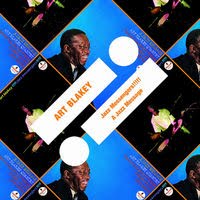 Art Blakey: The revered leader of the Jazz Messengers, one of jazz’s greatest musical proving grounds, drummer Art Blakey (1919-90) recorded only these two dates for Impulse, 1961’s Jazz Messengers!!!! (with the superb “Alamode”) and 1963’s unconventional, yet sterling, quartet outing A Jazz Message.
 Coleman Hawkins: Coleman Hawkins (1904-69) was not only one of jazz’s greatest tenor players, but probably its loveliest ballads performer. The Hawk recorded several Impulse records, including these two from 1962: Today and Now (with “Love Theme from ‘Apache’”) and the unusual Bossa Nova.
 Curtis Fuller: Bebop trombone great Curtis Fuller had already led dates for Prestige, Blue Note, Savoy and Epic and joined the Jazz Messengers when he waxed his only two leader dates for Impulse in the early 1960s, Soul Trombone (with fellow Messengers) and Cabin in the Sky (arranged by Manny Albam).
 Duke Ellington: It was producer Bob Thiele’s idea to feature legendary orchestra leader Duke Ellington (1899-1974) in small-group settings with former Ellingtonian Coleman Hawkins (1905-69) and the fiery saxophonist John Coltrane (1926-67). Both 1962 sets are inspired, historic and featured here.
  Elvin Jones: At the time propulsive drummer Elvin Jones (1997-2004) manned the beat in John Coltrane’s 1960-1965 quartet, he also found time to lead these great Impulse gems, Illumination (co-led with Coltrane bassist Jimmy Garrison and featuring Coltrane pianist McCoy Tyner) and Dear John C.
  Gabor Szabo: While the late, great guitarist Gabor Szabo (1936-82) recorded many studio albums during his brief career, he was always best served by his few live recordings. These two live Impulse albums brilliantly catch Szabo’s working group, featuring the stunning guitarist Jimmy Stewart, in 1967.
 McCoy Tyner: Legendary pianist McCoy Tyner launched his mercurial solo career with these two exciting trio sides, a mix of well-known standards and effective originals (including the now standard “Effendi”) recorded in 1962 while he was still part of John Coltrane’s historic quartet.
  Milt Jackson: Vibraphonist Milt Jackson (1923-99) led a double life, co-fronting the Modern Jazz Quartet, while also charting a significant course of his own on records such as 1962’s bracing Statements and 1964’s light-hearted Jazz ‘n’ Samba – two of his earliest and best Impulse endeavors.
 Pharoah Sanders: Saxophonist Pharoah Sanders was initially part of John Coltrane’s group before scoring his own hit with 1969’s “The Creator Has a Master Plan.” The saxophonist went on to become a world-class leader, waxing the East-meets-West-meets-Africa of these two great albums from 1973.
  Shirley Scott: Hammond B-3 great Shirley Scott (1934-2002) often played with John Coltrane in the 1950s but rose to fame as part of Eddie “Lockjaw” Davis’s group. Her long string of Impulse albums included these two, among her best, alternating her trio with a big band arranged by Oliver Nelson.
 Sonny Rollins: Tenor saxophonist Sonny Rollins was already one of jazz’s greatest players and composers when he recorded 1965’s On Impulse. Thirteen years later that album’s template, There Will Never Be Another You, caught live several weeks earlier, finally appeared. Here, they’re together at last.